Sam Darnold Is Back for Seattle and Jaxon Smith-Njigba's Volume Is the Question
By Verdexed Fantasy Desk
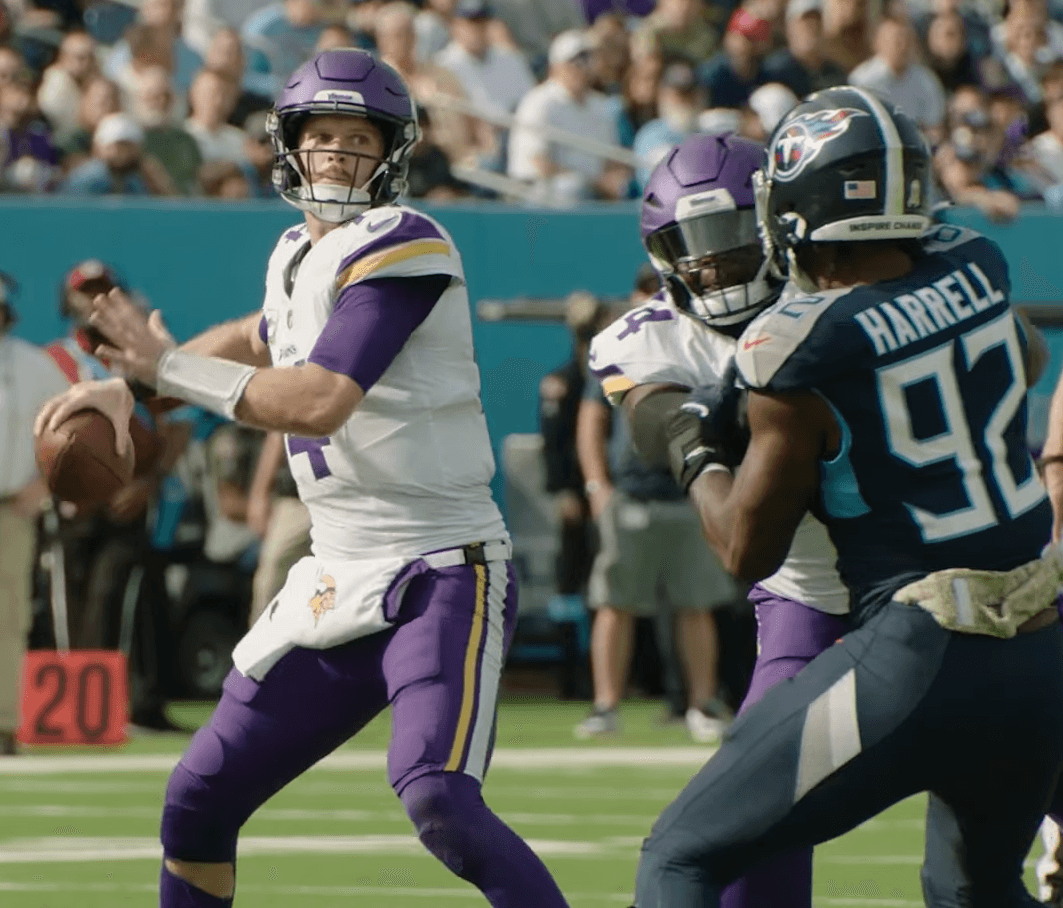
Sam Darnold is playing at Washington. The Seattle quarterback, who missed Week 2 with a glute injury, returned to practice during the week, was a full participant on Thursday and Friday, and head coach Mike Macdonald indicated he would start if cleared. Drew Lock returns to the bench after a strong performance in relief.
The fantasy question is not whether Seattle is better with Darnold. It is whether Jaxon Smith-Njigba's target volume survives the change.
What happened while Darnold was out
Lock played well enough in Week 2 that the decision was not automatic, and the reporting through the week acknowledged that Seattle could have given Darnold another game to heal. Part of what made Lock effective was a simple and concentrated distribution: Smith-Njigba was the focal point, and the offense ran through him.
That is the crux of the fantasy question. Backup quarterbacks under pressure often narrow their target distribution to the player they trust most, which inflates that player's volume beyond what the offense's normal structure would produce. When the starter returns, the distribution usually widens back out.
Smith-Njigba has been among the most productive receivers in the league through two weeks, and a portion of that production came in the game where Lock was throwing to him repeatedly. Managers should expect the target share to normalize somewhat while the overall offensive efficiency improves, which are offsetting forces rather than a clear downgrade.
Fantasy fallout
Smith-Njigba remains a start. He is the clear number one option in this offense regardless of who is playing quarterback, and Darnold has thrown to him effectively when healthy. The realistic expectation is fewer targets and better efficiency per target, which lands in roughly the same place in points.
The players who benefit from Darnold's return are the secondary options. A starting quarterback operating a full playbook spreads the ball to tight ends and second receivers in ways a backup in survival mode does not. That makes Seattle's complementary pass catchers more viable in deep leagues than they were last week, and it slightly reduces the concentration that made Smith-Njigba's Week 2 so large.
Seattle's receiver depth took a hit on Saturday when the team placed Bobo on injured reserve with a knee injury, which pushes more of the complementary work to whoever is next in line and reinforces Smith-Njigba's role as the offense's primary target.
The backfield is worth monitoring. Zach Charbonnet, who has been working back from a torn ACL and began the season on the reserve physically unable to perform list, is potentially in line to return to practice next week according to Macdonald. That is not a Week 3 factor, but it is a Week 5 and beyond factor for anyone holding Seattle running backs, and it is the kind of update that changes a backfield's value before the market reacts.
The Washington side
The Commanders are starting Marcus Mariota with Jayden Daniels out. Washington's medical staff ruled Daniels out to protect his long-term mobility after he avoided structural ligament damage, which is the kind of decision that tends to extend beyond a single week.
Mariota is a competent veteran, and Washington's offense will function, but the gap between Daniels and any backup is among the largest at the position in the league because so much of the offense is built on his mobility. That changes what Washington can run and how efficiently it can run it.
For fantasy managers, the Washington pass catchers become touchdown-dependent rather than volume-reliable, and the Commanders' running backs gain value because a backup quarterback's offense leans harder on the ground game.
The betting angle
The market has already adjusted for the Daniels absence. Quarterback injuries are the one category of news that moves NFL lines efficiently, and three quarterback injuries moved the Week 3 board meaningfully.
The less efficiently priced piece is the Darnold return. A starting quarterback coming back from a soft-tissue injury after missing one game is priced as fully healthy, and he rarely is. Glute and hamstring injuries in quarterbacks affect mobility and the ability to drive throws from a compromised base, and the effect shows up in the second half rather than the first.
That argues for a specific position: the Seattle first-half side has more value than the full game, and Darnold's passing yardage props are more likely to come in under than over if the injury limits him late. It also argues against assuming Seattle's offense returns immediately to its Week 1 form.
The Verdexed model take
The model rates Seattle as a meaningfully better team with Darnold than with Lock, and Washington as meaningfully worse with Mariota than with Daniels. Both adjustments point the same direction, which is the kind of alignment that produces a confident projection rather than a coin flip.
On the player level, the model projects Smith-Njigba's target share to decline from the Lock game while his catchable-target rate rises, netting out to a similar weekly projection with a lower floor and a higher ceiling. He stays in lineups.
What to do in your league
Start Smith-Njigba without hesitation. Start Seattle's lead back. Treat Washington's pass catchers as touchdown-dependent plays rather than volume plays, and lower expectations for Washington's receivers accordingly.
If there is a Charbonnet stash available at no cost, take it now. A running back returning from a torn ACL who handled the majority of his team's goal-line carries in his last healthy season is exactly the kind of asset that costs nothing in September and matters in November. That is the quiet actionable item buried in this week's Seattle injury report.