Russell Westbrook Retired With Offers on the Table and Two Backcourts Now Have Minutes to Give
By Verdexed NBA Desk
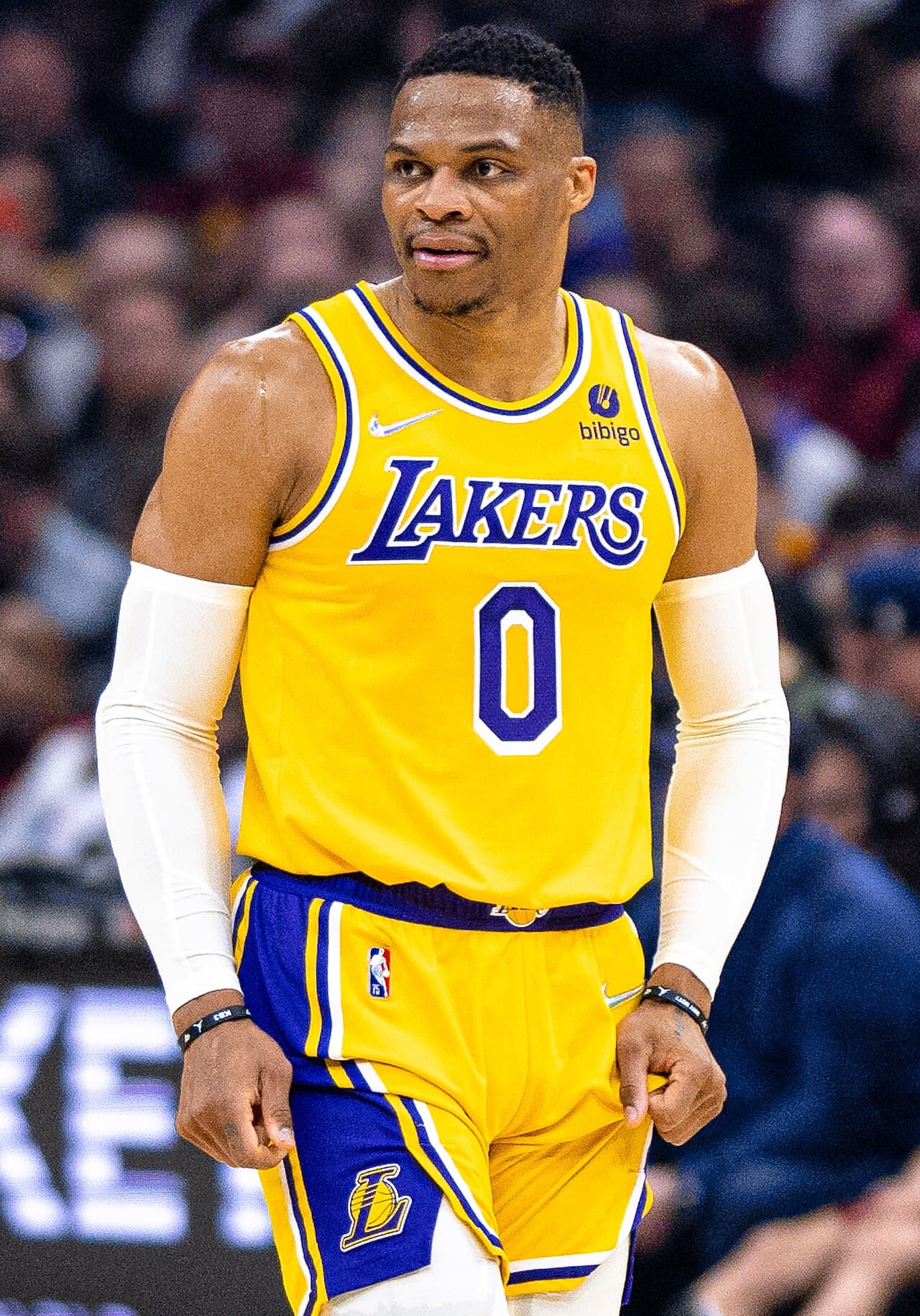
Russell Westbrook announced his retirement from the NBA after 18 seasons, ending his career on his own terms and with contract offers still available to him. ESPN's Shams Charania reported that Westbrook had received offers from the Sacramento Kings and the Washington Wizards during the 2026 offseason before deciding to step away.
The announcement came through social media rather than a press conference, delivered as a career-highlight video narrated by actor Michael B. Jordan. It was an unusual exit for a player whose on-court identity was built on relentless physical confrontation, and a fitting one for a career that never much cared what the conventional version of anything looked like.
Westbrook leaves as the NBA's all-time leader in triple-doubles with 209, a total that is unlikely to be approached. He was the 2017 Most Valuable Player, a nine-time All-Star, a nine-time All-NBA selection, a two-time scoring champion, a three-time assists leader, and a member of the league's 75th Anniversary Team.
Why the retirement matters to fantasy managers
Westbrook's late-career fantasy profile was one of the most distinctive assets in the game, and its disappearance from the player pool is not a trivial change for anyone who drafts in category leagues.
Even in a reduced role, Westbrook produced assists and steals at a volume almost no bench guard matches, while rebounding at a rate that made him a genuine multi-category contributor from the guard position. He was also, famously, a category liability: field goal percentage and turnovers were consistent drags, and free throw percentage was rarely a help.
That combination made him a specialist tool. Managers punting field goal percentage could draft Westbrook late and collect three categories at almost no cost. That specific late-round archetype, the high-usage veteran guard who wrecks efficiency but stuffs the counting stats, is now thinner in the 2026-27 player pool than it has been in years.
The minutes he leaves behind
The more actionable consequence is on the two rosters that wanted him.
Sacramento's offseason has been eventful. The Kings waived DeMar DeRozan, making him one of the more prominent free agents on the market, and Zach LaVine opted into his player option for the 2026-27 season. That is a backcourt in flux, and a roster that was apparently prepared to add a veteran ball handler now enters camp without one.
The fantasy implication is straightforward. Backup guard minutes in Sacramento are unclaimed, and unclaimed minutes on a team with an uncertain rotation are exactly where late-round category value comes from. Any young guard on that roster who shows well in preseason becomes a legitimate deep-league target, and the market will not have priced it because the depth chart is not yet settled.
Washington's situation is similar in structure and different in context. The Wizards have been building around youth, and Anthony Davis is extension-eligible there with both sides waiting. A veteran guard signing would have compressed the development minutes available to their younger players. That compression is no longer coming, which is a modest positive for anyone holding a Wizards guard in a dynasty format and a real positive for anyone playing deep redraft leagues where minutes are the whole game.
The Verdexed model take
Verdexed's minute-allocation model treats an unsigned veteran at a position as a suppressor on the projections of every young player behind him, because the possibility of a signing caps the confidence interval on their minutes. Westbrook's retirement removes that suppressor from two rosters at once.
The resulting projection changes are small in absolute terms and meaningful in relative terms. No individual player's projection jumps a tier. But several deep-league guards on Sacramento and Washington see their minute floors rise, and in formats where the last four roster spots decide a season, floor is what a manager is actually buying.
There is also a broader signal in the timing. Westbrook is the second high-profile veteran this offseason whose situation has stayed unresolved deep into August, and the pattern is consistent with a market that has been slow to clear at the veteran-minimum tier. Managers drafting before training camp should build rosters with the assumption that at least one more veteran signing will scramble a rotation they thought was settled.
The betting angle
Neither the Kings nor the Wizards move much on this. Both were priced as bottom-tier teams before the news, and a 37-year-old veteran guard signing would not have changed a win total in either case.
The market that does carry a small consequence is the Kings' season win total, which sits near the bottom of the league's board. A roster that has waived DeRozan, retained LaVine on a player option, and now will not add Westbrook is a roster leaning further into development minutes. Teams that make that choice historically underperform even low win totals in the second half of a season, when veteran rosters are still competing and rebuilding rosters have stopped. The under on a low number is an uncomfortable bet, but the structural case for it in Sacramento is stronger this week than it was last week.
What it means
For fantasy purposes, the action item is to watch preseason minute distributions in Sacramento and Washington rather than to react today. Nothing about either depth chart is settled, and the value that comes from a vacated role only becomes bettable once a coaching staff shows what it intends to do with it.
For everything else, this is the end of one of the most statistically extreme careers the league has produced. Westbrook's 209 triple-doubles will stand as the number that defines him, and the fact that he retired with offers in hand rather than waiting for the market to close is consistent with how he played: on his own terms, at his own speed, and without much interest in how anyone else thought it should go.