Robert Thomas Isn't Going Anywhere: The Blues Shut Down the Trade Talk on Their Top Center
By Verdexed NHL Desk
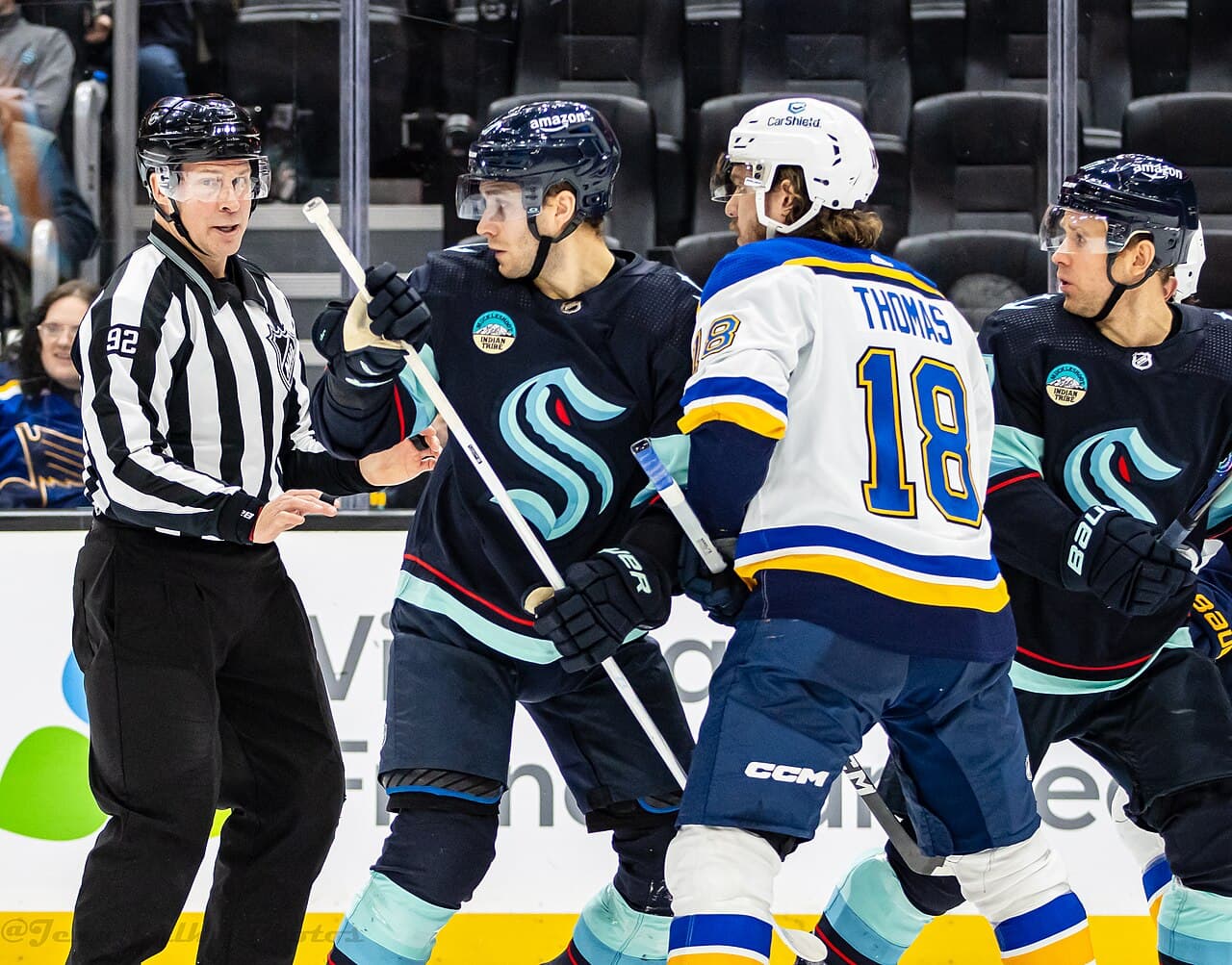
The Robert Thomas trade saga is over, and it ended the way these situations usually do when a player and a new general manager actually talk: with the player staying. St. Louis has effectively removed its top center from the market after a series of offseason conversations between Thomas and new general manager Alexander Steen, and Thomas has publicly described himself as a central part of what the organization is building, whether that arrives now or in a couple of years.
The speculation was not manufactured. Reporting through the offseason indicated Minnesota offered a package built around goaltender Jesper Wallstedt and center Danila Yurov, and that St. Louis declined. Philadelphia's interest reportedly ran into an asking price that included Porter Martone, Jack Nesbitt and a first-round pick. Montreal and Ottawa were among the other clubs connected to him at various points.
None of it produced a deal, and the reason appears to be simple: the Blues never wanted to move him, and the price they quoted reflected that.
Why the resolution matters
A star center whose name circulates in trade rumors for months carries a hidden fantasy cost. Managers discount him. Dynasty valuations soften. Redraft managers hesitate to spend an early pick on a player who might change teams, systems and linemates in October.
That discount is now gone, and the version of Thomas who returns to St. Louis is the same player who has been one of the league's more reliable point producers from the center position. He is signed long term, he is the alternate captain, and he is being positioned as the leadership core of a team in transition under a new front office.
For fantasy purposes, certainty is worth something. A center with a defined first-line role, first power play usage, and no relocation risk projects more cleanly than one with an equivalent talent level and an open situation.
What the Blues actually are
The more interesting question is what St. Louis is building. Steen is new in the chair, the roster is in a middle state between contending and retooling, and the front office has reportedly continued to explore additions on the back end while declaring Thomas untouchable.
That combination, holding the franchise center while shopping for complementary pieces, is a retool rather than a rebuild. It suggests the Blues believe the window is not closed, and it suggests Thomas's deployment stays maximal: heavy minutes, offensive zone starts, and the power play time that drives fantasy scoring.
The risk is the one attached to every middling team. If St. Louis starts poorly, the same trade conversations reopen in February with a deadline attached and a very different urgency.
The fantasy read
Thomas should be drafted as a solid second-line fantasy center in most formats, with the understanding that his production is assist-heavy. That distribution matters in category leagues. Managers who need goals should look elsewhere. Managers who need assists and points from the center position are getting a stable asset at a reasonable price.
His linemates are the secondary consideration. Wingers playing with Thomas benefit from one of the better setup men in the league, and the winger who takes the most shifts on his line is a value target relative to name recognition.
In dynasty leagues, the resolution is a modest positive. A 26-year-old center committed to an organization that has committed to him is a cleaner long-term hold than one with an unresolved situation, and managers who bought low during the rumor period made the correct call.
The Verdexed model take
Verdexed's model treats resolved trade situations as a variance reduction rather than a value increase. Thomas's projected point total does not change because he is staying. What changes is the confidence interval around it, and narrower intervals are worth more in fantasy formats where roster spots are scarce.
Where the model does move is on St. Louis's team projection. Retaining a first-line center is worth more to a fringe playoff team than the return in prospects would have been, because prospect capital does not score goals in the season being projected. The Blues' playoff probability improves relative to the scenario in which Thomas is traded, and any market that had shaded St. Louis down on trade speculation is offering a small edge.
The Minnesota side is the more interesting betting angle. The Wild reportedly offered a significant package and were turned down, which means they enter the season with the same center depth question they had in the spring. Minnesota has been aggressive under its current front office, and a team that fails to land its primary target in the summer typically returns to the market in-season.
What to do in your league
Draft Thomas at his consensus price without a rumor discount. Target the winger who ends up on his line as a late-round value. In dynasty leagues, hold, and stop fielding offers from managers who were buying the uncertainty.
What's next
The Blues still have work to do on their blue line, and reporting suggests the front office remains active in that market. Any defenseman added to St. Louis becomes relevant to fantasy managers who chase power play quarterbacks, because that role has been an open question for the Blues.
The date to circle is the trade deadline. If St. Louis is out of the race in February, every one of these conversations restarts. If the Blues are in it, Thomas's summer of rumors becomes a footnote and the retool gets another year.