 NHL2026-09-02
Quinn Hughes and the Wild Are Still Talking and Minnesota Says It Is Confident
By Verdexed NHL Desk
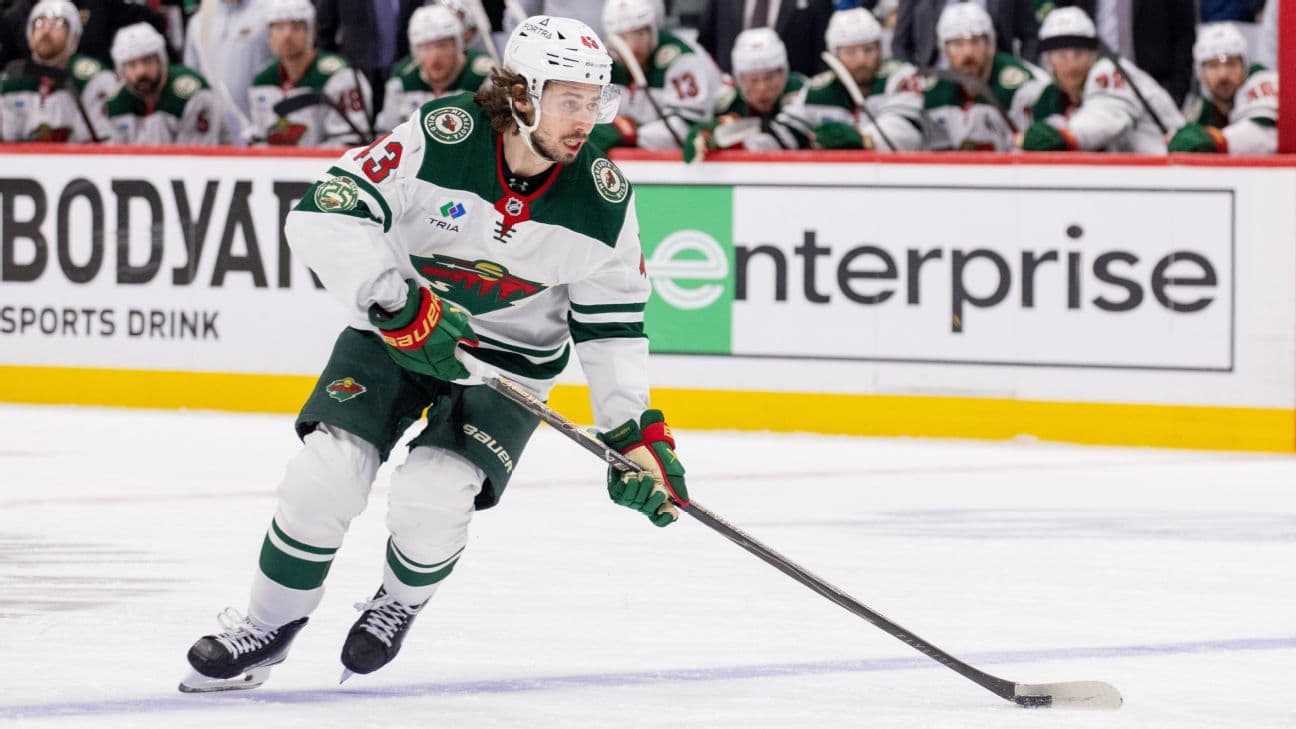
Minnesota Wild general manager Bill Guerin met with Quinn Hughes in Michigan as the two sides continue work on a contract extension, and Guerin has publicly said he is confident a deal gets done. Hughes has been eligible to sign since July 1 and is scheduled to become an unrestricted free agent on July 1, 2027.
Minnesota acquired Hughes from Vancouver in a December trade that sent forwards Marco Rossi and Liam Ohgren, defenseman Zeev Buium and a 2026 first-round pick to the Canucks. Hughes produced 53 points in 48 games after joining the Wild, production that immediately made him the most important skater on the roster and the most important contract on the books.
The price and the term
Cale Makar's extension with Colorado, at a $20.4 million average annual value, is the number every defenseman negotiation in the league now runs through. Guerin has acknowledged as much publicly, which is unusual candor from a general manager and a sign that Minnesota understands the market it is operating in rather than fighting it.
The term is where this negotiation appears to be genuinely interesting. Reporting suggests Hughes may prefer a shorter deal, potentially one that expires alongside his brother Jack's contract in New Jersey after the 2029-30 season. That would point toward a three-year extension rather than the maximum term.
For Minnesota, a short deal is a mixed proposition. It lowers the long-term risk on a defenseman who will be in his mid-thirties by the end of a maximum-length contract, and it almost certainly comes at a higher annual cap hit. It also guarantees the club revisits this exact conversation in three years with less leverage than it has now.
The trade speculation that surfaced this summer has been firmly denied. Reporting out of Minnesota indicates the Wild have not discussed Hughes with New Jersey or any other club, with one source characterizing the rumors as invented.
Fantasy fallout
Hughes is a top-three fantasy defenseman in every format and the contract situation does not change that for the coming season. He is signed, he will play, and he anchors a Wild power play that generates the assist volume his fantasy value is built on.
What the negotiation does affect is the Minnesota roster around him. A Hughes extension at or near the Makar number reshapes the Wild's cap structure for years and constrains what the club can pay its forward group. Managers in keeper and dynasty leagues holding Minnesota forwards should be paying attention to how much money is left after the top of the roster gets paid, because that is what determines whether the Wild can keep a genuine top-six intact.
For redraft managers, the practical takeaway is simpler. Draft Hughes at his talent, treat his power-play quarterback role as secure, and ignore the contract noise entirely.
The betting angle
Minnesota's win total and division futures assume Hughes plays the season, which is the right assumption. A player under contract does not become a betting variable because his extension is unresolved.
Where the situation could become tradeable is at the deadline. A club that reaches February with an unsigned franchise defenseman one year from unrestricted free agency faces a decision that every rival general manager will be circling. That is the scenario Guerin's public confidence is designed to prevent, and it is also the scenario that would move Minnesota's Cup price sharply in one direction or the other.
The Verdexed model take
Our simulations rate Hughes as one of the highest-impact skaters in the league on a per-minute basis, and Minnesota's projected point total is more sensitive to his availability than to any other single player on the roster. That sensitivity is the argument for paying whatever it takes.
The counterweight our long-range model surfaces is the same one that applies to Tampa Bay's situation with its own star: cap hits at the new market ceiling do not just cost money, they cost roster depth. Minnesota's projected competitive window is strongest in the next three seasons and narrows meaningfully in the years after a maximum-value extension would begin. A shorter deal, if that is genuinely what Hughes wants, is not obviously bad for the Wild. It aligns the contract with the window.
What's next
Wild camp opens later this month, and NHL teams generally prefer to have this kind of business settled before players report. Guerin's willingness to travel to Michigan for a face-to-face meeting is the clearest signal available that both sides are engaged rather than entrenched.
The date that actually forces a resolution is much further out. Hughes cannot reach free agency until July 2027, which means Minnesota has a full season of runway and a trade deadline in between. Guerin says he is confident. The market, for now, is treating that as credible.
Reading Guerin's public confidence
General managers say they are confident about contract negotiations all the time, and the statement carries almost no information on its own. What carries information is the specificity around it. Guerin did not say he expects something eventually. He said he is on the inside of the negotiation and he is confident, and he backed it by flying to meet the player in person.
The comparison worth making is with the negotiations around the league that have gone badly. Those tend to share a signature: public silence from the front office, an agent making comments to reporters, and a widening gap in the reported numbers. None of those markers is present here. Hughes's camp has not gone public with a demand, Minnesota has not floated a walk-away number, and the disagreement, to the extent one exists, appears to be about structure rather than about whether a deal happens.
What to do in your league
Draft Hughes as the top-tier fantasy defenseman he is and do not apply any discount for contract noise. Defensemen who quarterback a first power-play unit and log 25 minutes a night are the scarcest resource in category leagues, and there are only a handful of them.
The secondary play is on Minnesota's forward group. A team that commits an enormous cap hit to one defenseman has to find scoring cheaply everywhere else, and cheap scoring on a good team is exactly what fantasy managers should be targeting in the middle rounds. Whoever ends up on the Wild's top power-play unit alongside Hughes is going to be more valuable than their draft position suggests.