 NHL2026-09-02
Nikita Kucherov Has Until September 16 to Sign an Eight-Year Deal in Tampa
By Verdexed NHL Desk
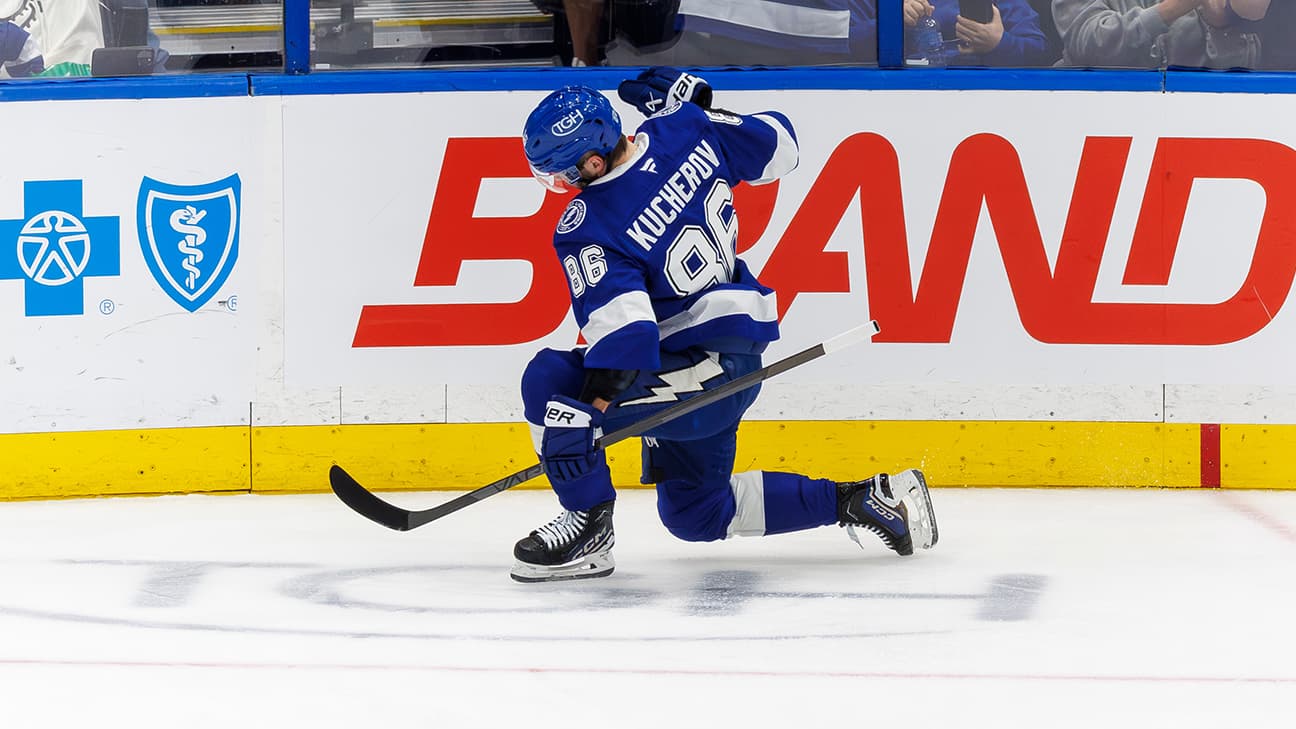
Nikita Kucherov and the Tampa Bay Lightning have a two-week window to do the biggest piece of business remaining in the NHL offseason. Kucherov can sign an eight-year extension with Tampa Bay only through September 16. After that date, the league's new collective bargaining agreement takes effect and the maximum term for a team re-signing its own player drops to seven years.
Kucherov became extension-eligible on July 1, when he entered the final season of the eight-year, $76 million contract he signed in 2018. That deal carries a $9.5 million cap hit, a number that has aged into one of the most team-friendly contracts in the sport. He is coming off a Hart Trophy season in which he produced 130 points.
Why the term matters more than it sounds
A single year of contract term is not a rounding error at this level of the market. It is a meaningful chunk of guaranteed money and, just as importantly, a lever for structuring the cap hit. Longer deals allow front-loaded salary structures that lower the annual average, which is the entire mechanism by which cap-constrained contenders keep star players.
The difference between an eight-year and a seven-year deal for a player at Kucherov's price point runs into the tens of millions of dollars in total value and a nontrivial swing in annual cap hit. Both sides have an incentive to beat the deadline, which is exactly why deadlines of this type tend to produce agreements.
The number problem
The complication is that the market Kucherov is negotiating in has changed underneath him. Cale Makar signed with Colorado at a $20.4 million average annual value, resetting the ceiling for the entire league and giving every subsequent negotiation a new anchor. Kucherov's camp can point at that contract, at his own Hart Trophy, and at a 130-point season and argue that hockey's most productive forward should be compensated accordingly.
Tampa Bay's position is complicated by age and by the roster around him. Kucherov turned 33 this year, and an eight-year deal signed now runs deep into his late thirties. Front offices have grown considerably more disciplined about long-term commitments to forwards on that side of 30, even elite ones, because the back half of those contracts has a habit of becoming immovable.
Fantasy fallout
For fantasy hockey purposes, none of this changes Kucherov's 2026-27 outlook. He is under contract for the season regardless of whether an extension gets signed, and he remains a first-round pick in every format on the strength of a scoring profile that has been the most reliable in the league for a half-decade.
What it does affect is the environment around him. A Lightning team that gets its franchise player signed enters the season with clarity. One that does not enters it with a season-long story that follows the club into every road city and into the trade deadline conversation, and that kind of ambient pressure has a documented effect on team performance in the sport.
Dynasty and keeper leagues are where the deadline genuinely matters. A Kucherov signed through his age-40 season is a different long-term asset than one who reaches unrestricted free agency next summer and could land anywhere. Managers in those formats should be watching the calendar closely.
The betting angle
Tampa Bay's Stanley Cup and division futures have been priced without any assumption of a Kucherov departure, which is correct: he is under contract for 2026-27 and a trade of a player at his level in-season is close to unprecedented for a contending team.
The more tradeable market is the one that opens if September 16 passes without a deal. An unsigned Kucherov entering the final year of his contract becomes the dominant NHL storyline of the winter and creates a deadline scenario the futures market will have to price. Bettors who want exposure to that outcome will find better numbers before the deadline than after it.
The Verdexed model take
Our projections have Kucherov as a top-five fantasy forward for the coming season and Tampa Bay as a playoff team in the substantial majority of simulations. Neither of those outputs is contract-dependent.
Where the model does register the contract is in the multi-year view. A Lightning roster that carries a Kucherov cap hit north of $14 million from 2027 forward is a materially more constrained roster than the one that has been operating on his current deal, and our long-range team simulations show Tampa Bay's competitive window narrowing under that structure regardless of how well Kucherov himself continues to play. That is the real cost of a market reset: not the player's production, but everything the team can no longer afford around him.
What's next
September 16 is the date. Tampa Bay's camp opens shortly after, and NHL teams have a strong institutional preference for entering camp without an unresolved contract hanging over the room.
If a deal gets done, expect the term to be the full eight years and the cap hit to land in the range the Makar contract established as the new market. If September 16 passes quietly, the story does not go away. It just moves to the trade deadline, where it gets considerably louder.
What to do in your league
In redraft, nothing changes. Kucherov is a first-round pick on the strength of a scoring rate that has been the league's most consistent for years, and a contract negotiation has never cost a healthy forward a single point of production.
In keeper and dynasty formats, the deadline is worth acting on. A Kucherov signed long-term in Tampa Bay is an asset with a known environment for the rest of the decade: a defined power play, a defined linemate structure, and an organization that has built a scoring system around him. An unsigned Kucherov is an asset whose 2027-28 environment is completely unknown, and unknown environments are how elite forwards end up producing 25 fewer points than their talent suggests.
If you are in a league where a manager is nervous about the deadline passing, that is a buy window. The most likely outcome by a wide margin is that this gets done, because both sides lose real money if it does not.