 NHL2026-09-07
NHL Rookie Tournaments Open This Week and Fantasy Drafters Should Watch Them
By Verdexed NHL Desk
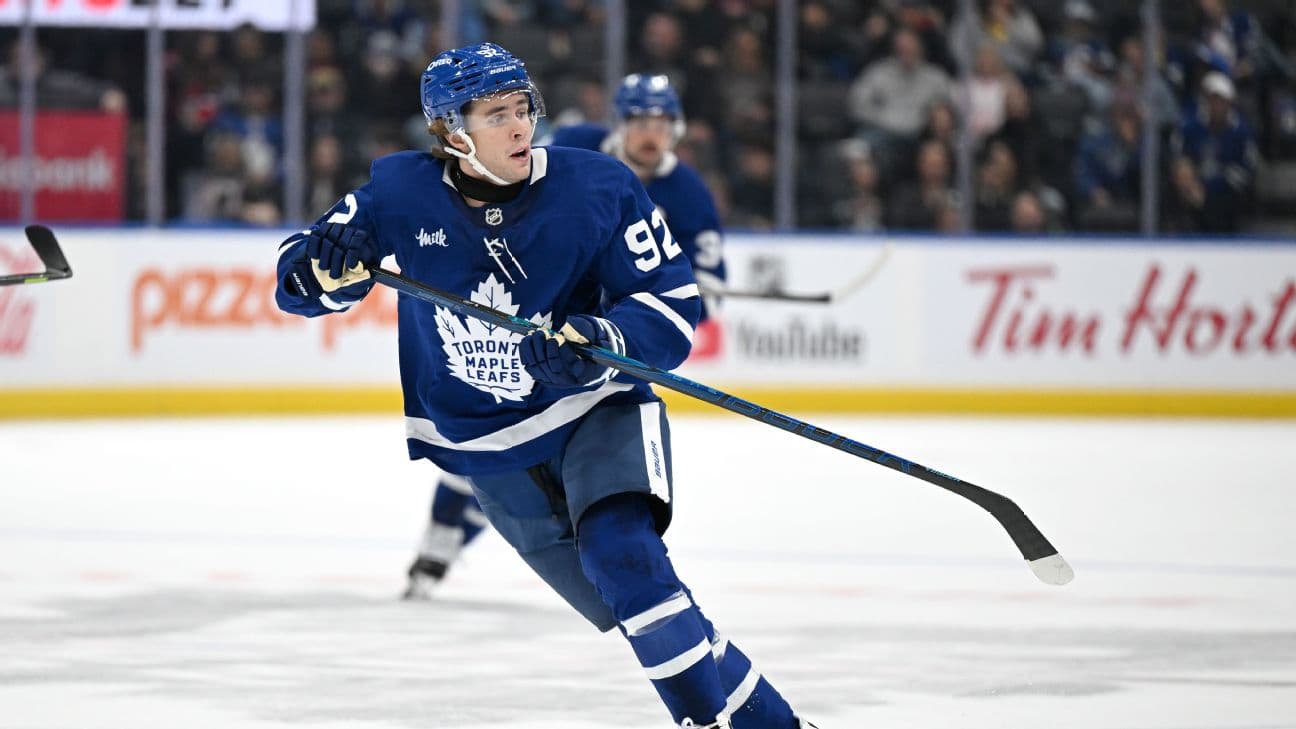
Rookie and prospect camps open across the NHL this week, feeding into the September showcase tournaments that run roughly September 11 through 15. In a normal year those events are a curiosity. This year they are the single best evaluation window fantasy drafters have, because the new collective bargaining agreement capped the preseason and stripped away the exhibition games managers have always used to confirm line combinations and rookie roles.
Four preseason games per team, played between September 19 and 26, is not enough to sort a depth chart. The rookie tournaments are what is left.
Where to look
Detroit hosts its prospect tournament September 12 through 15 at the BELFOR Training Center inside Little Caesars Arena, with prospect groups from Dallas, Pittsburgh and Columbus. San Jose hosts the Rookie Faceoff over the same dates at Tech CU Arena and Sharks Ice, with Anaheim, Colorado, Los Angeles, Utah and Vegas in the field.
Those two events cover a meaningful slice of the league's most fantasy-relevant young talent, and they arrive before most drafts.
The names that matter
Gavin McKenna is the headliner of the class. Toronto selected him first overall in the 2026 draft, and he is the rare top pick whose skill could earn an immediate role alongside established scorers rather than a sheltered bottom-six assignment. Toronto also signed Sergei Bobrovsky to a three-year contract this offseason, which tells you the organization believes its competitive window is open now rather than in three years, and teams in that posture play their best young forwards.
Ivar Stenberg went second overall to San Jose, a Swedish winger coming off his first full season with Frolunda in the SHL, where he produced 33 points on 11 goals and 22 assists in 43 games. Producing at that rate in a men's professional league as a teenager is the profile that translates. He attends the Rookie Faceoff as the Sharks' headline prospect.
Nate Danielson leads Detroit's group alongside first-round pick Carter Bear. Danielson, the ninth overall pick in 2023, already has NHL time, appearing in 28 games last season and recording two goals and three assists. That is the exact profile to watch at a prospect tournament: not the newest name, but the one who has tasted the league and is trying to hold a full-time job.
What these games can and cannot tell you
Prospect tournaments are unreliable as talent evaluations and useful as opportunity evaluations. Nobody should draft a player because he scored four points against other teams' prospects, and the competition is uneven enough that raw production means very little.
What the games do reveal is deployment intent. Which prospect gets the first power play unit. Which one plays center rather than being shifted to the wing. Which one is paired with the organization's other top prospects, signaling a plan to keep them together. Those are the signals that survive into October, and they are the ones traditionally confirmed in the preseason that will not be confirmed there this year.
The second thing to watch is who is not there. A high-end prospect held out of the rookie tournament is usually being protected for the main camp, which is a promotion rather than an injury in most cases.
Fantasy fallout
Rookie forwards are the most consistently overdrafted group on any fantasy hockey board. Draft capital creates hype, hype creates ADP, and the typical first-year forward produces at a rate that would not justify a bench spot in a 12-team league.
The exceptions share a specific set of traits: a top-six role confirmed before the season, power play time on either unit, and a team with enough offensive talent to support a young player's on-ice percentages. McKenna is the only member of this class who plausibly checks all three on day one, and even his case depends on where Toronto slots him.
Stenberg is the better value play precisely because his name will not carry the same premium. A second overall pick on a rebuilding team frequently gets more ice time than a first overall pick on a contender, and ice time is the whole game in fantasy.
The Verdexed model take
Our projections for first-year skaters lean almost entirely on projected ice time rather than on junior or European scoring rates, because the correlation between pre-NHL production and rookie fantasy value is weak once ice time is controlled for.
That produces a counterintuitive output most seasons: the model prefers the third or fourth most talented rookie on a bad team to the most talented rookie on a good one. It also applies a steep discount to any rookie without confirmed power play usage, since power play time accounts for a disproportionate share of a young forward's counting stats.
The practical instruction is to draft rookies last and to draft them off deployment news rather than draft position.
Betting angle
Calder Trophy markets open before any of this information exists, and they are priced almost entirely on draft position. That makes the period between the rookie tournaments and opening night the most inefficient stretch of the season for that market.
The pattern to exploit is well established: a prospect who wins a top-six job in camp sees his Calder price shorten dramatically the week the season begins. Buying before the deployment news becomes public, on the strength of what the September tournaments reveal about line combinations, is the entire edge.
What's next
Veteran camps open between September 10 and 13, the preseason runs September 19 through 26, and the season starts September 29. That is a very short runway.
Fantasy drafts held before the rookie tournaments are drafting blind on this entire class. Drafts held after them are not. If your league has flexibility on scheduling, that is a genuine reason to wait a week.