 NFL2026-07-11
Broncos Backfield 2026: J.K. Dobbins Leads, but RJ Harvey and Jonah Coleman Cloud the Fantasy Math
By Verdexed Fantasy Desk
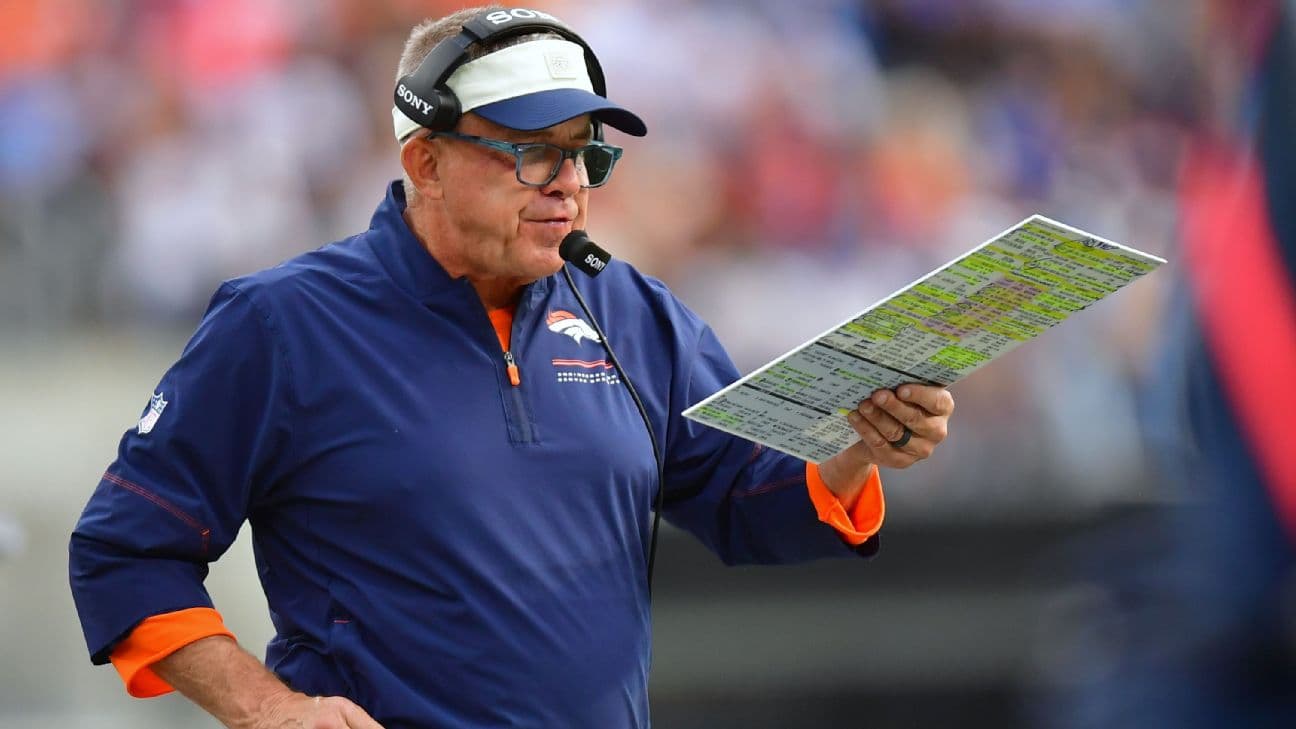
Denver's backfield has gone from a roster weakness to a genuine strength, and that is exactly the problem for fantasy managers. J.K. Dobbins enters training camp as the Broncos' starting running back, with 2025 second-round pick RJ Harvey positioned as the favorite for the RB2 role and rookie Jonah Coleman carving out third-down work, per depth-chart reporting. The talent is real. The touch distribution, under a coach known for spreading the ball, is the fantasy headache.
This is the classic Sean Payton backfield dilemma: enough good backs to win football games, and enough of them to frustrate anyone trying to project a weekly workhorse. For drafters, the challenge is figuring out which piece of this rotation returns value at his cost, and which one is a trap priced on talent the offense may not fully unleash for fantasy purposes.
Dobbins holds the job, for now
Dobbins sits atop the depth chart heading into camp, and his early-down role gives him the clearest path to volume. The knock has always been availability, and that is precisely why the pieces behind him carry fantasy weight. A healthy Dobbins operating as the lead back is a usable fantasy starter; the question is whether he holds that share across a full season and whether Payton lets him dominate touches or rotates aggressively.
The upside case for Dobbins is straightforward. If he stays healthy and Payton leans on him as the primary early-down and goal-line back, his cost could look like a bargain by midseason. The downside case is a committee that caps his ceiling even when he is producing.
Harvey's RB2 upside
RJ Harvey is the name to watch as the leverage play. As the favorite for the RB2 role in a scheme that generates efficient rushing production, Harvey is one Dobbins injury away from a featured workload, and Denver's line and play-caller make that a valuable role to inherit. Even in a fully healthy backfield, a change-of-pace back in a Payton offense can flash weekly upside through explosive runs and red-zone touches.
Harvey is the direct handcuff whose standalone value could exceed a typical backup's, which makes him a smart late-round target for anyone who drafts Dobbins and a reasonable dart throw even for those who do not.
Coleman squeezes the passing downs
The rookie is the wrinkle. Denver used a fourth-round pick on Jonah Coleman, a compact 5-foot-8, 220-pound back out of Washington who was productive as both a runner and a receiver. Reporting suggests Coleman handles RB3 duties but could be the top choice on third downs, and he profiles as an upgrade in the passing game and in pass protection over the incumbent passing-down back.
That matters for fantasy in PPR formats specifically. Third-down snaps mean targets, and targets are the most valuable currency in points-per-reception leagues. If Coleman locks down passing-down work, he becomes a quietly relevant PPR flex in an offense that will throw to its backs, even without a large early-down role.
The Verdexed model take
Verdexed's projection engine treats Payton backfields as high-variance by design, distributing touches across more players than most schemes. The model has Dobbins as the touch leader but with a wider range of outcomes than his ADP implies, reflecting both his injury history and the committee risk. Harvey scores as the highest-leverage secondary back in the room, a player whose projected value spikes dramatically in any Dobbins-absent scenario. And Coleman grades out as a sneaky PPR asset, with a projected reception share that outpaces his draft cost in points formats.
The model's overall read is that this backfield is more valuable to attack in pieces than to bet on with a single high pick. Pairing Dobbins with Harvey captures both the floor and the contingency, while Coleman is a cheap PPR upside stash.
What to do in your league
The plan depends on format. In standard leagues, Dobbins is the back to prioritize if you believe in his health, with Harvey as the essential handcuff. In PPR, bump Coleman up your board as a late-round flier whose target share could make him startable in bye weeks. Above all, resist paying a bell-cow price for any single Denver back, because Payton's history says the touches will be shared.
The Payton track record is the warning label
Any projection of this backfield has to account for the play-caller's history. Sean Payton offenses have repeatedly frustrated fantasy managers by spreading touches across multiple backs rather than anointing a single bell cow, even when one back is clearly the most talented option. That pattern is the reason to discount the ceiling of whichever Denver back you draft and to value the depth of the room over the certainty of any one piece. Betting on a Payton back to command 70 percent of touches has historically been a losing proposition.
The flip side is that Denver's offense generates efficient production, so the touches that do get distributed carry real value. A back who earns just the goal-line and passing-down work in a good offense can post usable fantasy weeks without ever being the volume leader. That is the lens to apply here: rather than asking which Broncos back is best, ask which one owns the highest-value snaps, the carries inside the ten and the targets out of the backfield, because in a Payton committee those specialized roles often out-earn a larger share of low-leverage early-down work. Camp will show how those roles get assigned, and that assignment matters more than the raw touch count.
What's next
Camp will reveal how Payton intends to divide this room, and the preseason snap counts will be more instructive than any offseason projection. Watch specifically for who handles third downs and two-minute work, because that role, more than early-down carries, will determine which of these three backs delivers the most fantasy value. Denver's backfield is deep and talented, which is great for the Broncos and a puzzle for everyone drafting it.