 NFL2026-07-11
2026 Fantasy RB Camp Battles: Bhayshul Tuten, Jaylen Warren, and the Backfields That Decide Drafts
By Verdexed Fantasy Desk
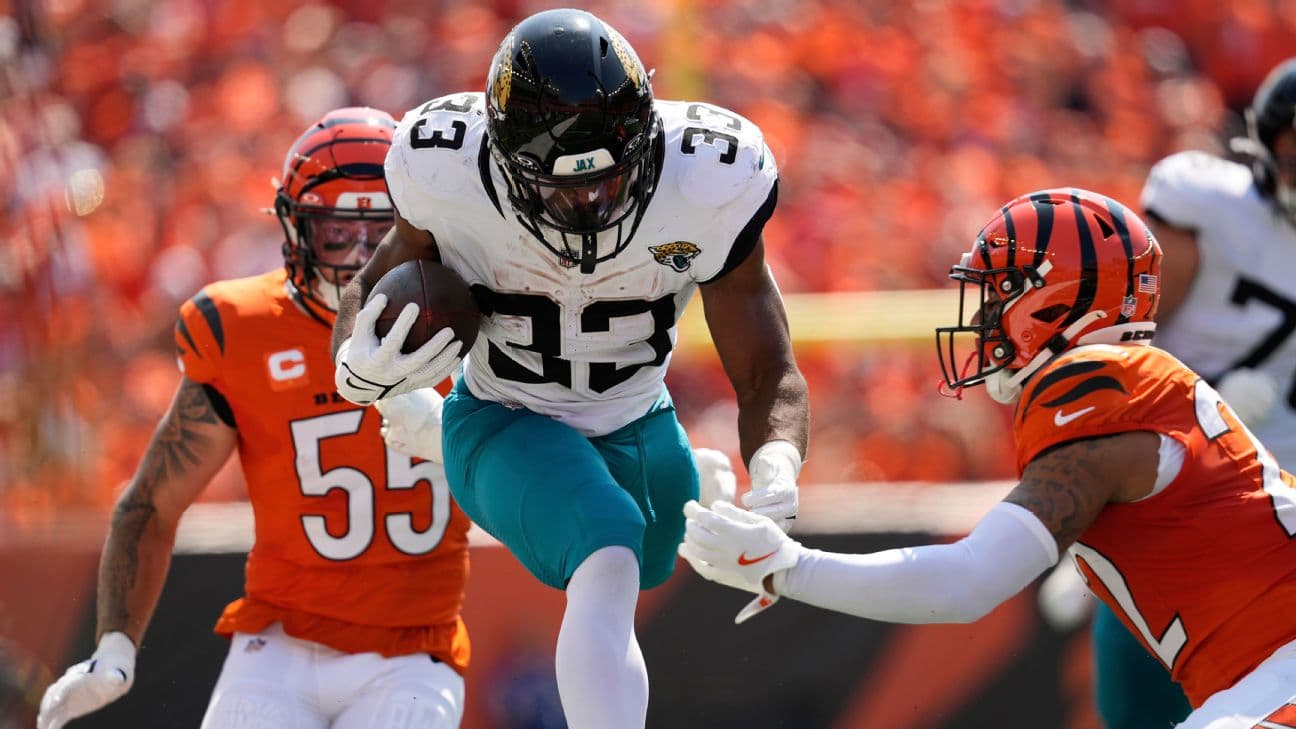
NFL training camps open across the league over the next two weeks, and nowhere is the fantasy stakes higher than in the backfields that still have not sorted their pecking order. Running back remains the position where opportunity is destiny, and a handful of unsettled rooms in Jacksonville, Pittsburgh, and Carolina will swing draft boards more than almost any other camp story. Getting these calls right is the difference between a league-winning value and a wasted mid-round pick.
The common thread is uncertainty that the market has only partly priced in. In each of these backfields, the projected starter carries real questions, and the handcuff or committee-mate sits at an ADP low enough to return a profit if the split breaks his way. That is exactly the kind of inefficiency fantasy drafters should be hunting in July.
Jacksonville: Bhayshul Tuten's door swings open
The most intriguing situation belongs to the Jaguars, where Travis Etienne Jr. departed in free agency and left the lead role wide open. Second-year back Bhayshul Tuten, a 2025 fourth-round pick out of Virginia Tech, has drawn the early edge on the depth chart, in part because he shined in offseason work while Chris Rodriguez Jr. was sidelined by an injury, per beat reporting. The competition is far from settled for September, but Tuten has the inside track and a scheme fit that matters.
Tuten is learning Liam Coen's run scheme, a system with a track record of maximizing compact, explosive slashers. That fit is the fantasy angle: an ascending back who profiles perfectly for his offense, on a team without an established alternative, is the kind of ADP riser who can outperform his cost. Rodriguez is the name to monitor as a cheap contingency, but Tuten is the one drafters should be targeting as a potential value at his current price.
Pittsburgh: Warren versus Dowdle
The Steelers present a different flavor of committee. Jaylen Warren has a proven pass-catching profile, while Rico Dowdle arrives with a connection to the coaching staff, having worked with Mike McCarthy in Dallas. The likely outcome is a genuine split, which sounds like a fantasy killer but may not be at their respective draft costs.
This is a case where the timeshare itself is the opportunity. If both backs go later than a clear feature back would, a manager can draft the room rather than the player, capturing whichever back emerges as the passing-down or goal-line specialist. Warren's receiving usage gives him the higher PPR floor, while Dowdle's coaching tie is the wild card that could tilt early-down work his way. Neither is a set-and-forget RB1, but both are usable at a discount.
Carolina: Hubbard's health and Brooks behind him
Carolina's backfield hinges on health. Chuba Hubbard is projected as the starter but is coming off a season interrupted by injury, and Jonathon Brooks lurks behind him as the higher-upside talent whose own recovery timeline is the variable. The fantasy read is a bet on which back is both healthy and trusted when the season opens.
Hubbard offers the safer bet on volume if he holds the job, while Brooks represents the upside swing if he is back to form and earns a role. Managers who value ceiling should keep tabs on Brooks's camp reports, because a healthy version changes the entire complexion of this backfield.
The Verdexed model take
Verdexed's backfield projections are built on projected snap share, route participation, and goal-line usage rather than name recognition, which is why the model consistently flags ambiguous rooms as market inefficiencies. In Jacksonville, the model likes Tuten's combination of an open depth chart and a favorable scheme, projecting a workload that outpaces his current ADP. In Pittsburgh, the model splits the room closely enough that both backs clear replacement value, making the pair a better bet than either alone. In Carolina, the model's projection is health-contingent and therefore wide, which argues for drafting the discount rather than paying up for certainty that does not yet exist.
What to do in your league
The draft-day plan writes itself. Target Tuten as an ADP riser with real feature-back upside and a scheme built for his skill set. In Pittsburgh, be willing to draft either Warren or Dowdle at their discounted cost, treating the committee as a value rather than a trap. In Carolina, monitor Brooks's health closely and prioritize whichever back looks locked into the majority role by the end of camp.
Why committees are the market's blind spot
The reason these backfields are worth targeting is that fantasy drafters systematically undervalue ambiguous rooms. The market loves certainty, so it pushes clear feature backs up the board and pushes committee pieces down, often past the point where their expected touches justify the discount. That inefficiency is the edge. A back projected for 55 percent of a backfield's work at a committee-level ADP is a better value than a nominal starter priced as a workhorse but likely to cede goal-line or passing-down snaps.
The key is to draft the role, not the reputation. In a true timeshare, the back who owns the passing downs is often more valuable in PPR than the one who leads in early-down carries, because targets are worth more than low-leverage rushes between the twenties. Identifying which piece of each committee controls the high-value snaps, receptions and red-zone touches, is how a manager turns an ambiguous room into a profit. That is why camp reporting on snap distribution matters so much: it reveals the role allocation the ADP has not yet caught up to, and it is where the disciplined drafter finds the value the field is leaving on the table.
What's next
Pads come on within days, and the first two weeks of camp will clarify these rooms faster than any offseason chatter. Snap-count reports from joint practices and the preseason will confirm or upend the current depth charts. Fantasy managers who track these three backfields through camp, rather than locking their rankings now, will be the ones holding the right side of each split when the value is still on the board.