Malik Nabers Takes His First Full Practice Since the ACL Tear
By Verdexed Fantasy Desk
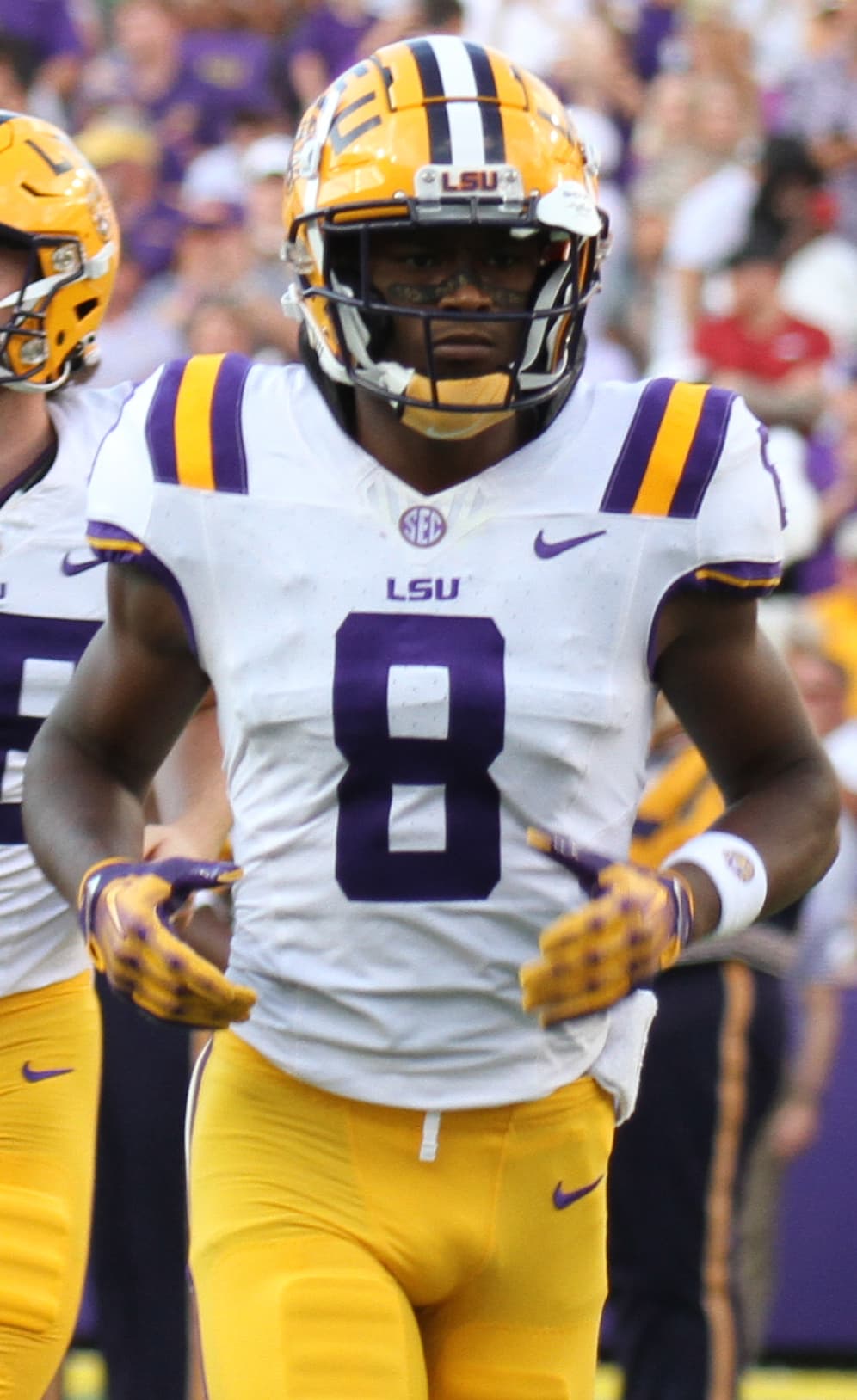
Malik Nabers went through a full practice at Giants training camp this week, roughly 10 months after tearing the ACL in his right knee in Week 4 of last season, and his head coach described him afterward as looking good. It is the single most encouraging data point of Nabers' recovery and the most important piece of fantasy news to come out of a Giants camp that had been managing expectations carefully all summer.
What the team did not do is commit him to Week 1. Both the head coach and general manager Joe Schoen declined to say Nabers is on schedule for the opener against Dallas, framing the plan as day-to-day through camp and dependent on how the knee responds to consecutive practices. That distinction matters enormously for anyone about to spend a second-round pick on him.
The recovery has not been linear
Nabers' rehab was more complicated than a standard ACL timeline. The initial injury required waiting for swelling to subside before surgery could happen, pushing back the start of the clock. Then in the spring he underwent a second procedure to remove scar tissue and address stiffness in the same knee, which cost him time at minicamp and created most of the uncertainty that has followed him into camp.
Two knee procedures inside 12 months is a different profile than one clean ACL reconstruction. The scar tissue cleanup is generally considered a minor intervention, and players routinely return from it without long-term consequence, but it consumed weeks of conditioning work that a receiver in Nabers' situation could not afford to lose. That is the practical reason the Giants will not put a date on anything.
The encouraging counterweight is that he ran routes at full speed in individual work before this week and has now completed a full team session. Explosive movement without hesitation is the checkpoint that matters in ACL recovery. Players who are still protecting the knee do not look right in change-of-direction drills, and by the accounts coming out of camp, Nabers did.
What it does to his fantasy price
Nabers has been one of the most volatile ADP cases of the summer, drifting up and down through June and July on each new report. He has generally been going in the second round, which prices him as a high-end WR2 with an assumed short absence.
That price is roughly correct, but the shape of the risk is worth understanding. This is not a player whose weekly ceiling is in doubt. When healthy, Nabers commands a target share that puts him in the conversation with the best receivers in the league regardless of how the Giants offense performs around him. The risk is entirely in games played and in the possibility of a slow first month while he works back to full conditioning.
That is a materially different bet than drafting a receiver with a low ceiling. Managers who take Nabers in the second round are buying roughly 12 to 14 games of WR1 production with a chance of getting 17. Managers who pass are avoiding a scenario where they get eight games and a wasted pick.
The Verdexed model take
Verdexed's model projects Nabers as a per-game top-eight receiver when active and applies a games-played haircut that pulls his full-season projection into the WR14 to WR18 range. The gap between those two numbers is the entire investment case.
Our model treats the full practice as a meaningful update, not a cosmetic one. The probability weighting on a Week 1 return moved up on the news, and the probability of a multi-week early-season absence moved down. It did not move to a clean bill of health, because the team's own language does not support that yet.
The takeaway the model produces is a specific one: Nabers is a better value in formats that reward per-game production and a worse value in formats that punish empty roster spots. In a shallow league with a deep waiver wire, the missed games are cheap. In a 14-team league with tight benches, they are expensive.
What to do in your league
Draft him, but draft him with a plan. If Nabers is on your roster, your WR3 and WR4 need to be players who can start in September rather than upside stashes who need six weeks to develop. The most common mistake with a returning-from-injury star is pairing him with other unstable pieces and building a lineup that cannot survive the first month.
Handcuffing him within the Giants offense is not realistic, because there is no single beneficiary who inherits his target share. If Nabers misses time, the volume distributes across the rest of the receiver room and the tight ends, which makes any individual replacement a low-confidence flex play rather than a startable option.
For managers already holding a second-round pick and deciding between Nabers and a healthy receiver with a lower ceiling, the tiebreaker is roster construction. If your first-round pick is a running back who plays every week, take the swing. If you are already carrying injury risk, take the boring option.
What to watch next
Three things over the next two weeks. First, whether Nabers practices on back-to-back days, which is the real test of how the knee responds to volume rather than to a single session. Second, whether he takes any snaps in preseason work, which the Giants have every reason to avoid but which would be the clearest possible signal. Third, whether the team's language shifts from day-to-day to something more definitive.
If all three break positively, his ADP will climb into the back of the first round in the last week of August and the value will be gone. Managers who believe the knee is fine should be drafting him now, before the market catches up to the practice reports.