Justin Jefferson Hurt His Ankle on Minnesota's First Drive and Never Came Back
By Verdexed NFL Desk
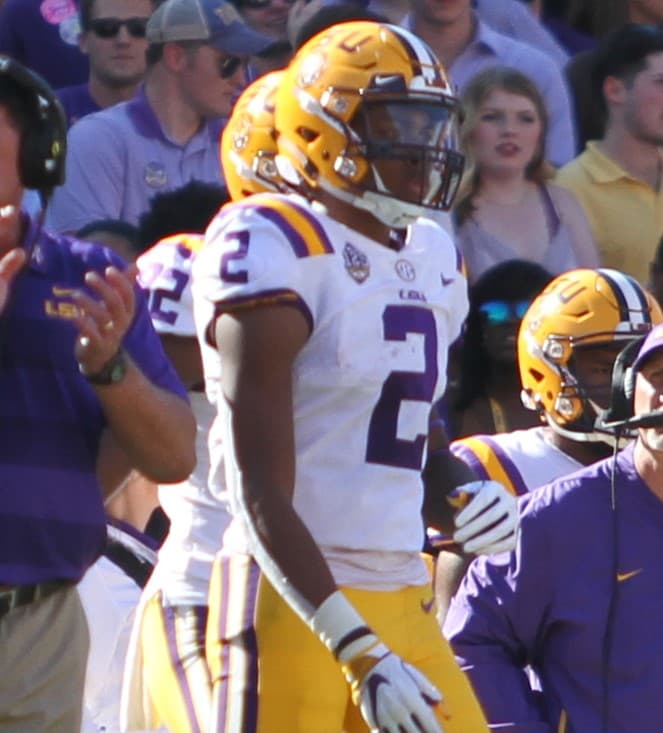
Justin Jefferson injured his left ankle on a 10-yard reception at the end of Minnesota's opening possession against Tampa Bay and finished the game with two catches for 32 yards. He walked off under his own power, spent part of the second quarter on the sideline with his helmet on, went to the locker room, and was downgraded from questionable to out partway through the third quarter of what became a 23-16 Vikings win.
Vikings head coach Kevin O'Connell told reporters afterward that Jefferson tried to work through it and got close to returning a couple of times before the team ruled him out. That is a meaningfully better postgame message than the one coming out of Miami about De'Von Achane, and it is the single most useful detail available right now. Players who nearly return in the third quarter are usually dealing with something short of structural damage.
The severity has not been announced, and no imaging results have been made public.
Reading the tea leaves on the status
The sequence matters. Jefferson was initially questionable, not out, which means the medical staff believed a return was live. He was on the sideline in his helmet rather than in street clothes, which is the posture of a player expecting to play. The downgrade came late, in a game Minnesota was winning, against an opponent the Vikings could beat without him.
None of that guarantees Jefferson plays in Week 4, and ankle injuries have a habit of looking better on Sunday night than on Wednesday morning. But the base case is a player who is questionable through the week rather than one who lands on injured reserve.
Fantasy fallout
Jefferson managers should do nothing dramatic. He is not droppable under any circumstance, he is not trade bait at a discount, and panic-selling a top-three receiver on an unspecified ankle injury is how seasons get lost. The correct action is to secure a contingency plan at receiver this week and hold.
The direct beneficiary in Minnesota is Jordan Addison, who becomes the primary target if Jefferson sits and who already operates as the clear second option when Jefferson plays. Addison's floor is unattractive in games where Jefferson dominates the target share. His ceiling in a Jefferson-free week is WR2 territory, and he is worth a flex start in that scenario.
T.J. Hockenson is the quieter beneficiary. Tight ends who play alongside a target monopolist tend to see their route-level target rate spike the moment that receiver sits, because defensive attention redistributes rather than disappears. Hockenson is already a startable tight end. Without Jefferson he moves into the top tier for the week.
Betting angle
The Vikings' team total is the market to watch, and it should move less than casual bettors expect. Minnesota scored 23 against Tampa Bay with Jefferson contributing 32 yards, which is the cleanest possible demonstration that this offense is not a one-man operation. O'Connell's system generates structural separation, and the passing volume does not disappear with the WR1.
The more exploitable angle is in the props market. If Jefferson is ruled out, Addison's receiving yards line and Hockenson's reception line both tend to get set from a small sample of Jefferson-free games, and that sample is usually too small for books to price confidently. Historically, the receptions market underreacts to the absence of a team's primary target.
If Jefferson plays but is limited, the opposite is true. A questionable tag on a star receiver typically suppresses his own prop lines more than his actual usage warrants, because the market prices in a snap count that coaching staffs frequently ignore once the game starts.
The Verdexed model take
The model treats Jefferson as the largest single-player swing factor in Minnesota's weekly projection, and it is not close. His presence raises the Vikings' expected points per drive by more than any non-quarterback on the roster, primarily through the deep passing game and through the coverage attention that opens the intermediate middle for everyone else.
Removing him drops Minnesota's projected point total by a couple of points in a typical matchup and widens the distribution of outcomes, because an offense without a reliable separator becomes more dependent on scheme and on short-field opportunities. That is the case for an under on the Vikings' team total in a Jefferson-free week, but only if the number moves less than a point and a half.
For Jefferson himself, the model's projection assumes full health when he is active. The history of ankle injuries to high-volume receivers suggests a modest efficiency hit in the first game back rather than a usage reduction, because target share is a function of the play-caller rather than the ankle.
What to do in your league
Hold Jefferson and stream around him if he is out. Add Addison if he is somehow available, which he should not be in a competitive league. Start Hockenson with confidence either way. Do not trade for Jefferson at a discount unless the discount is severe, because the injury information available today does not support a meaningful price cut, and any manager selling cheap knows something you do not or is panicking.
If you are the Jefferson manager and you are 1-2 or worse, the temptation to sell is real. Resist it. The postgame description is not the description of a season-altering injury.
What's next
Minnesota's Wednesday practice report is the checkpoint. A limited participation on Wednesday points toward a game-time decision. A did-not-participate through Thursday points toward a week off. The Vikings have not announced a timeline, and until they do, everything past the ankle designation is inference rather than fact.