 NFL2026-06-28
Jonathon Brooks Is Back and Fast: The Panthers RB Sleeper Worth a Late-Round Dart
By Verdexed Fantasy Desk
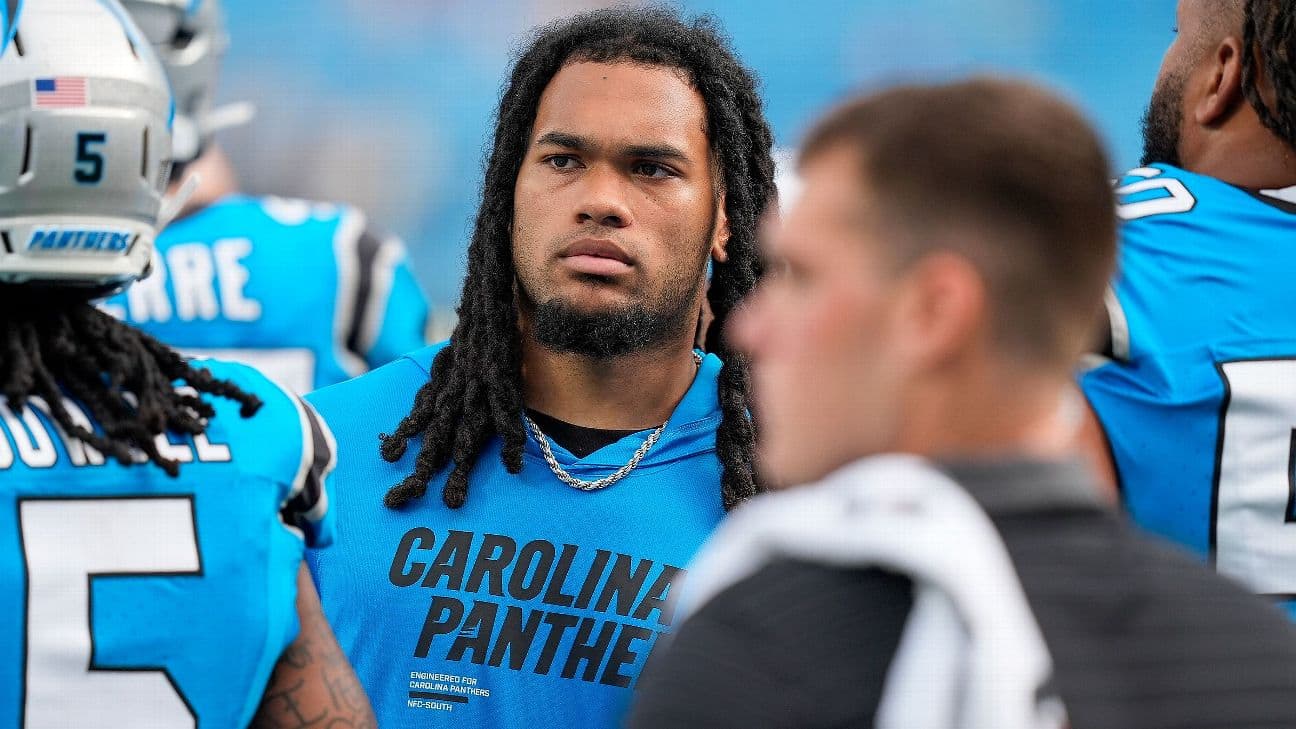
Jonathon Brooks is moving again, and that alone makes him one of the more intriguing late-round running backs on the 2026 board. The Panthers back was a full participant in Carolina's spring practices, drawing praise from coaches and teammates for the burst and cutting ability that made him a coveted prospect in the first place. After a second ACL recovery, simply being on the field as a full go is a meaningful step, and the depth chart around him has opened up in a way that gives his comeback real fantasy stakes.
The headline for drafters: with Rico Dowdle having departed for Pittsburgh, the change-of-pace and complementary touches behind lead back Chuba Hubbard are there to be won, and Brooks has the talent to claim them if his knee holds up.
The recovery is the question, the talent is not
Brooks is working back from his second ACL tear, and that history is the single most important variable in his outlook. The encouraging news is that he participated fully in OTAs and minicamp rather than being limited or held out, which is a stronger signal than vague optimism. Reports out of Carolina described his speed and change of direction as looking sharp, the traits that matter most for a back whose game is built on explosiveness.
It is worth being precise here. Full practice participation in the spring is a positive indicator, but it is not the same as a clean bill of health through a full season of contact. Two ACL surgeries on a young running back is a genuine durability concern, and that risk is exactly why Brooks is available late rather than as a mid-round pick.
Fantasy fallout
The depth chart math is favorable. Hubbard is the established lead back and the player who will get the early-down and goal-line work, but Dowdle's exit cleared out a chunk of complementary touches, and a healthy Brooks is the most talented option to absorb them. That gives him two paths to fantasy relevance: standalone flex value if he carves out a passing-down and change-of-pace role, and league-winning upside as the handcuff if anything happens to Hubbard.
That dual path is what makes him a smart late-round dart. You are not drafting Brooks to start in Week 1. You are drafting the combination of contingent value and standalone upside at a price where the downside is just a roster spot.
The Verdexed model take
Verdexed's model likes contingent backs whose floor is propped up by an aging or injury-prone player ahead of them and whose ceiling is unlocked by talent. Brooks checks the talent box, and the model treats his full-participation spring as a real positive while still applying a durability discount for the injury history. The net result is a back the model values as a high-upside flier rather than a reliable weekly starter, which lines up neatly with where his average draft position has settled after climbing from its early-offseason lows.
The model's swing factor is camp usage. If the Panthers start lining Brooks up on passing downs and giving him meaningful first-team reps in August, his projection rises toward standalone flex territory. If he is buried behind a crowded committee, he stays a stash. The early signals are encouraging, but August reps are what confirm it.
The dynasty and best-ball angle
Brooks is even more interesting in formats that reward upside over certainty. In dynasty leagues, his age and draft pedigree mean his long-term value barely moved despite the injuries, and a healthy spring is the kind of signal that lets contending rosters buy a former coveted prospect at a depressed price. The two-ACL history scares off risk-averse managers, which is precisely the inefficiency a sharp dynasty player can exploit.
Best-ball is the other ideal home for his profile. In a format where you are not forced to start him every week, Brooks's boom weeks count and his quiet ones simply get left out of your optimal lineup. That structure neutralizes the biggest downside of a volatile contingent back and lets you bank the spike games without paying the price for the duds. At his cost, he is a strong best-ball dart.
The redraft case is the most cautious of the three, because you need the role to materialize on a predictable schedule to get weekly value. Even there, the math favors taking the swing late: the downside is a wasted final-round pick, and the upside is a back who could be in a starting fantasy lineup by midseason if Chuba Hubbard misses time. That asymmetry, small cost against real ceiling, is the whole reason to draft him.
What to do in your league
Brooks is a target in the final rounds of redraft and a clear buy in dynasty, where his age and pedigree carry extra weight. Pair him with a stable starter earlier so you are not depending on a two-time ACL recovery to anchor your backfield, then let his upside be a bonus rather than a need.
Watch the camp reports for two things: whether he is taking passing-down work and whether he holds up through padded practices without setbacks. If both check out, you will have drafted one of the better value backs on the board. If the knee barks, you spent a late pick on the lottery ticket, which is exactly what a late pick is for.