Jayden Higgins Tore His ACL and the Texans Lost Their No. 2 Receiver for the Season
By Verdexed NFL Desk
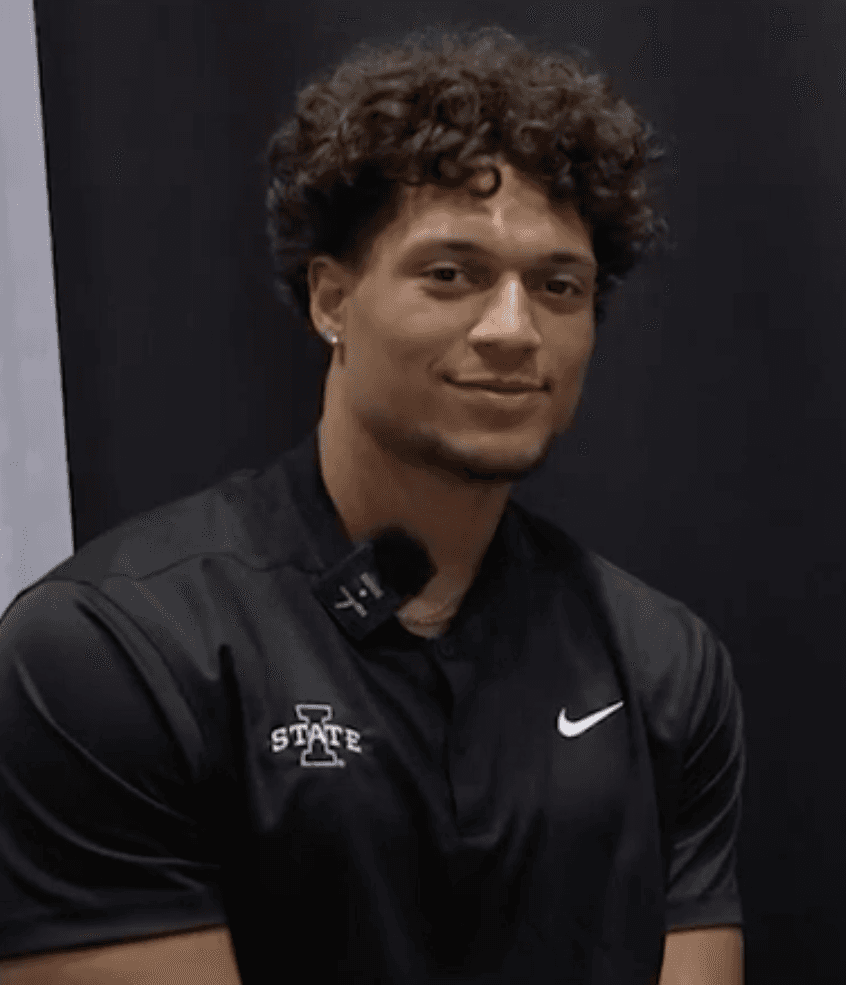
Houston Texans wide receiver Jayden Higgins tore his ACL during Tuesday's joint practice with the Las Vegas Raiders and will miss the entire 2026 season, according to multiple reports Wednesday. It is the single most consequential fantasy injury of the week, and it lands on an offense that had already spent the summer trying to build a reliable second option behind Nico Collins.
Higgins was a second-round pick in the 2025 draft and produced immediately, catching 41 passes for 525 yards and six touchdowns as a rookie. That production came in a crowded, injury-thinned receiver room, and it was enough to make him the consensus favorite to open 2026 as C.J. Stroud's clear No. 2 target. That job is now vacant, and Houston has ten days until the August 30 cutdown deadline to decide whether to fill it internally or shop the veteran market.
What the Texans just lost
The value of Higgins to this offense was never about volume alone. He is a big-bodied outside receiver who gave Stroud a contested-catch answer on the boundary when Collins drew the opponent's best cornerback and safety help. Take that away and Houston's passing game becomes far more predictable: Collins on one side, tight end Dalton Schultz working the middle, and a rotation of unproven bodies filling the rest of the route tree.
The timing compounds the damage. This is not a Week 6 injury where a team can reshuffle after seeing a month of real football. It is an August injury on a roster that has no cap flexibility to sign a top-tier free agent receiver and no obvious in-house heir with an established NFL role.
Who moves up in Houston
Two names carry most of the opportunity. Jaylin Noel, a third-round pick out of Iowa State in 2025, is the more explosive of the two and profiles as the natural slot successor, but he has been dealing with a hamstring issue during camp, which is exactly the wrong problem to have in the week your role expands. Xavier Hutchinson is the closer stylistic match to Higgins in terms of size and boundary usage, and he is the likelier beneficiary if the Texans simply want to plug the same body type into the same alignments.
Tank Dell remains the wild card. He missed all of 2025 after significant knee injuries, and any projection that treats him as a full-season contributor is projecting on faith rather than evidence. If he is genuinely healthy, he is the most talented option Houston has behind Collins. If he is not, the Texans are one more injury away from a receiver room that cannot function.
Dalton Schultz is the quietest winner here. Target share does not vanish; it redistributes. Tight ends who play close to 90 percent of snaps on offenses that lose a starting receiver almost always see their route volume and red zone looks tick up, and Schultz fits that profile.
Fantasy fallout
Nico Collins was already being drafted as a high-end WR1, and this pushes his floor up rather than his ceiling. He is coming off his third consecutive 1,000-yard season, and the target concentration in this offense just tightened considerably. The risk is the mirror image: defenses can now dedicate coverage resources to him without fear, which historically compresses efficiency even as raw volume climbs. Collins managers should expect more targets at a lower yards-per-target rate, which is still a very good outcome in PPR formats.
Noel and Hutchinson both belong on the late-round radar in redraft leagues, but they are not the same bet. Noel is the upside dart throw, the player who could carry standalone value if the hamstring clears and he wins the slot. Hutchinson is the volume bet, the player most likely to run the routes Higgins was going to run. In a 12-team league, Noel is the one worth a final-round pick. In deeper formats, take both and let camp sort it out.
The name nobody is discussing enough is Stroud himself. His fantasy price this summer was built on an improving supporting cast. That premise took a real hit on Tuesday, and the case for drafting him as anything better than a back-end starting quarterback is now much harder to make.
The Verdexed model take
Our projections treat receiver injuries as a redistribution problem rather than a subtraction problem, and the redistribution here is unusually concentrated. When an offense loses its No. 2 receiver and has no proven replacement, the model reallocates roughly two-thirds of the vacated targets to the remaining established pass catchers and only about one-third to the replacement, because coordinators lean on players they trust rather than the depth chart order. Applied to Houston, that means Collins and Schultz absorb the majority of the change and the WR2 replacement inherits a smaller share of Higgins's projected work than a naive depth-chart read would suggest.
That is the core actionable point: do not draft Noel or Hutchinson as though they simply inherit 41 catches and 525 yards. They inherit a piece of it, spread across two or three players, on an offense that just got easier to defend.
On the market side, this is a modest negative for Houston's team total and a modest positive for opposing defenses in the early weeks. The number to watch is not the season win total, which rarely moves much on a No. 2 receiver, but the Week 1 total and Stroud's passing yardage prop once those markets open. Both should drift down, and both have historically been slow to fully price August receiver losses.
What's next
Houston hosts Las Vegas on Thursday night in preseason action, and the snap distribution behind Collins is the only thing worth watching. Whoever takes the first-team reps opposite Collins with Stroud on the field is the player to prioritize, and that read will be more useful than anything reported this week.
The other thing to watch is the waiver wire and the veteran market. Cutdown day is August 30, and every year a handful of experienced receivers hit free agency when contending teams trim to 53. Houston has both the need and the motive to be aggressive, and a veteran signing in the first week of September would immediately reset every projection above. Do not spend a meaningful pick on the Texans' WR2 job until the roster is final.
What it means for your league
Move Collins up a spot if you had him on the WR1 bubble. Move Stroud down. Add Noel to your late-round queue and Hutchinson to your deep-league queue, and be ready to abandon both if Houston signs a veteran. And if you are drafting this weekend, remember that this is the fourth significant August receiver loss across the league. The middle of the wide receiver board has been thinned out badly, and the managers who adjust their tiers before the draft rather than during it are the ones who will get the value.