 NFL2026-08-30
J.K. Dobbins Opens as Denver's RB1 and RJ Harvey's Fantasy Price Assumes Otherwise
By Verdexed Fantasy Desk
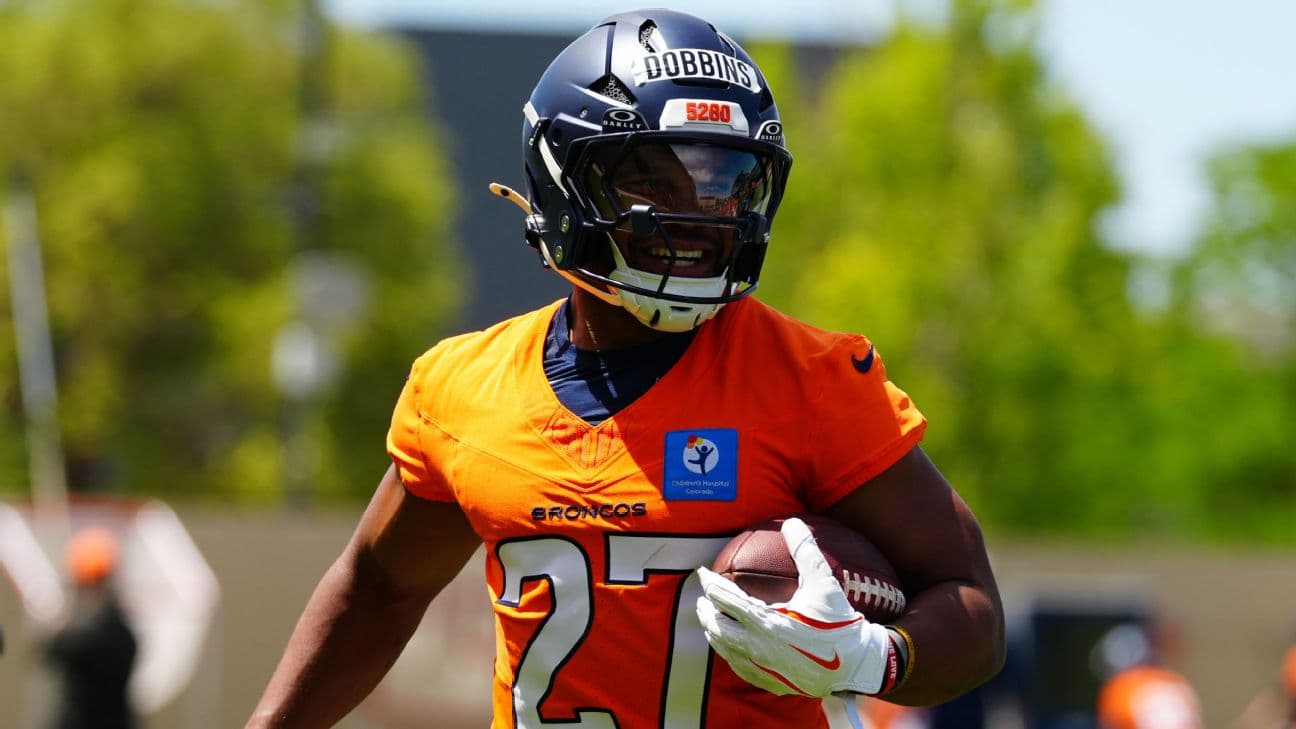
Denver's updated depth chart ahead of the roster deadline lists J.K. Dobbins as the starting running back and RJ Harvey second, with Tyler Badie, Jaleel McLaughlin, Cody Schrader and Jonah Coleman filling out the room behind them. For a backfield that fantasy drafters have spent the summer treating as a Harvey ascension story, that ordering is the most concrete information available, and it points the other direction.
Depth charts in late August are unofficial and frequently misleading. This one is worth more than most, because it is consistent with how the Broncos have described the backfield all offseason: a two-man rotation with Dobbins in the lead role and Harvey working behind him.
The history the depth chart is built on
Dobbins and Harvey shared the backfield through the first stretch of the 2025 season before a foot injury ended Dobbins' year roughly ten games in. That partnership was productive, and Denver's response in the offseason was continuity rather than change. The team re-signed Dobbins, McLaughlin and Badie, then added Coleman through the draft, which is a set of moves that reads as depth accumulation rather than a search for a replacement.
Coleman being listed sixth is the detail most likely to be misread. Denver's head coach has a well-documented habit of listing rookies low on early depth charts regardless of their expected role, and the same thing happened to Harvey a year ago, when he opened at the bottom of the chart and finished the summer as the clear No. 2. The listing is a coaching convention, not a verdict.
What this does to fantasy value
The market has generally priced Harvey ahead of Dobbins, on the theory that the younger back with draft capital eventually takes the job. That is a reasonable long-term thesis and a poor Week 1 thesis.
The immediate reality is a committee with a defined leader. Dobbins is the back most likely to handle early downs and goal-line work in September, which is the usage that produces reliable fantasy points. Harvey is the back most likely to be the change of pace and the passing-down option, which is the usage that produces spike weeks and inconsistent floors.
That makes Dobbins the better redraft asset right now and Harvey the better one to own if the season runs long and roles shift. Fantasy managers who drafted Harvey as an RB2 are holding a player whose value depends on a change that has not happened yet.
The injury history cuts both ways and cannot be ignored. Dobbins has not completed a full NFL season, and the lead role in this backfield has changed hands because of injury before. That is precisely why Harvey retains real value: he is one of the few backups in the league with a genuine claim to a full workload the moment the starter is unavailable.
Fantasy fallout
The clean read on Denver's backfield is that it produces one usable fantasy starter at a time, not two. Committees with a clear lead back rarely support two weekly starters unless the offense is elite, and Denver's offensive projection does not support that.
Dobbins profiles as a low-end RB2 with RB1 weeks when the Broncos control games, which is the outcome the schedule and the defense both point toward. Harvey profiles as a flex with standalone value in PPR formats and league-winning upside if the depth chart flips.
Badie, McLaughlin, Schrader and Coleman are handcuff-of-the-handcuff territory. In a room this deep, the third back has almost no path to fantasy relevance unless two players go down.
The Verdexed model take
Verdexed's projection system splits Denver's backfield closer to sixty-forty in favor of Dobbins on early-down carries and closer to even on passing-down snaps, which produces a modest but real projection gap in standard scoring and a much narrower one in full PPR.
The model's more interesting output is on goal-line share, where the gap is widest. Denver's short-yardage work has been Dobbins' when he has been healthy, and short-yardage touchdowns are the least replaceable source of running back fantasy points. That single input is most of the reason the model has Dobbins ahead.
The model also flags the volatility explicitly: this is a backfield where the projection distribution for both backs is unusually wide, because the lead role has a demonstrated history of changing hands mid-season. That argues for owning both if the cost allows, and for not paying an RB2 price for either in isolation.
What to do in your league
If you are drafting this weekend, take Dobbins at his current price and treat Harvey as a target two or three rounds later. Owning both is the cleanest way to capture this backfield, and the combined cost is reasonable relative to the total production the room will generate.
If you already have Harvey and no Dobbins, do not panic-drop him. He is one injury from an every-down role on a team that runs the ball, which is a better bench asset than most of what is available in the last rounds.
Do not read Coleman's position on the depth chart as an indication he will not play. Watch his usage in the first two weeks rather than his listing in August.
What's next
The Broncos finalize their 53 by Sunday evening, and the first regular-season practice reports will tell more about the split than any depth chart has. The specific thing to watch is which back takes first-team reps in short-yardage packages, because that is where the fantasy separation in this room actually happens.