 NFL2026-08-29
Isaiah Likely Is Jaxson Dart's Favorite Target and the Fantasy Tight End Board Has Not Caught Up
By Verdexed Fantasy Desk
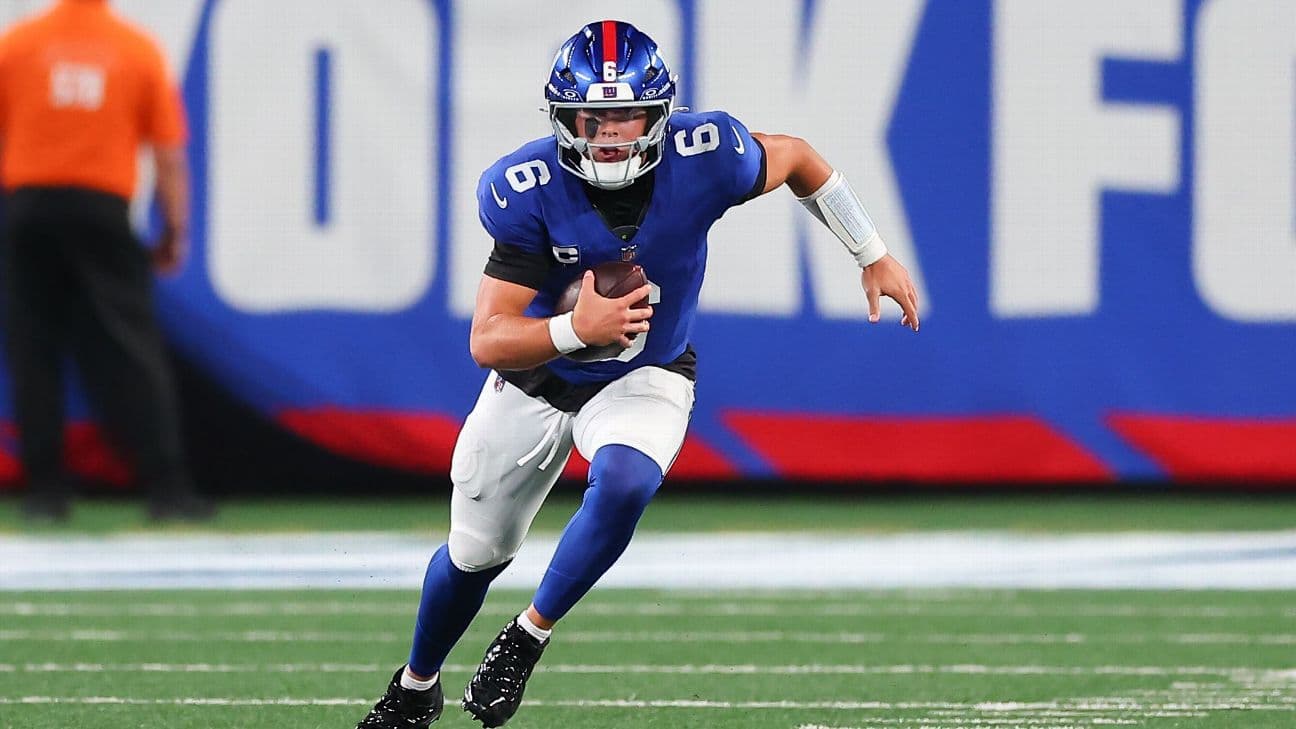
Isaiah Likely spent four seasons in Baltimore catching passes that Mark Andrews did not. He spent this August as the most talked-about receiver in New York Giants camp. Multiple beat reports have described him as quarterback Jaxson Dart's most reliable target and as the clear No. 2 option in the passing game behind Malik Nabers, and he is still being drafted around the back end of the top 12 at his position.
That gap between the reporting and the draft price is the entire story. Tight end is the position where fantasy managers reliably wait too long to react to a role change, and Likely just had the biggest role change of his career.
What actually changed
Likely's ceiling in Baltimore was never a talent question. It was a target-share question, and the answer was always Andrews. When Andrews missed time, Likely produced. When Andrews played, Likely was a matchup-dependent TE2 whose good weeks arrived without warning.
New York signed him this offseason to a deal that placed him among the highest-paid tight ends in the league, per contract reporting. Teams do not pay that number for a rotational player. They pay it for someone they intend to feature.
What the Giants are describing is not a traditional in-line tight end role either. Reports out of camp have consistently framed Likely as a movable piece, split wide, flexed into the slot and used on option routes in the short and intermediate areas. That is the alignment profile that produces target volume rather than blocking snaps.
Why the quarterback fit matters
Dart enters his second season with a full offseason as the unquestioned starter. Second-year quarterbacks, particularly ones who took over midseason as rookies, lean heavily on the throws they trust: short and intermediate targets over the middle, against zone, to a receiver who wins with timing rather than separation speed.
That is a precise description of Likely's game. The chemistry reports coming out of Giants camp are not a coincidence; they are a predictable consequence of a young quarterback finding the outlet who is always where he is supposed to be.
The Giants also lack a proven second wide receiver. Nabers commands the defense's attention and the target volume that comes with it. Behind him, the room is unsettled enough that a tight end with a top-of-market contract is likely to see more looks than the depth chart suggests.
The risk case, stated honestly
Two things could break this.
The first is Dart himself. A second-year quarterback in a new-look offense is a variance machine, and if the Giants' passing game stalls, everyone downstream of Nabers suffers. Likely's floor is tied to an offense that has not proven it can sustain drives.
The second is red-zone usage. Likely's career touchdown rate has been buoyed by the specific way Baltimore used him near the goal line. New York has Skattebo, Nabers and a run-first identity under Harbaugh. Touchdown regression is the most common way a breakout tight end profile falls apart.
Neither risk is disqualifying. Both are reasons to draft him as a TE1 rather than to pay a premium for one.
The Verdexed model take
Verdexed's model prices tight ends primarily off projected targets and secondarily off the offense's total pass volume, which is why it separates Likely from most of the names being drafted around him. The players in his ADP neighborhood are largely tight ends with defined but capped roles. Likely's projected role has no obvious ceiling inside his own depth chart.
The model's read on the Giants' passing game is more conservative than it is on Likely's share of that passing game. New York projects as a middling offense in total volume, which caps the raw target number. But the share is what wins fantasy weeks at tight end, because the position's scoring is so compressed that four or five extra targets a game separates TE4 from TE14.
The cleanest framing: the model does not have Likely as a top-three tight end, but it has him meaningfully closer to the top three than to the tight ends going undrafted after him. That is a positive expected value on any board where he is the twelfth tight end off it.
What to do in your league
If you are running a late-round tight end strategy, Likely is the target. He is the last tight end on the board with genuine top-five upside and a defined role, which is a combination that usually costs three rounds more.
If you already own an elite tight end, ignore this. The positional advantage you paid for does not improve by adding a second one.
In dynasty, buy now. Likely is on the right side of the age curve, he just signed a contract that guarantees him opportunity, and his acquisition cost will never be lower than it is in the week before the season, when nobody has a box score to point at.
What is next
The Giants open the season against Dallas, and the first two weeks of target distribution will settle this argument in either direction. Watch Likely's route participation rate more than his catch total. If he is running routes on 75 percent or more of Dart's dropbacks, the role is real and the production follows.
If he is on the field for 50 percent and blocking on most of them, the contract was about something other than fantasy football.