 NHL2026-11-16
Igor Shesterkin Moves to Season-Ending Injured Reserve: The Rangers' Cap Windfall and the Dylan Garand, Joonas Korpisalo Fantasy Split
By Verdexed NHL Desk
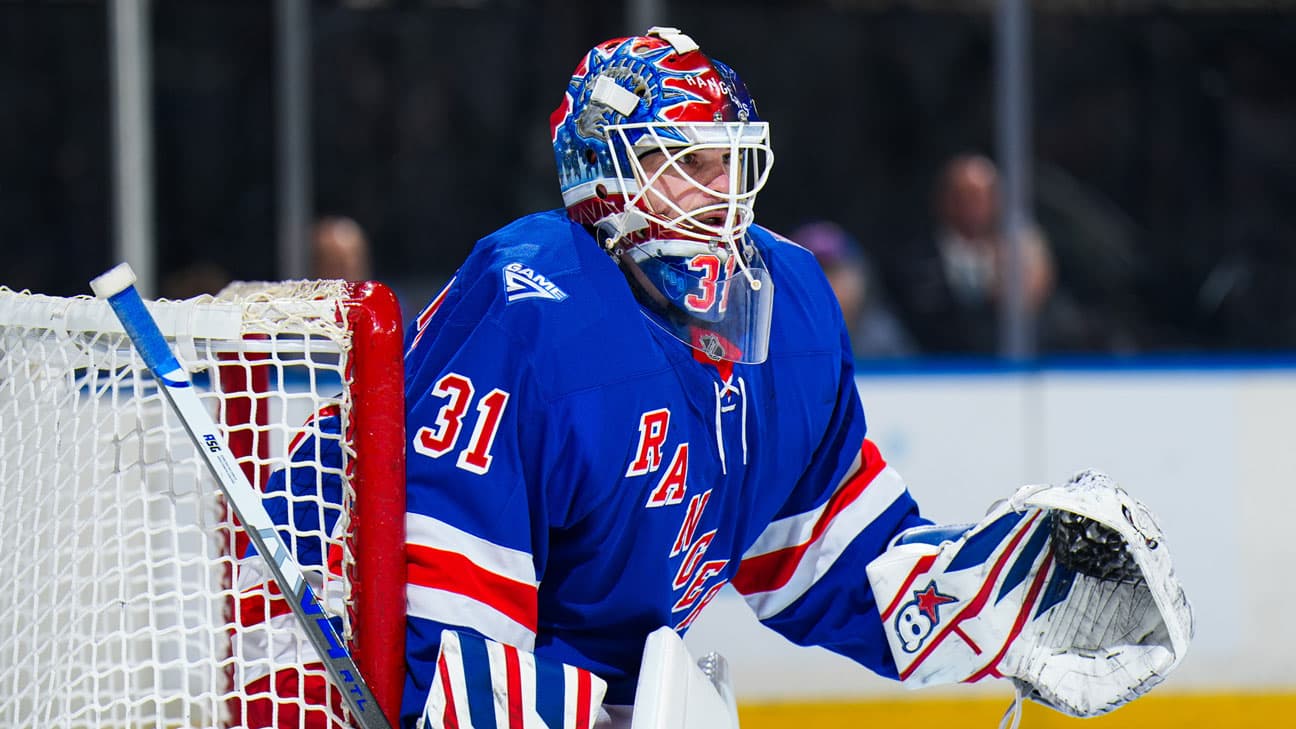
The New York Rangers moved goaltender Igor Shesterkin from long-term injured reserve to season-ending injured reserve on Sunday, formally ending his 2026-27 season. Under the designation, Shesterkin is ineligible to return in the regular season or the playoffs, even if he recovers before New York's season ends. In exchange, the Rangers gain access to his full cap hit, reported at about $11.57 million, as cap space for the season, compared with the far smaller relief available while he sat on LTIR.
Shesterkin played only five games this season before getting hurt against Washington on Oct. 9. Reports have described it as a lower-body or right knee injury; the team did not attach a new diagnosis to Sunday's move. For fantasy managers who were stashing him in an IR slot, the hold is over.
What season-ending IR means
Season-ending injured reserve is a newer tool under the league's current cap rules. A team that places a player there surrenders his availability for the rest of the season, playoffs included, and in return receives his entire cap hit as space. It is a clear signal that the Rangers do not expect him back this season and are choosing roster flexibility over the outside chance of a spring return.
| Item | Detail |
|---|---|
| Injury date | Oct. 9 vs. Washington |
| Games played in 2026-27 | 5 |
| New designation | Season-ending injured reserve |
| Eligible to return | Noincluding playoffs |
| Cap space gained | His full cap hit, about $11.57 million |
The crease now: Garand and Korpisalo
With Shesterkin hurt and Joonas Korpisalo sidelined early with a foot infection, rookie Dylan Garand carried the load for most of October and early November, appearing in 12 straight games, including 10 starts. Korpisalo came off injured reserve on Nov. 7 and made 25 saves in a 4-3 win at Seattle in his Rangers debut. Reports since have described a 1A/1B arrangement, with the possibility that one goalie seizes the job.
Tonight's home game against Montreal at Madison Square Garden is the next data point. Neither team had confirmed a starter by Monday morning. One preview projected Korpisalo to start because Garand played Friday, but that is a projection, not a confirmation. Check the confirmed starter before puck drop.
Fantasy fallout
Igor Shesterkin: Drop him in all redraft leagues. In keeper and dynasty formats, hold only if you have a dedicated IR slot that does not cost you an active roster spot.
Dylan Garand: The rookie has handled a heavy workload and remains the most likely goalie to win the bulk of starts over a full season. He is a rosterable No. 2 or No. 3 fantasy goalie in most standard leagues, with value tied to how the Rangers split starts in the coming weeks.
Joonas Korpisalo: A useful streamer on nights he is confirmed, especially at home. His debut was solid, and the Rangers have every reason to keep him sharp.
Rangers skaters: No direct effect on their fantasy value, but the cap space could change that. A team with roughly $11.6 million of new room is a natural buyer before the trade deadline.
The cap angle: a deadline buyer
The real story is what the Rangers do with the space. A team that had been operating with limited flexibility now has room to add a significant contract, whether a veteran goaltender to stabilize the crease or a skater to boost the scoring. Any addition would reshape fantasy values in New York: a new goalie would squeeze Garand and Korpisalo, and a new top-six forward would shift power-play time.
Watch the trade market closely. The Rangers are now one of the few teams with real cap space during the season, which makes them a logical landing spot for any player whose current team wants to move salary.
How the split could shake out
Teams with two healthy goalies and no clear starter tend to settle into a pattern within a few weeks. The most common outcome is that one goalie earns a majority of starts based on recent play, with the other taking back-to-backs and selected matchups. For the Rangers, Garand's long run as the starter gives him the edge in experience with this group, while Korpisalo's veteran track record gives the coaching staff a reason to lean on him when the rookie struggles.
For fantasy managers, the best approach is to roster both if your league allows it and to start whichever goalie is confirmed. In leagues with tight roster limits, Garand is the better hold because his age and recent workload suggest he will see the most starts over a full season.
The Rangers' defensive structure matters, too. A team that suppresses shots makes both goalies more valuable; a team that bleeds chances makes both riskier. Watch shot volume against the Rangers over the next week as a guide.
Betting angle
Goalie uncertainty is a bettor's edge when it is resolved early. On nights where the confirmed starter is announced late, market lines may not fully reflect the difference between Garand and Korpisalo. Verdexed's model view for every NHL slate is posted at /nhl/predictions, with the daily picks piece at /blog/nhl-picks-2026-11-16.
What to do in your league
1. Drop Shesterkin in redraft leagues; use the roster spot on an active goalie. 2. Roster Garand if he is available; he has the inside track on volume. 3. Stream Korpisalo on confirmed home starts. 4. Monitor Rangers trade rumors. The cap space makes New York a likely buyer, and any acquisition changes the fantasy picture.