Frederik Andersen Carries Conn Smythe Buzz Into the Cup Final, With July 1 Looming
By Verdexed NHL Desk
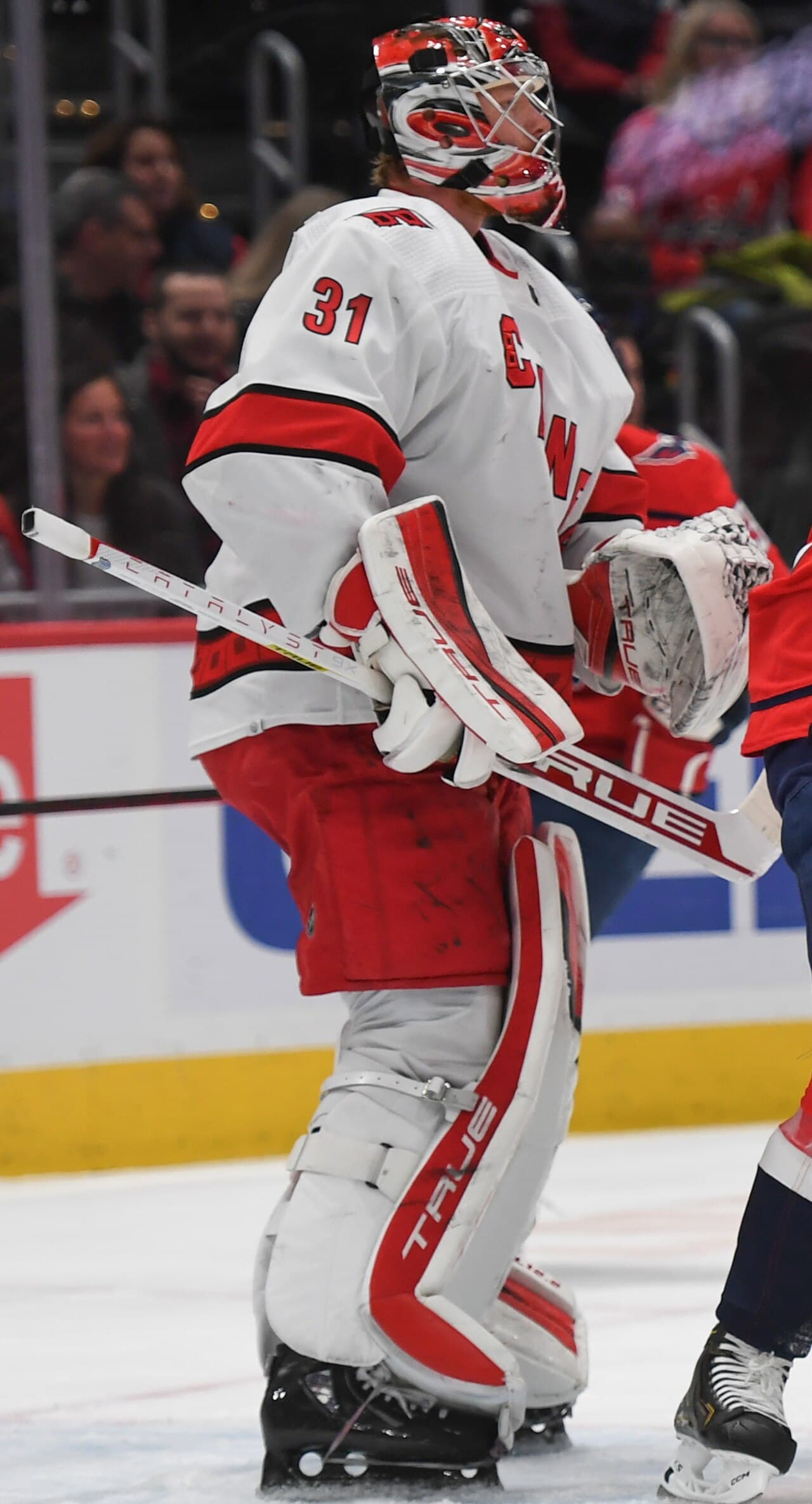
Frederik Andersen has been the engine of Carolina's run to the 2026 Stanley Cup Final, and the numbers behind his postseason put him squarely in the Conn Smythe conversation. Entering the Final, Andersen was 12-1 across 13 playoff starts, with a 1.41 goals-against average and a league-best .931 save percentage among goalies with at least five games. That is the profile of a netminder carrying a team toward a championship.
He also leads the NHL with three shutouts this postseason, a mark that speaks to how often he has simply taken the opponent out of games entirely. For a Hurricanes franchise that has spent years searching for playoff goaltending stability, Andersen's spring has been a long-awaited answer.
A Place in the Record Books
Andersen's run has already rewritten parts of the Carolina record book. He set the Hurricanes' franchise record for career playoff shutouts with five, passing Cam Ward's previous mark of four. That is a meaningful line to cross given Ward's place in the franchise's championship history.
The broader historical company is even rarer. Andersen became just the third goalie in NHL history to win 12 of his first 13 games in a single playoff year, joining Ken Dryden in 1976 and Gerry Cheevers in 1970. Those are two names associated with all-time goaltending postseasons, and the fact that Andersen sits alongside them tells you how unusual this run has been.
There is also a precision element to his game this spring. He has not allowed a long-range goal all postseason, going 47-for-47 on long-range shots according to NHL EDGE tracking. Eliminating soft, distance goals is exactly the kind of detail that separates a hot goalie from a dominant one.
The Age Factor
Andersen is 36, which adds a layer of weight to what he is chasing. Winning the Conn Smythe at that age would put him in extremely select company: only Tim Thomas in 2011 and Glenn Hall in 1968 have claimed the award at 36. Goaltenders that age are usually managing workloads, not anchoring deep playoff runs.
Whether he should win the trophy is, of course, a matter of opinion, and the voting will hinge on how the Final plays out. But the historical framing is real. A 36-year-old goalie putting up a sub-1.50 GAA and a .931 save percentage through three rounds is the kind of story voters tend to gravitate toward if the team finishes the job.
Game 1 offered a reminder that the run is not invincible. Andersen made 18 saves but allowed four goals in the loss, a result that snapped the run of dominance and underscored what Vegas's offense can do on a good night. One game does not undo a postseason, but it does temper any sense of inevitability.
The July 1 Backdrop
Layered on top of the on-ice story is a contract question. Andersen appears on 2026 free-agent lists and is set to be a free agent on July 1, with his exact contract intentions not publicly confirmed. That timing turns the Final into something more than a championship pursuit: it is also, potentially, an audition or a farewell, depending on how the offseason unfolds.
For Carolina, the calculus is complicated by age and durability. Betting big on a 36-year-old goalie coming off a career-defining playoff run is the kind of decision that can win or lose an offseason. For Andersen, a deep Final run only strengthens his market, whether he stays or tests free agency.
None of that is settled, and it should be framed as a looming decision rather than a known outcome. What is clear is that the next few weeks will shape both Andersen's legacy and his next contract.
The Conn Smythe and Betting Markets
Conn Smythe markets list Andersen among the top contenders, alongside Carolina forward Mitch Marner. The dynamic to understand is correlation: voters historically reward a winning goalie, so an Andersen-led Conn Smythe outcome is tightly linked to Carolina winning the series.
That linkage creates a coherent narrative play. Pairing a Carolina series bet with an Andersen Conn Smythe ticket aligns two outcomes that tend to move together. If Carolina lifts the Cup behind its goaltending, both legs have a real chance to cash, and the Conn Smythe price typically offers more upside than the series moneyline alone.
The risk is the same correlation in reverse. If Vegas's offense replicates its Game 1 output and Carolina falls short, both legs are likely to fail together. This is a conviction play on a specific outcome, not a hedge.
A Verdexed DFS Read
For daily fantasy, Andersen's elite save rate makes him a premium goalie option in any Carolina-favored spot. The combination of volume opportunity and a league-best save percentage is exactly what DFS players want from the position, particularly when the matchup and game script point toward Carolina controlling play.
The caution, again, is variance. Game 1's four-goal output against Vegas is a reminder that even the best goalie of the postseason can have his floor tested by a high-end offense. In a Final where one team has already posted five goals, the goalie position carries more downside risk than it would against a weaker opponent.
What's Next
The Final will decide whether Andersen's run ends with a Conn Smythe and a Cup or becomes a what-if attached to a July 1 departure. Both threads, the trophy and the contract, run through the same series.
The actionable takeaway: if you believe in Carolina, the Andersen Conn Smythe ticket is the higher-upside way to express that view, ideally paired with a Carolina series bet so the two legs reinforce each other. For DFS, treat Andersen as a premium play in Carolina-favored spots, but build with the Game 1 variance in mind rather than assuming a shutout-level floor.