Fred VanVleet Is on Track for Opening Night and Houston's Guard Rotation Gets Crowded
By Verdexed NBA Desk
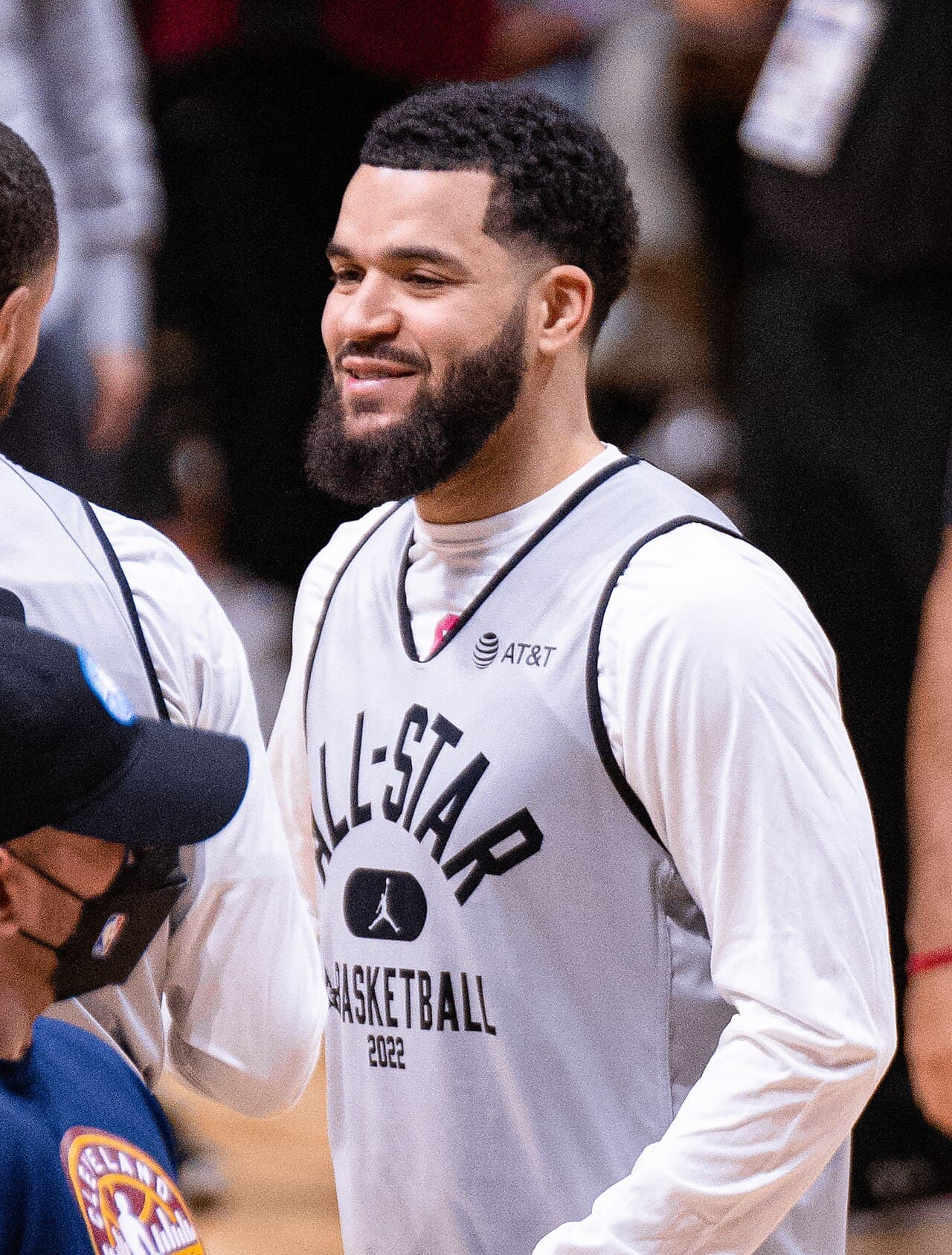
Fred VanVleet is on course to be ready for the start of the 2026-27 season, according to reports out of Houston, roughly a year after the torn ACL and meniscus that cost him the entire 2025-26 campaign. He exercised his $25 million player option in late June, and by the time the Rockets open training camp he will be past the long end of the nine-to-twelve month recovery window that typically governs this injury.
For Houston, that is straightforwardly good news. For fantasy managers, it creates one of the more difficult roster puzzles on any team in the league.
What the Rockets looked like without him
The Rockets did not collapse in VanVleet's absence. They finished 52-30 and fifth in the Western Conference in Kevin Durant's first season with the franchise, which is a strong result for a team that lost its starting point guard in a preseason workout.
They got there by redistributing playmaking rather than replacing it. Amen Thompson took on a larger creation role, Alperen Sengun continued to operate as a hub from the elbow and the post, and Reed Sheppard got the extended runway that a lottery pick rarely receives on a contending roster. That combination produced a top-five seed, which means the version of Houston that fantasy managers drafted last October is not the version that will exist this year.
The minutes problem
Projections around the league have Houston's likely starting five as VanVleet, Durant, Thompson, Jabari Smith Jr. and Sengun, with Sheppard, Tari Eason, Steven Adams and Marcus Smart in the rotation behind them. Those are projections rather than announcements, and Ime Udoka has never been shy about changing lineups, but the general shape is clear enough to plan around.
The squeeze lands on the guards. VanVleet returning to a starting role reclaims the on-ball responsibilities that Thompson and Sheppard absorbed last season, and the addition of Smart gives Udoka another veteran option in the backcourt rotation. That is four players competing for what amounts to two-and-a-half spots worth of guard minutes, on a team whose best offensive players are a forward and a center.
Sheppard is the one whose fantasy value is most exposed. He had the clearest path to volume in the league's most valuable fantasy categories last season, and he now has to hold that ground against a returning starter and a veteran addition. His per-minute production will determine whether he keeps it, but the minutes themselves are no longer safe.
Thompson is the least exposed. He signed an extension conversation into the offseason and his defensive value guarantees him minutes regardless of who else is healthy. What changes for him is role rather than playing time: less primary creation, more off-ball scoring and cutting, which shifts his category profile away from assists.
The VanVleet question itself
The honest framing is that a 32-year-old point guard returning from a torn ACL and meniscus after missing an entire season is one of the least predictable projections in fantasy basketball.
The optimistic case is that VanVleet's game has never depended on explosiveness. He is a pick-and-roll operator, a high-volume three-point shooter and an elite defensive guard whose value comes from positioning and strength rather than burst. Those skills age and recover better than athleticism does.
The pessimistic case is the same one that applies to every guard in this situation: first seasons back from ACL reconstruction usually feature reduced minutes, load management on back-to-backs, and a shooting percentage below career norms while rhythm returns. VanVleet has also indicated the injury was more severe than initially reported, requiring surgery on both the ACL and the meniscus.
The Verdexed model take
Our projections handle returns from season-long absences by blending three inputs: the player's pre-injury baseline, an age-adjusted decline curve, and a games-played distribution rather than a single expected value. That third input is where most public rankings fall short. Ranking a returning player by his projected per-game production ignores that the most likely outcome is not a full season.
For VanVleet specifically, the model produces a per-game projection close to his pre-injury norms with a games-played projection well below them, which nets out to a mid-round value in standard formats rather than the early-round value his name and role suggest. That is a useful gap, because his draft price this fall is likely to be set by name recognition and starting-lineup position rather than by availability.
The knock-on effect matters more. In leagues where managers draft VanVleet early, Sheppard becomes underpriced, because the market will assume the minutes are gone. If VanVleet misses even fifteen games, Sheppard's role reverts to what it was last season, and he is the cheapest way to buy that outcome.
The team-level betting angle is the inverse of the fantasy one. Houston won 52 games without its starting point guard, and the market has to decide whether adding him back is worth much when the team already proved it could function otherwise. Season win totals tend to overprice the return of a name player to a team that succeeded without him, because the market credits the addition without accounting for the minutes and touches it removes from players who earned them.
What to do
Draft VanVleet as a mid-round guard, not an early-round one, and do it in leagues where you can absorb missed games. Draft Sheppard as a late-round upside play in any league where VanVleet was taken early. Treat Thompson as a category shift rather than a value shift, and downgrade his assist projection accordingly.
And watch training camp reporting closely in late September. The one piece of information that resolves most of this is whether VanVleet is cleared for full contact from the first day of camp or eased in. That single detail is worth more than any projection published before it.