Dylan Sampson Is on Injured Reserve and Quinshon Judkins Just Became a Workhorse
By Verdexed Fantasy Desk
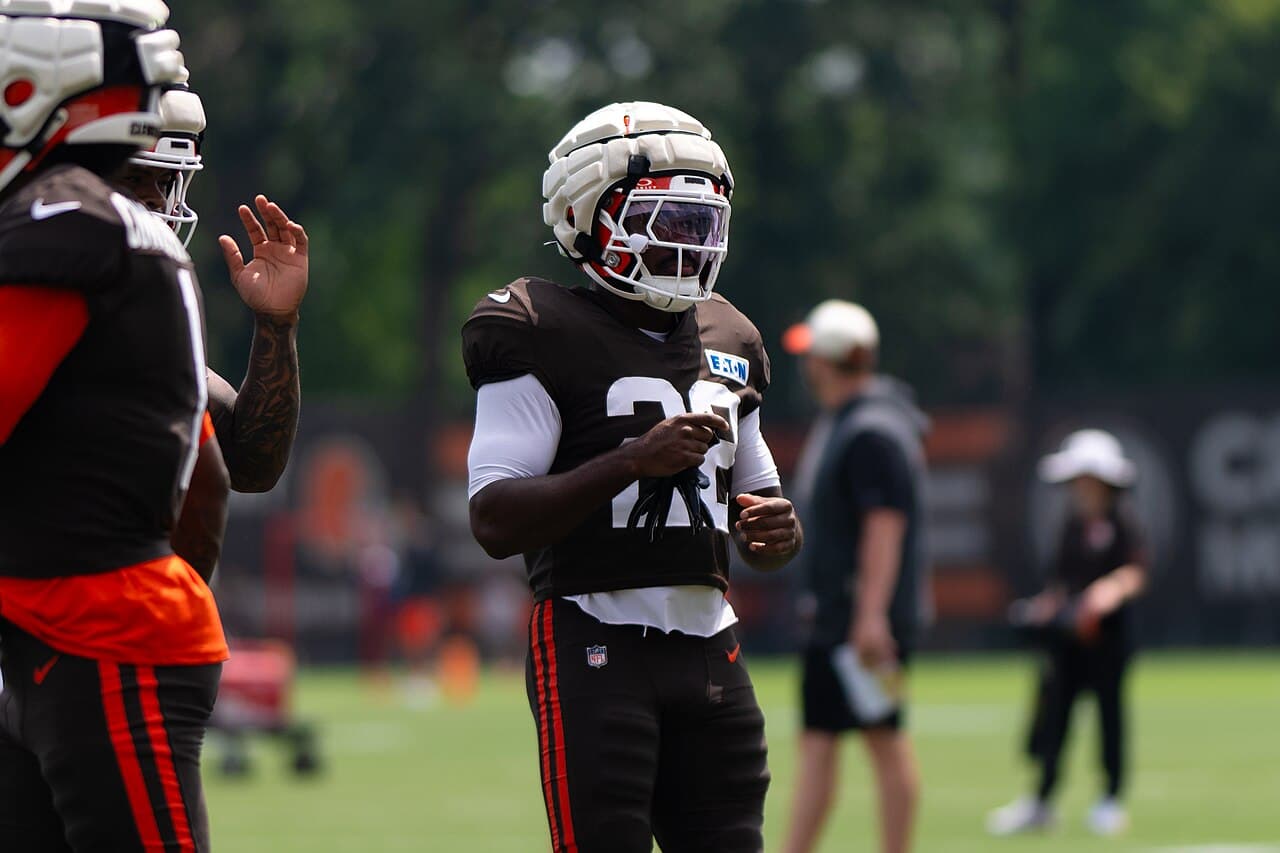
The Browns placed running back Dylan Sampson on injured reserve with the knee injury he suffered on a Week 1 kickoff against Jacksonville, sidelining him a minimum of four games, and signed former Broncos running back Jaleel McLaughlin to the 53-man roster in his place. Reporting around the injury has pointed to significant time rather than a minimum stay. The fantasy consequence is immediate and unambiguous: Quinshon Judkins is now the only established back in Cleveland's building, and his projected workload just jumped.
What Cleveland lost
Sampson was the change-of-pace half of what the Browns intended to be a two-man backfield, the passing-down and tempo complement to Judkins' early-down volume. He went down on the second kickoff of the afternoon, which is its own indictment of how the Browns were deploying him, and the team's response was to move him off the active roster and add a veteran rather than promote from within.
The McLaughlin signing is a tell. Cleveland could have leaned on its existing depth and given those snaps to Judkins entirely. Instead it went out and got a back with three seasons of NFL experience, which suggests the Browns want an actual complementary piece rather than a bell-cow arrangement. That tempers the ceiling here, but only slightly.
Judkins is the beneficiary, and it is not close
McLaughlin is a rotational back joining a new offense on a Tuesday in the middle of a game week. He will not have the playbook installed deeply enough to take meaningful high-value work from Judkins for at least a few weeks. Whatever Sampson's snaps were going to be, most of them land on Judkins in the short term.
That matters because Judkins was already the lead back. Adding the vacated passing-down work to an established early-down role is the single most valuable transformation in fantasy football: it converts a touchdown-dependent RB2 into a three-down back with a floor. Backs who catch passes survive negative game scripts. Backs who do not get benched in them. Cleveland is going to see plenty of negative game scripts.
Judkins should be treated as a firm RB2 with weekly RB1 upside starting immediately, and his rest-of-season value is higher today than it was on Sunday morning.
The game script problem
Here is the honest counterweight. Cleveland lost 34-10 to Jacksonville in Week 1 and is a substantial underdog against Tampa Bay in Week 2, with the market pricing the Buccaneers as more than a touchdown favorite and the total in the low 40s. A workhorse back on a team that trails by two scores is a workhorse in name only.
This is where the passing-game share earns its keep. If Judkins is running routes and catching four or five balls a game, the negative script is survivable and even helpful for PPR purposes. If the Browns treat him as an early-down runner and rotate in McLaughlin on obvious passing downs, his ceiling caps out around 12 to 14 points in most weeks and craters in blowouts.
Watch the Week 2 snap distribution on third down specifically. That single data point determines whether Judkins is a top-15 back or a volume-dependent RB2 for the rest of the season.
Jaleel McLaughlin is a speculative add, not a starter
McLaughlin is worth a look in deep leagues and nothing more right now. He is a small, quick back with a defined NFL skill set who has spent his career as a complementary piece. Landing on a new team mid-week is close to the worst possible circumstance for immediate production.
The case for adding him is contingency. If Judkins misses time, McLaughlin becomes an every-down back on a team that will run to stay in games, and that is a valuable handcuff to already own. In 12-team leagues, he is a last-bench-spot flier. In 10-team leagues, leave him alone.
The Verdexed model take
The model treats backfield consolidation as one of the highest-signal events in the sport, higher than most injury news to skill players, because touch distribution is more predictable than efficiency. When a committee becomes a solo act, the projection for the surviving back moves more than any single-game performance would justify.
Applied here, Judkins' projected weekly touches move up meaningfully, and his projected receptions move up by more in percentage terms than his carries do. That is the right way to think about the change: the carries were mostly his already, the targets were not.
Where the model is more cautious is on Cleveland's implied team total. An offense that scored 10 points in the opener and lost its second-best skill player does not project well, and that suppresses Judkins' touchdown equity. The model likes him as a volume play and is neutral on him as a scoring play, which in practice means he is a better start in PPR than in standard.
Betting angle
The relevant market is Judkins' rushing-attempt prop. Books setting that line based on his Week 1 workload rather than the post-Sampson depth chart are offering the cleanest edge on the board for this game. The over on attempts is the play; the over on rushing yards is less attractive against a Tampa Bay front in a game Cleveland is likely to trail.
Cleveland's team total under is a defensible correlated position. An offense down its complementary back, facing a favored opponent, with a quarterback room that generated 10 points a week ago, is not a unit the model projects to clear a modest number.
What to do in your league
If you roster Judkins, you are starting him every week. If you do not, he is not on waivers, but he is now a legitimate buy target, and the price is likely still anchored to his preseason valuation rather than his current role. Offer a WR3 with name recognition and see what happens.
Add McLaughlin only in leagues of 12 teams or more, and only as a handcuff. Drop Sampson in redraft leagues without an IR slot. In dynasty, hold: he is young, the knee injury has not been described as career-altering, and a back who was drafted into a defined role does not lose that role permanently over four weeks.