Dylan Larkin Is Hurt, Still Wants Out, and Detroit Has No Timeline
By Verdexed NHL Desk
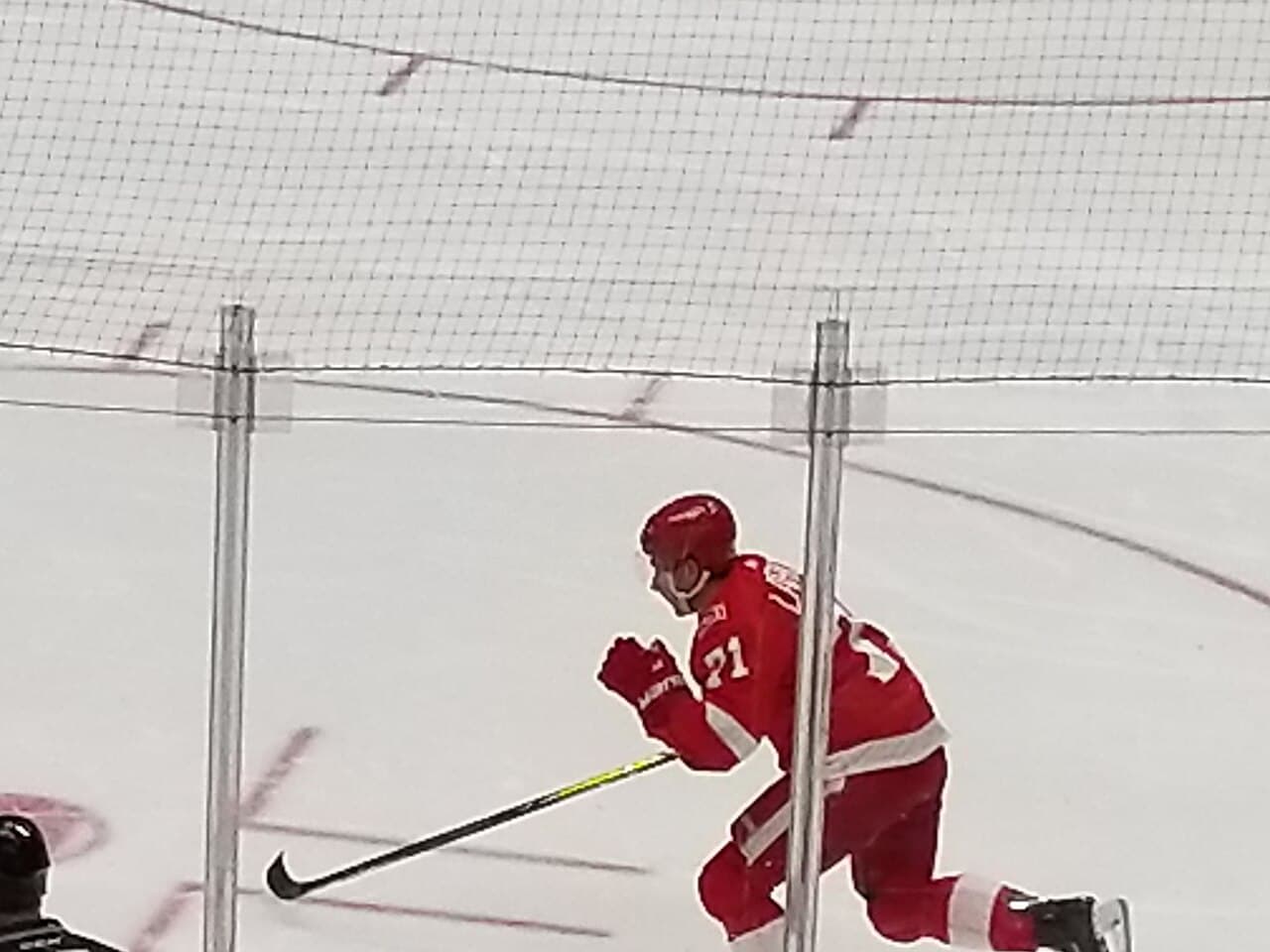
Dylan Larkin suffered an upper-body injury during an off-ice training session this week and will not participate in on-ice work at the start of Detroit's training camp. Interim general manager Shawn Horcoff announced the injury on Wednesday, said Larkin had been evaluated by team doctors and would rehab at camp, and offered no return timeline beyond hoping he would be back on the ice at some point during camp.
The injury lands on top of a situation that was already unresolved. Larkin's request to be traded became public this summer, and Detroit has not found a deal. A player who wants out, is now injured, and has no timeline is the definition of an asset that is difficult to move.
Why the timing matters
Training camp is when trade markets clear. Teams with cap problems and teams with roster surpluses do their business in the ten days before the season, because that is when the picture of who has what becomes clear and when injury replacements become urgent.
Larkin being unavailable for that window removes Detroit's leverage almost entirely. No acquiring team is going to pay a premium for a center who has not skated with a group in weeks and whose medical status has no stated end date. The realistic outcome is that Larkin opens the season in Detroit, healthy or otherwise, and that the trade conversation resumes in November or at the deadline.
The phrase to focus on in Horcoff's remarks is that it will take him some time to get back. That is not language used about a player expected back in three days. It is language used about a player whose availability for the season opener is a live question.
The fantasy read
Larkin has been a fixture in fantasy hockey drafts as a top-six center with power play time and a scoring rate that supports it. An injury with no timeline arriving at the start of camp is an automatic downgrade, and the size of the downgrade depends on format.
In redraft leagues with standard rosters and no injured reserve slot, he moves down two to three rounds. A center who might miss the first month is not worth a mid-round pick when the floor of the position is deep enough to stream.
In leagues with an IR slot, the calculus flips. A player with an unknown short-term timeline who occupies a roster spot that does not count against your active lineup is a bargain at a discounted price, and Larkin at a two-round discount with an IR slot available is a good bet.
In dynasty and keeper formats, the trade request is the more important variable than the injury. A Larkin traded to a team with better wingers and a stronger power play is worth materially more than a Larkin in Detroit, and the injury has pushed that possibility from October toward the deadline.
The trade market read
Detroit's position is weaker than it was a month ago. A general manager with an interim tag, a disgruntled top-line center, and no medical clarity is not in a position to demand a return. The teams that would have been interested at a premium in September will be interested at a discount in December.
For bettors, the relevant market is Detroit's season win total and playoff odds. A team entering the season without its best center, with an unresolved trade request hanging over the room, is a team whose downside scenarios are more likely than the market typically assumes when it sets a preseason number in August.
The counterargument is that a trade request resolved by an actual trade could return young talent and picks, which does not help this season but does change the franchise's trajectory. That is a dynasty consideration, not a betting one.
The Verdexed model take
Our model handles no-timeline injuries by widening the games-played distribution rather than picking a point estimate, which for Larkin produces a projection ranging from a full season to something closer to 65 games. The midpoint is enough to keep him inside the top 30 at center, but the variance around it is among the highest at the position.
On the team side, the model's Detroit projection was already sensitive to center depth, and an injury to the top-line center at the start of camp pushes the Red Wings toward the lower end of their range. That makes the under on Detroit's regular season point total the defensible side at current pricing, with the caveat that preseason totals move quickly once camp injuries are digested.
What's next
Watch for Larkin's first full practice with the group. That is the meaningful checkpoint, not a report that he is skating on his own, which tells you nothing about contact readiness. The gap between skating alone and practicing with the group is usually the longest part of an upper-body recovery.
The second thing to watch is whether Detroit names a captain or makes any other structural announcement during camp, which would signal how the organization is planning around a player who has asked to leave. Front offices communicate their intentions through roster decisions long before they communicate them through statements.
What to do in your league
If your draft is this week, move Larkin down your board but do not remove him. The gap between his talent and his current price is going to be the widest it has been in years, and centers who produce at his rate are not available in the middle rounds under normal circumstances.
If you already have him in a keeper league, hold. A trade request that eventually results in a move to a better situation is a value-creating event for a fantasy asset, and the current injury is suppressing his perceived value at precisely the moment his long-term outlook may be improving.
If you are shopping for a Detroit forward to replace him in the short term, the players to target are whoever moves up to the top line and the top power play unit during camp. Those two assignments, more than anything a coach says in a press conference, determine which Red Wing is worth a roster spot in October.