 NFL2026-09-01
The Dolphins Claimed an NFL-High Seven Players Off Waivers and Cut Seven More to Fit Them
By Verdexed NFL Desk
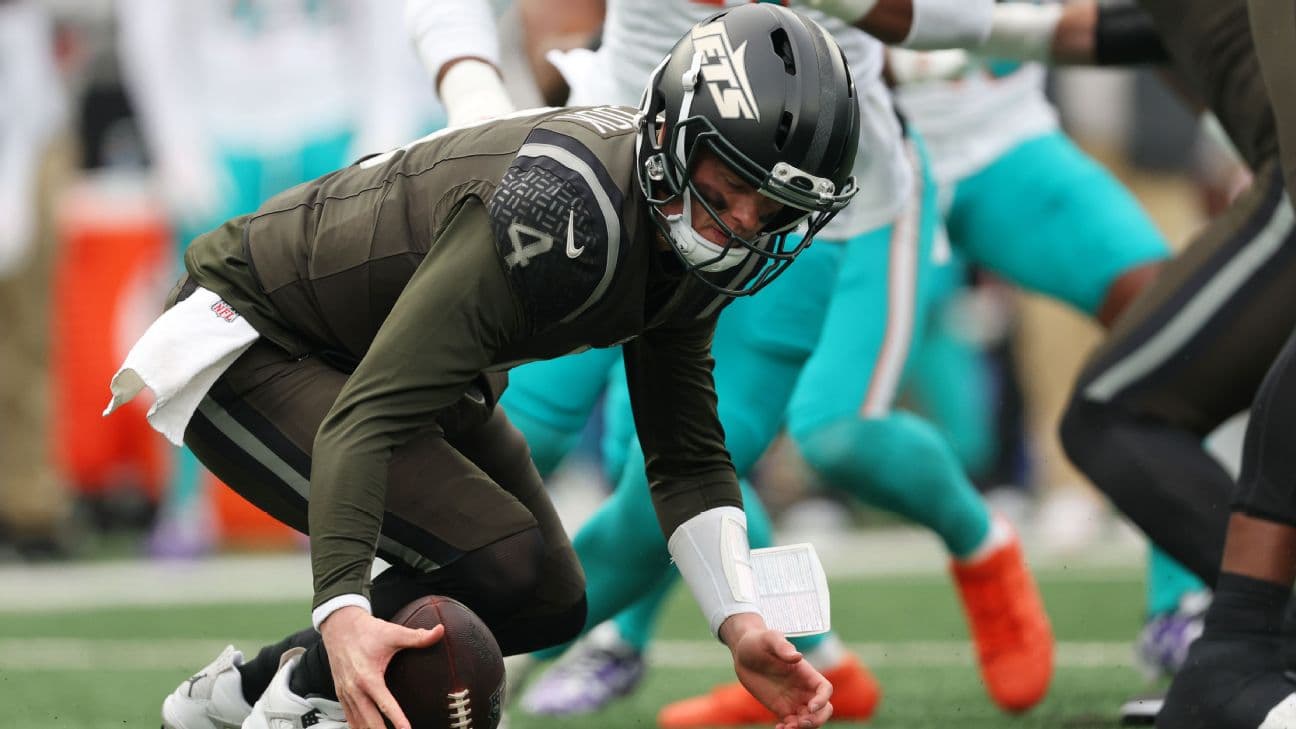
Miami claimed seven players when the NFL processed waivers at 1 p.m. ET on Monday, the most of any team in the league, and because every successful claim must go straight onto the 53-man roster, the Dolphins had to clear an identical number of spots on the same afternoon. The group includes quarterback Brady Cook, tight end Justin Joly, offensive tackles Jarrett Kingston and Chukwuebuka Godrick, and defensive backs Reese Taylor, Marcellas Dial Jr. and Julius Wood. Miami also added a free agent defender in the same window.
That is not a depth move. That is a roster teardown two weeks before the games count, and it tells you something about how the Dolphins graded their own initial 53.
Why Miami had the appetite
The Dolphins entered cutdown weekend with the youngest initial 53-man roster in the NFL. Young rosters are cheap and they are also fungible: when a front office has stacked the back half of the depth chart with undrafted rookies and late-round fliers, there is very little cost to swapping any of them for another team's late-round flier who happened to survive a deeper camp elsewhere.
The waiver order at this point of the calendar mirrors the draft order, which means the teams that picked highest in April get first crack at the wire. Miami sat far enough up that list to win most of what it wanted, and it clearly wanted a lot. The claims cluster around the two spots where a season goes sideways fastest: offensive tackle and defensive back.
Cook is the headline name for casual readers because he is a quarterback. He arrives from the Jets, who waived him after the rookie Cade Klubnik locked down the No. 2 job behind Geno Smith. Cook is not a threat to start in Miami. He is insurance, and insurance is the entire point of a seven-player churn.
Fantasy fallout
Directly, almost none. Nobody in this group projects to touch the ball in a fantasy-relevant way in September. Joly is the only skill-position addition and he lands in a room where the depth chart was already set before he got on a plane.
Indirectly, it matters more than the names suggest. Seven roster spots turned over means seven players were cut in a hurry, and those departures are where the fantasy signal lives. When a team churns this hard at tackle, it is telling you the offensive line it planned to field in Week 1 did not hold up in August. Miami's fantasy skill players, the running back room in particular, are priced on the assumption that the line blocks the way it did when everyone was healthy. Two claimed tackles in one afternoon is a quiet argument against that assumption.
The defensive back claims cut the other way for opposing offenses. A secondary that needed three outside additions on September 1 is a secondary that will be learning on the job through the first month, and that is the kind of unit that inflates opposing passing volume before it settles down.
The Verdexed model take
Our model treats late-August roster churn as a variance input, not a talent input. Claiming seven players does not make a roster better in any measurable Week 1 sense. What it does is widen the distribution of outcomes: more new faces means more communication errors, more busted assignments in the secondary, and more early-season penalties, all of which push a team's realistic range of results outward in both directions.
Miami opens against Las Vegas, a game where the Raiders' own status is unsettled because of Ashton Jeanty's ankle. That is an unusually noisy opener on both sides. When two teams both carry above-average uncertainty into a game, the sharper play is almost always the total rather than the side, and the direction depends on whether the uncertainty is concentrated on offense or defense. Here it is concentrated on defense for Miami and on offense for Las Vegas, which is a messier setup than the number on the board suggests.
Betting angle
Do not read seven claims as a team-strength signal in either direction. The market barely moves on waiver activity and it is right not to. What is worth tracking is whether the claimed tackles appear on the Week 1 injury report or, worse, in the starting lineup. A tackle who was on another roster on August 30 and is protecting a quarterback's blind side on September 13 is one of the more reliable predictors of a sack-rate spike, and sack rate is the single cleanest input into a team total.
The same logic applies to the secondary. If two of the three claimed defensive backs are active on game day, opposing pass-catchers in that matchup deserve a small bump in projection, and the game total deserves a look at the over.
What to do in your league
Nothing yet. There is no add here for a 12-team redraft. In deep dynasty formats, Cook is a name to file away only because backup quarterback jobs turn into starting jobs more often than people expect, and he is now on his second organization in a week.
The actionable version of this story is on the other side of the transaction. Track the seven Dolphins who were released to make room. Players cut in a numbers crunch on September 1 are a different population than players cut on August 30: they survived the first pass and lost their spot to an outside claim, not to a coaching evaluation. Some of them will land on other 53-man rosters within days. That is where the waiver-wire value from this move actually sits.
What's next
Practice squads fill out over the next several days, and Miami will use most of its 17 spots to restock the depth it just spent. Watch the first official Week 1 injury report for the Dolphins, which is the first moment the team has to publicly account for whatever prompted a seven-man overhaul. Until then, treat this as what it is: a young team betting that other organizations evaluated the back of a roster better than it did.