Dereck Lively Is Not Cleared for Camp and the Mavericks Center Job Is Open
By Verdexed NBA Desk
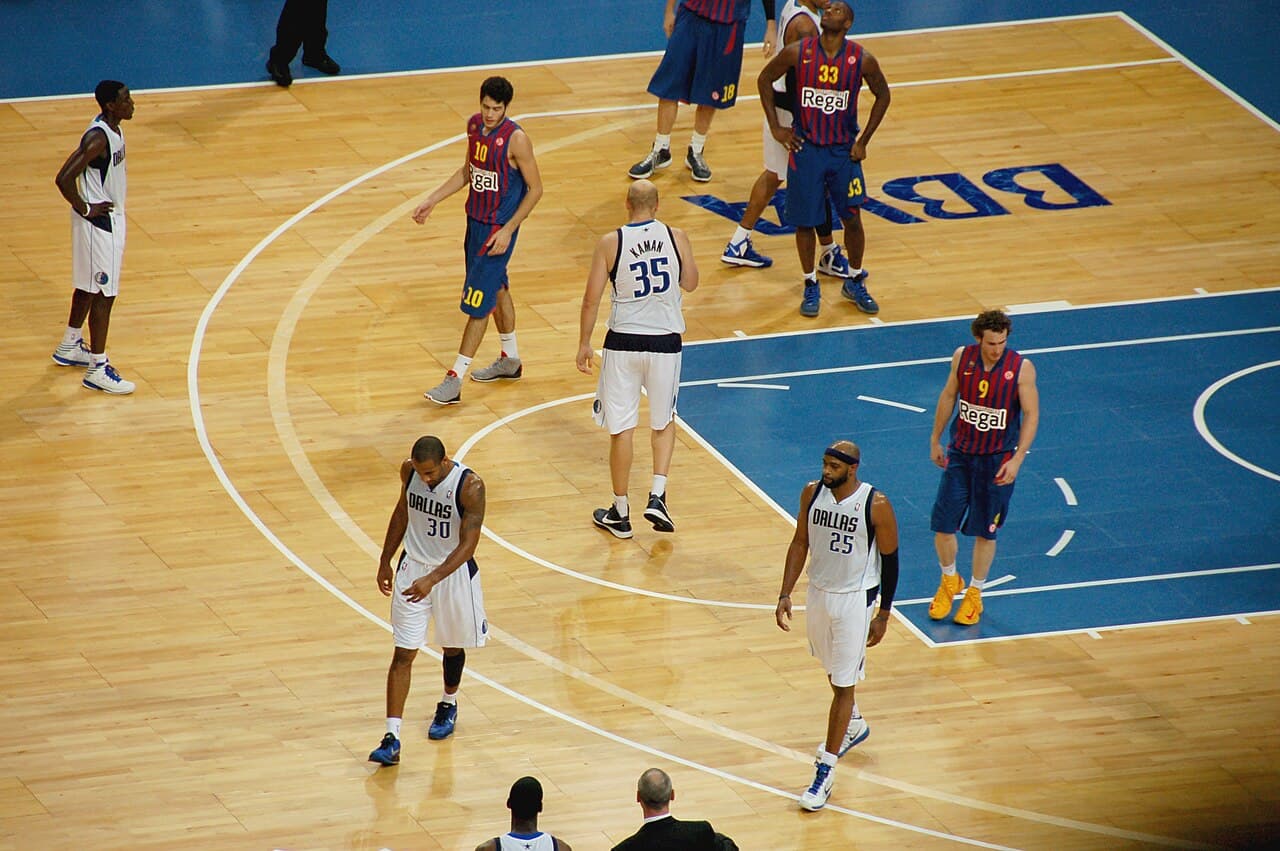
Dereck Lively II has not been medically cleared to participate in Mavericks training camp as he continues recovering from surgery on his right foot, and his status for the start of the regular season has not been determined. Team president Masai Ujiri addressed the situation at Dallas media day, noting that Lively has progressed from shooting to running on the court and emphasizing a patient approach given the player's size and the nature of the injury.
Dallas signed 13-year veteran Dwight Powell on Friday, a deal reported as guaranteed for only $500,000 until he makes the opening night roster. That is not a coincidence. A team that expects its starting center to be available does not add a veteran big on a camp-level guarantee days before practices begin.
The injury history is the concern
This is not a single procedure. Lively underwent season-ending surgery in December to address persistent discomfort in the foot, and he had an operation on the same foot in July of 2025 to clear bone spurs. He played just seven games last season before the December surgery.
Two operations on the same foot in roughly eighteen months, in a 7-foot-1 player, is the profile that makes teams cautious for good reason. Foot injuries in players of that size have a long history of recurrence, and the fact that Dallas is explicitly framing this as requiring patience and careful monitoring tells you the organization is managing a chronic issue rather than waiting out a clean recovery.
The encouraging detail is the progression. Moving from shooting to running is a real milestone, and the team has said it is not discouraged by the pace. But running on a court is several steps removed from absorbing contact in NBA minutes.
Fantasy fallout
Lively's draft price needs to come down, and in many leagues it has not come down enough. He entered the offseason as a player with legitimate breakout appeal: a young, athletic center on a team with a rebuilt roster and a clear path to starter minutes. That appeal is intact whenever he is healthy. The problem is that "whenever" is now undefined.
Treat him as a stash rather than a starter. If he is available in the middle rounds of your draft, that is a price that assumes availability he has not demonstrated. If he falls to the late rounds, the upside becomes worth the risk, because a healthy Lively is a double-double center with blocks.
The more immediate value is in who covers for him. Powell is a known quantity: a veteran who will play hard, set screens, and produce almost nothing worth rostering in fantasy. His signing is about filling minutes, not about producing.
The player to identify is whoever Dallas uses as the primary center in Lively's absence. Center minutes on a team with playoff ambitions are worth having, and the Mavericks now have an opening at the position with no obvious incumbent. That is exactly the kind of situation that produces a late-round fantasy contributor, and it is worth monitoring through the preseason.
The bigger Dallas picture
The Mavericks are already the league's most interesting fantasy unknown. They have Cooper Flagg entering his professional career, Kyrie Irving on the roster and reportedly already working out with Flagg, a new front office under Ujiri, and now an unresolved situation at center. That is a lot of variables for a team people will be drafting heavily.
The Lively uncertainty compounds the rest. A Dallas team without its starting center plays differently: more minutes for smaller lineups, more defensive rebounding responsibility distributed to forwards, and potentially more possessions, since teams without a traditional interior anchor tend to play at a higher pace.
Each of those has fantasy consequences. Forward rebounding totals go up. The team's defensive rating likely goes down. And the pace effect lifts everyone's raw counting stats modestly.
Betting angle
Dallas win totals are the market to watch. A team with an unresolved center situation, a rookie carrying significant expectations, and a veteran guard rotation is a wide-variance proposition, and wide variance usually means the market's number is soft in one direction or the other.
The specific angle is that center availability is the kind of injury the win-total market handles poorly. Quarterback injuries in football move numbers immediately. A big man who may or may not be available for the first month of an NBA season is easy to underweight, particularly when the team is publicly optimistic about his progression.
Watch also for the Powell roster decision. If Dallas guarantees his contract by opening night, that is a concrete signal that Lively is not close.
The Verdexed model take
Our model handles undetermined injury timelines by projecting a games-played distribution rather than a point estimate, which means Lively's projection is discounted across every category in proportion to his probability of missing time, not merely in the weeks he is confirmed out. Given two surgeries on the same foot and a recovery the team is describing in cautious terms, that discount is substantial.
The result is a projection that keeps his per-game rate production intact while cutting his expected season totals meaningfully, which is precisely the profile of a player who should be drafted later than his talent suggests and held rather than started.
On the team side, the model redistributes his projected minutes across the remaining Dallas bigs and applies a small negative adjustment to the Mavericks' projected defensive efficiency, which flows into a slightly lower win total than the market currently shows.
What to watch
Preseason games are the tell. If Lively is cleared and plays in the exhibition schedule, the timeline is short and his draft price is justified. If he is not cleared by the time Dallas begins preseason play, plan on missing him for the early weeks of the season.
The second thing to watch is the Powell guarantee decision at the roster deadline. Teams do not guarantee veteran minimum money for players they do not need.