Cutter Gauthier's Raise Is Coming and the Ducks May Have to Trade Killorn or Vatrano to Pay It
By Verdexed NHL Desk
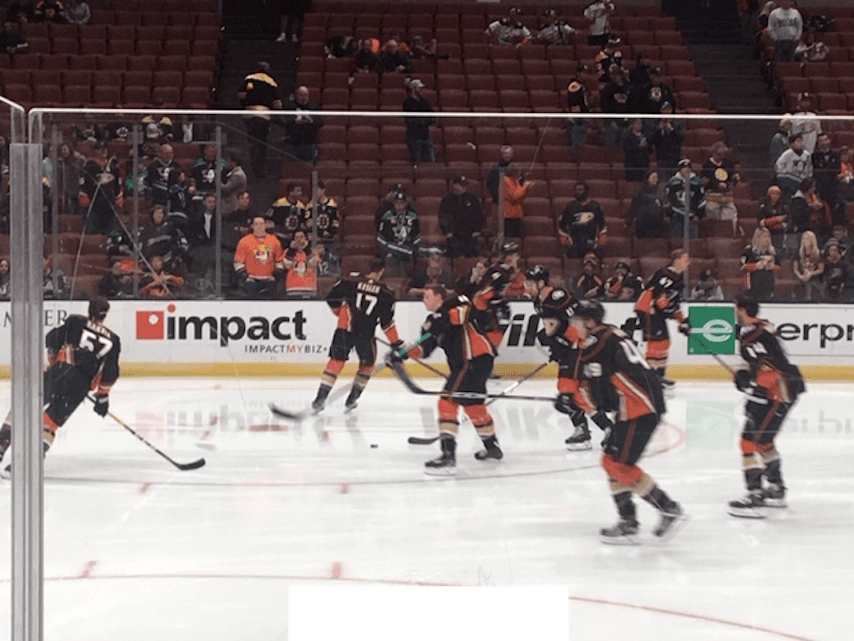
Anaheim enters the second week of August with a cap problem it created on purpose and a 41-goal scorer without a contract. The Ducks have a little more than $9 million in projected cap space, and Cutter Gauthier remains unsigned after a season that established him as a genuine first-line scorer. Insider speculation has placed his eventual number well into eight figures annually, which does not fit under the space Anaheim currently has.
The cap crunch traces back to a decision the Ducks would probably make again. Philadelphia tendered an offer sheet for Leo Carlsson at a reported $18 million annually across five years, and Anaheim matched it. Matching kept the franchise center. It also consumed the flexibility that would have covered Gauthier's raise and a defensive upgrade in the same summer.
The names in the crosshairs
Two veteran forwards keep appearing in the speculation because their contracts are the ones that solve the arithmetic. Alex Killorn carries a cap hit of roughly $6.5 million. Frank Vatrano carries roughly $4.6 million. Moving both would clear enough room to sign Gauthier comfortably and potentially leave change for a defensive addition.
This is analyst speculation rather than reported trade talks, and that distinction matters. What is reported is the cap situation and the size of the raise coming. The specific names are the logical conclusion of the math rather than confirmed front office intent.
That said, the math is not subtle. Anaheim's roster does not contain many other movable contracts of meaningful size, and general manager Pat Verbeek has shown a willingness to make aggressive roster moves.
Why Anaheim matched in the first place
It is worth defending the decision that created this problem, because the alternative was worse. An offer sheet at that price on a franchise center is designed to be unmatchable, and teams that decline to match one rarely recover the asset value in draft compensation. Anaheim paid a premium to keep a player it drafted and developed, and the premium is showing up now as a cap constraint rather than as a roster hole.
The organizational bet is that a forward group built around Carlsson and Gauthier is worth more over the next five years than the flexibility Anaheim gave up to keep it. That is a defensible bet. It also means the Ducks will be operating close to the ceiling for the duration of both contracts, which changes how they can build the rest of the roster. Teams in that position tend to fill out their depth with entry-level contracts and short-term veteran deals, and they tend to be aggressive about moving anyone whose cap hit exceeds his current role.
For fantasy managers, the practical implication of a permanently tight cap is that Anaheim's bottom six will churn every summer. That is a bad environment for depth forwards holding value and a good one for young players getting opportunities earlier than they otherwise would.
Fantasy fallout
The fantasy consequences run in two directions.
If Killorn and Vatrano are moved, the ice time they vacate goes somewhere, and on a young Anaheim roster it goes to players with more upside than either veteran. That is a positive for the Ducks' emerging forwards and a meaningful one, because top-six minutes and power play time on a team with Carlsson and Gauthier are worth having.
Killorn and Vatrano themselves would land in situations that are difficult to project. Veteran forwards moved for cap reasons typically land in bottom-six or second-power-play roles on the acquiring team, which is a downgrade from what they have in Anaheim. Neither is a player to acquire on the news.
The larger fantasy story is Gauthier himself. A 41-goal scorer entering the prime of his career on a team with a legitimate No. 1 center is a first-round fantasy asset in most formats, and the only question attached to him is whether the contract gets done in time for camp. It almost certainly will, because Anaheim has no path forward that does not involve signing him.
The Verdexed model take
The model's forward projections are driven by ice time, power play deployment and linemate quality, and Gauthier scores well on all three regardless of what happens with the veteran contracts.
What the veteran moves would change is the model's projection for the players behind him. Removing roughly 30 minutes of nightly ice time from the veteran group and redistributing it among younger forwards produces a measurable projection bump for two or three players who are currently going undrafted in most fantasy leagues. Those are the names to identify before the transaction happens rather than after.
At the team level, the model's projection for Anaheim is largely insensitive to whether Killorn and Vatrano stay or go, because the players replacing them project similarly in aggregate. What matters is Gauthier being under contract, and the model assumes he will be.
Betting angle
Anaheim's season win total reflects a team that has been improving and is not yet a playoff lock in a difficult conference. The model's projection sits close to the market, which is the usual outcome for teams whose offseason has been mostly about retaining their own players rather than adding.
The angle worth monitoring is the Ducks' Pacific Division odds. If Anaheim clears cap space and uses the savings on a defenseman rather than pocketing it, the model's projection moves up more than the market typically prices for a summer defensive addition. Defensive upgrades are systematically underpriced in hockey futures markets relative to forward additions, and that is a persistent inefficiency.
What to do in your league
Draft Gauthier at his market price without worrying about the contract. The Ducks have no alternative to paying him.
Do not draft Killorn or Vatrano. Their situations are uncertain and their ceilings are limited in either scenario.
Do identify the Anaheim forwards who would gain from a veteran exodus and keep them on a watch list. If the trades happen in late August or early September, the fantasy market will not have adjusted before most drafts.
What's next
The signing is the first domino. Once Gauthier's number is public, the exact amount of cap space Anaheim needs to clear becomes arithmetic rather than speculation, and the trade market will move accordingly.
Watch for the Ducks retaining salary in any deal, which would signal they are prioritizing speed over return. That would be the clearest indication the front office is working against a deadline it does not control.