The Connor Hellebuyck Trade Talk Has Gone Quiet, and Elliotte Friedman Still Expects a Deal
By Verdexed NHL Desk
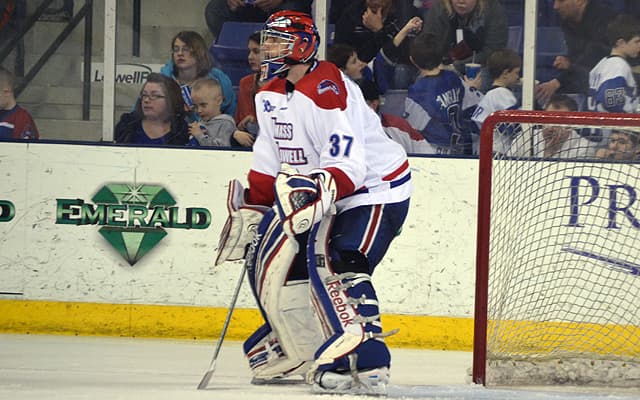
The loudest goaltending story of the NHL offseason has spent the past month in silence, and that silence is being widely misread. Connor Hellebuyck remains a Winnipeg Jet, the trade chatter that dominated the weeks around the draft has faded, and Elliotte Friedman has continued to indicate he expects the goaltender to be traded eventually rather than to stay.
Winnipeg's general manager has publicly acknowledged the team is listening to offers. That is not the same as shopping a player, and the distinction is doing a lot of work in how this situation gets covered.
The structure that controls everything
Two contractual facts govern this entire story, and neither has changed.
Hellebuyck is signed through 2030-31, which means Winnipeg has no urgency. A team trading a player with one year left is negotiating against a clock. A team trading a player with five years left is negotiating from a position of total control, and can wait as long as it takes for an offer that matches its valuation.
He also carries a full no-movement clause, which means he selects his destination. That single provision explains why Buffalo appears in every version of this story: multiple insiders have indicated Hellebuyck is either open to a move to the Sabres or actively interested in one, and a full no-movement clause turns a player's preference into a de facto shortlist.
The Jets and Sabres reportedly held talks before the draft that did not produce a deal. Nothing since has been reported as close.
Winnipeg's stated hope remains to keep him and to convince him to stay, and there is no reason to treat that as posturing. A team with a top goaltender under contract for five more years is not obligated to do anything.
Why this matters more than a typical trade rumor
Goaltending is the most concentrated source of value in fantasy hockey and the most volatile. A single netminder can decide a category league, and unlike skaters, a goalie's fantasy value is determined almost entirely by the quality of the team in front of him rather than by his own play.
That makes a Hellebuyck trade the most consequential possible transaction for fantasy hockey drafts this fall. His individual talent has been established for years. What is unresolved is which team's shot suppression and offensive support he is attached to, and those inputs swing his win totals, save percentage, and shutout equity dramatically.
A move to Buffalo, the most frequently cited destination, would be a meaningful downgrade in team quality relative to Winnipeg for the purpose of wins, while potentially increasing his save volume. Those two things move fantasy value in opposite directions, which is exactly why the destination matters rather than just the fact of a trade.
Fantasy fallout
Draft Hellebuyck as a top-tier goaltender regardless of the noise. His skill is not in question, he is under contract, and even a move to a lesser team leaves him among the most valuable netminders available.
Adjust your expectations by category. If your league weights wins heavily, a trade to a rebuilding team is a genuine downgrade and his price should reflect it. If your league weights saves and save percentage, a busier workload on a worse team can be neutral or even positive.
Do not draft the handcuff. Backup goaltenders behind an established starter are among the least valuable roster spots in fantasy hockey, and the situation behind Hellebuyck would only matter if the trade happened and the return included a goaltender, which is speculation on speculation.
Watch the Buffalo crease for a secondary effect. If Hellebuyck ever arrives there, the goaltenders currently in that organization lose their fantasy relevance instantly. That is the sharper edge in this story, because it is a value that goes to zero rather than a value that shifts.
The Verdexed model take
Verdexed's goaltender projections are built from team-level expected goals against, shot volume faced, and projected games started, which is why the model produces two distinct Hellebuyck projections rather than one blended number.
The Winnipeg version projects him as an elite fantasy goaltender across every category, supported by a team that suppresses chances well and gives him a strong win base. The alternate-destination version projects a higher save total, a lower win total, and a save percentage that holds up better than most people assume, because Hellebuyck's individual performance has historically been resilient to team quality in a way few goaltenders are.
The model's conclusion is that the trade risk is smaller than the market treats it. The gap between his best-case and worst-case fantasy outcome is narrower for Hellebuyck than it would be for almost any other goaltender, precisely because his individual play carries so much of his value.
Betting angle
Winnipeg's season win total and Stanley Cup price are the markets most exposed here, and both are currently priced with Hellebuyck on the roster. That means any position taken on the Jets now carries trade risk that the number does not compensate for, which argues for waiting.
Buffalo's futures are the more interesting side. A Sabres price that reflects the current roster would move sharply on a Hellebuyck acquisition, and futures markets are generally slow to reprice goaltending upgrades relative to how much they actually move a team's expected points. Anyone holding a view that the trade happens has a cleaner expression on the Buffalo side than on the Winnipeg side.
What's next
There is no deadline forcing this. Winnipeg can carry Hellebuyck into camp, into the season, and to the trade deadline without any loss of leverage, and the contract structure means his value does not decay.
The realistic trigger points are training camp, if the relationship becomes untenable, and the trade deadline, if Winnipeg is not in a playoff position. Fantasy managers drafting in September and October should assume he is a Jet, price him accordingly, and be ready to reassess the moment a destination is reported.