 NHL2026-08-26
Connor Hellebuyck Is Still a Jet and the Trade Talk Is Waiting for Camp
By Verdexed NHL Desk
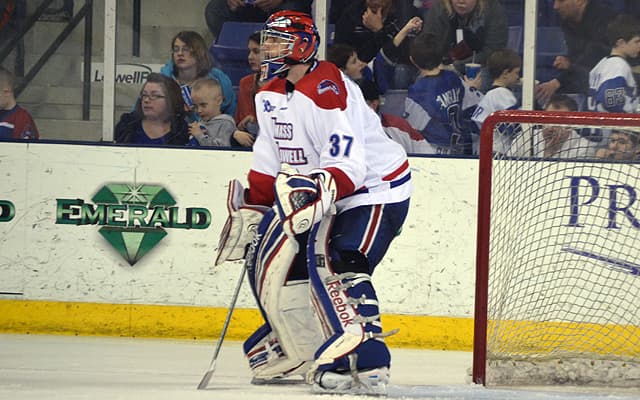
Connor Hellebuyck remains a Winnipeg Jet with the 2026-27 season roughly a month away, and the biggest name on the NHL trade board has not moved. A deal sending the three-time Vezina winner to the Buffalo Sabres appeared close before the opening round of the 2026 draft and fell apart. The chatter has been quiet since, though Sportsnet's Elliotte Friedman has suggested it could restart around training camp.
Jets captain Adam Lowry, speaking publicly this month, said he expects Hellebuyck to report to camp and stressed that until something actually happens, Hellebuyck is a Jet. Winnipeg general manager Kevin Cheveldayoff acknowledged earlier this summer that the club was listening to offers.
That is the full picture: a team that will listen, a player who is expected to show up, and a market that has not produced a deal.
Why no deal has happened
The asking price is the obvious answer, and reporting around the league has characterized Winnipeg's demands as extremely high. But the more interesting reason is that Hellebuyck's most recent season complicates his valuation considerably.
He finished 23-23-11 with a 2.86 goals-against average and an .895 save percentage. For most goaltenders that is a serviceable season. For a three-time Vezina winner it is a significant step down, and it arrived at exactly the moment his trade value was being tested.
A general manager being asked to surrender a substantial package for a goaltender entering his mid-30s with meaningful term remaining on his contract now has to weigh that season. Some will read it as a blip in front of a defense that changed. Others will read it as the start of a decline curve. That disagreement is precisely why there is no market-clearing price.
Why camp is the natural restart
Training camp changes the calculus for both sides in ways that summer does not.
For Winnipeg, camp is when a hypothetical becomes a locker room dynamic. Having a goaltender in the room whose situation is publicly unresolved is manageable in August and corrosive in October.
For acquiring teams, camp is when injuries happen. Every year, at least one contender loses a starting goaltender in the preseason, and the team that was unwilling to meet Winnipeg's price in July becomes willing in late September. Buffalo remains the most frequently mentioned destination, and reporting has indicated the Sabres are still viewed as a potential landing spot.
Fantasy fallout
Hellebuyck is one of the hardest players to price on a fantasy draft board right now, and the reason is not his ability. It is that his fantasy value differs substantially by destination.
On Winnipeg, he is a high-volume starter behind a defensive structure he knows, which historically has produced elite ratios. On a different team, he is a high-volume starter learning a new system, and goaltender ratios in a first season with a new club are notoriously volatile.
The read is to draft him as a low-end No. 1 rather than as a top-three goaltender, and to accept that you are buying volume rather than certainty about ratios. Volume is the single most valuable goaltender attribute in fantasy, and a trade does not threaten it. Nobody acquires Hellebuyck to play him 45 games.
Winnipeg's backup becomes a speculative add if a deal happens, and the value there depends entirely on what comes back. A trade that returns a goaltender changes the picture. A trade that returns skaters and picks would leave Winnipeg's crease genuinely open, which is a late-round dart worth tracking.
The Verdexed model take
Verdexed's goaltender projections are built from workload, team defensive quality, and shot-quality-adjusted save performance, and the model separates the third input from the first two deliberately.
Applied to Hellebuyck, that separation is clarifying. His shot-quality-adjusted performance last season was better than his raw save percentage indicates, which supports the read that the number reflected the situation in front of him more than a decline in his own play. That is the analytical case for a team paying a real price.
The model's projection for him is not highly sensitive to which team he plays for, because the workload input dominates and the defensive input is similar across the plausible destinations. That is an argument for drafting him without waiting for the trade to resolve.
At the team level, the model treats Winnipeg's projection as materially dependent on him and Buffalo's as materially improved by him, which is why this is the offseason's most consequential unresolved transaction for the futures market.
The betting angle
Both teams' win totals and playoff odds carry an embedded probability of this trade. That means neither number is currently correct in the world where the trade happens, and neither is correct in the world where it does not.
The play is to wait for camp and act fast. Futures markets move slowly on goaltender trades relative to how much they matter, and the window between a deal being announced and the numbers being adjusted is where the edge lives.
What to do in your league
Draft Hellebuyck as a No. 1 goaltender at a slight discount to his peak-era price, and do not let the trade uncertainty push him too far down your board. He is going to play a lot of games for a team that wants to win, which is the entire fantasy case for a goaltender.
If you already roster him in a dynasty league, hold. A trade to a better defensive team would raise his value, and the current uncertainty is suppressing his trade price in your league more than it should.
What's next
Watch the first week of camp. If Hellebuyck reports as Lowry expects and no deal materializes in the opening days, the most likely outcome is that he starts the season in Winnipeg and the conversation moves to the trade deadline. If a contender loses a goaltender in the preseason, expect this to move quickly.