 NHL2026-07-27
Connor Bedard Signs for $75 Million and Opens the Season on the Shelf: Chicago's Fantasy Draft Problem
By Verdexed NHL Desk
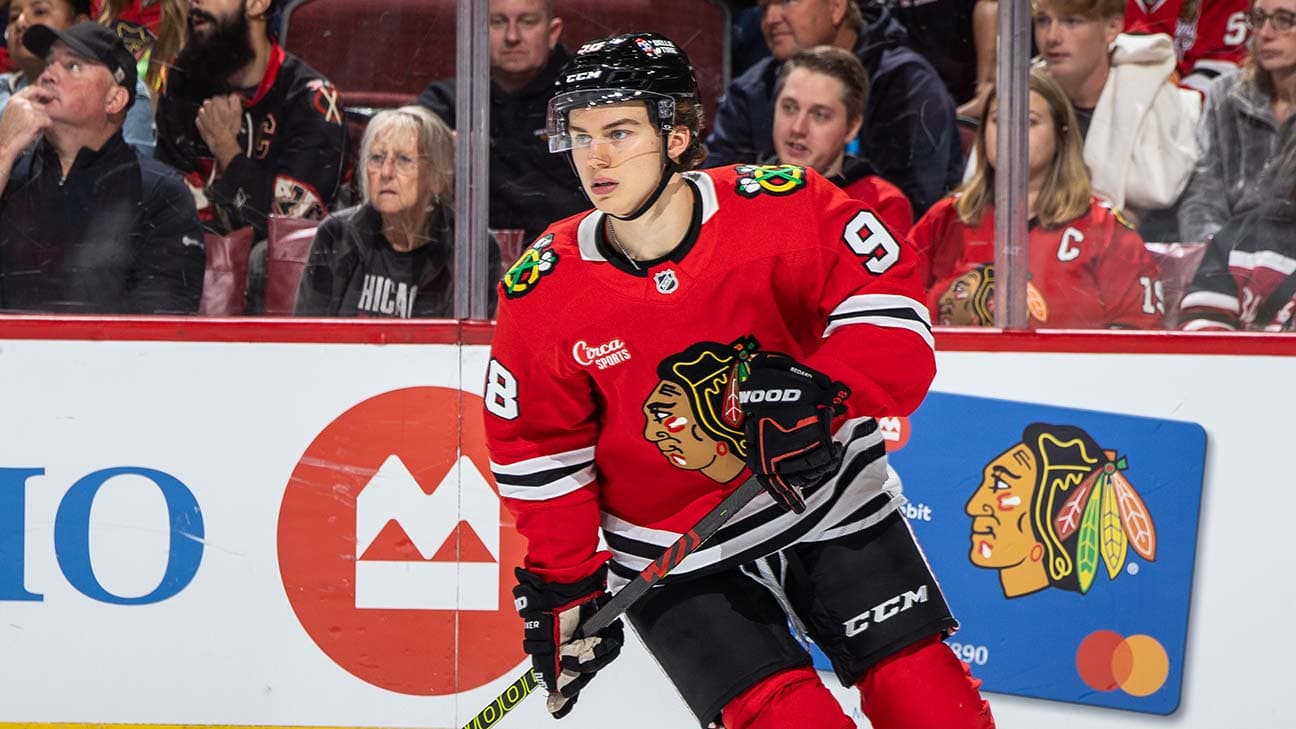
Connor Bedard signed a five-year contract worth $75 million with the Chicago Blackhawks, a $15 million annual average that makes him one of the highest-paid forwards in the league. He will not be available when the deal starts paying out. Chicago announced on July 8 that Bedard underwent surgery on his left shoulder after being injured during an offseason training session in Vancouver on July 2, with a recovery timeline reported at roughly four months.
Four months from early July puts a return somewhere around November. Bedard has said publicly that the early stages of rehabilitation have gone well, and he was reported to be roughly two weeks past the procedure when he addressed it. For fantasy managers, the number that matters is the number of games missed, and the honest estimate right now is at least the first month of the season.
What happened
The injury occurred during a training session with a private skills program in Vancouver. Video circulated showing Bedard losing an edge and going into the boards, leaving the ice quickly while favoring the left shoulder. It is the kind of freak offseason event that no projection system anticipates and that no organization can prevent.
The contract and the injury are not related in a causal sense, but the timing is awkward. Bedard produced 75 points in 69 games last season, with 30 goals and 45 assists, numbers that justified the extension on their own. He turned 21 in July.
The fantasy math
A player who misses a month of an 82-game season loses roughly 12 to 14 games, which is about 15 percent of the schedule. For a point-per-game forward, that is a meaningful counting-stat haircut before a single puck drops.
The second and larger problem is the return. Shoulder surgery for a forward who relies on shot volume and puck protection is not a clean-slate recovery. Shooting mechanics load through the shoulder, and players returning from shoulder repairs frequently take several weeks past their return date to reach normal production. The realistic model is not "misses a month, then produces at full rate." It is "misses a month, produces below baseline for another few weeks, then normalizes."
Combine those and Bedard's realistic 2026-27 output is meaningfully below what his per-game rate would suggest across a full season.
What it does to your draft board
Bedard's fantasy price this summer has been built on the expectation of a leap. He is 21, he just got paid like a franchise centerpiece, and the standard trajectory for a player with his pedigree is a jump into the elite scoring tier in year four. That case is not dead. It is delayed.
The right way to handle him depends entirely on format.
In redraft leagues with injured reserve slots, Bedard becomes a value target. The market tends to overreact to offseason injuries with defined timelines, and a player who will be back by November on a team that will give him every opportunity is exactly the profile worth drafting at a discount and stashing.
In redraft leagues without an IR slot, he is close to unusable early. Occupying an active roster spot with a player who cannot play for a month is a real cost, and managers should let him fall further than his talent suggests.
In dynasty, nothing changes. A 21-year-old signed for five years who missed a month with a repaired shoulder is not a franchise-altering event.
In daily and weekly transaction leagues, the play is to let someone else draft him and monitor the waiver wire in October. Managers who stashed an injured star frequently cut bait when the roster crunch arrives.
The Chicago fallout
Bedard's absence redistributes ice time and power-play usage across a Blackhawks group that has been substantially reshaped. Chicago acquired Bowen Byram from Buffalo in June and then signed him to a six-year, $75 million extension with a $12.5 million average annual value that begins in 2027-28, making him one of the highest-paid defensemen in the league. Patrick Kane returned to Chicago earlier this offseason.
For fantasy purposes, the immediate beneficiaries are whoever inherits first-line center minutes and top power-play unit time in October. Those are the sleeper additions worth identifying before drafts, because the window is defined and the production is real while it lasts.
Byram's value is not directly affected by Bedard's absence in a negative sense. A puck-moving defenseman running a power play generates assists regardless of who is finishing, though a weaker first unit does compress the ceiling.
The Verdexed model take
Our projection system separates availability from performance, and Bedard's inputs move in both. The availability adjustment is straightforward: our model removes an estimated month of games and applies a graduated ramp on the return rather than a step function, which is how the historical data on shoulder repairs actually behaves.
The performance adjustment is smaller than managers might expect. Our system does not apply a lasting talent penalty for a single offseason shoulder procedure in a player this young, because the evidence for durable production loss in that specific scenario is weak.
Net result: our rest-of-season projection for Bedard sits comfortably inside the top forward tier on a per-game basis and outside it on a total-points basis. That gap is the entire fantasy decision, and it resolves differently depending on whether your league rewards rate or volume.
Betting angle
Chicago's win total should already reflect the Bedard news, which broke in early July. The market to watch is his individual points total, where books may set a number that splits the difference between a full season and a partial one. Our model reads those markets as more likely to be set too high than too low, because season-long props tend to anchor on prior-year production and adjust for injury conservatively.
The sharper play is on Chicago's October game markets specifically. A team missing its first-line center for the opening month is a different team than the one the season-long number describes.
What's next
The next real update should come when Bedard is cleared for contact, which typically precedes a return by two to three weeks. That milestone, rather than any general progress report, is the signal fantasy managers should be waiting for.
Draft accordingly: pay for the player he will be in December, not the one who will be watching in October.