Connor Bedard Is Skating at Blackhawks Camp Without Contact and a November Return Is the Target
By Verdexed NHL Desk
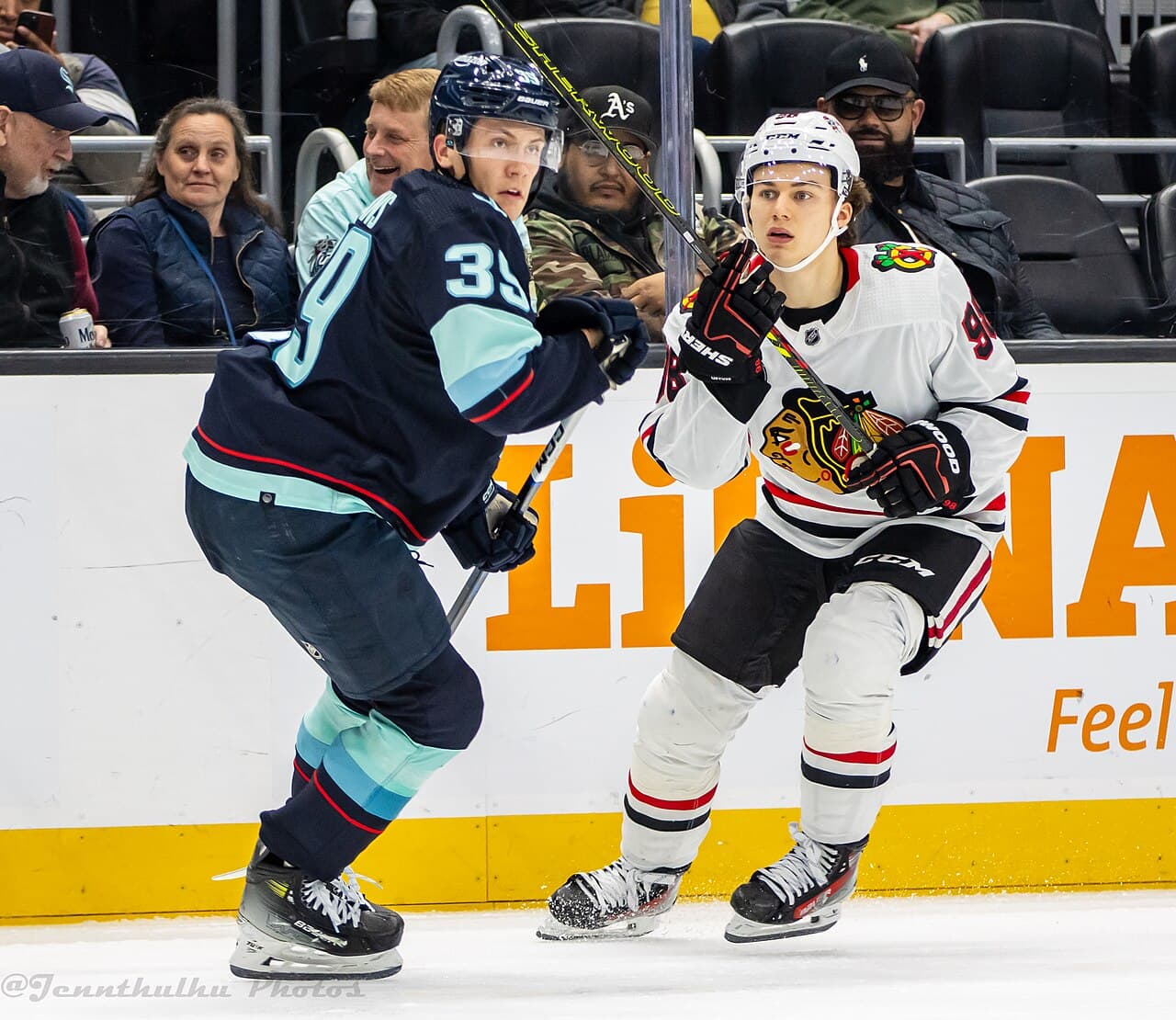
Connor Bedard is back on the ice at Blackhawks training camp, skating on his own as he rehabs the left shoulder he had surgically repaired this summer, and he has not yet been cleared for contact. The roughly four-month recovery timeline from the procedure points to an early-November return, which would keep him out of Chicago's first 14 games.
For fantasy managers heading into draft season, that is the number that matters. Fourteen games is roughly 17 percent of a season, and it arrives at the front of the schedule rather than the back, which changes how a drafted player can be managed.
What happened and where it stands
Bedard suffered the injury during an offseason training session in Burnaby, British Columbia, skating off the ice holding his left arm and shoulder after an awkward fall. He underwent surgery in July with a timeline reported at approximately four months.
The camp reporting this week has been cautiously positive. Bedard has been spotted skating independently at the Blackhawks Ice Center on multiple occasions over the past week, and observers noted he appeared more aggressive with his shooting than in earlier sessions and was moving well. He remains restricted to solo skill work with the team's skills coaches rather than full-contact practice.
That distinction is the whole story. Skating and shooting are the easy parts of shoulder rehabilitation. Contact clearance is the gate, and there is no indication yet of when it comes.
What a November return actually means
Chicago's first 14 games represent a specific kind of cost for a fantasy manager. A player who misses the opening month is a player whose draft-day price has to be discounted by more than the raw games-missed percentage, because the roster spot has to be held or streamed during a period when waiver-wire value is at its highest.
The offsetting factor is that early-season absences are the most manageable kind. Injured reserve slots are typically open in October. The players who might replace Bedard's production are available on waivers in the first weeks. And a player returning in November has 60-plus games ahead of him, which is enough to matter in every format.
Compare that to a player who goes down in February. Same number of games missed, dramatically worse fantasy outcome.
The Verdexed model take
The model's read on Bedard is that the shoulder is a bigger question for his rate statistics than for his availability.
A four-month timeline for shoulder surgery is standard and the reporting suggests he may be tracking at or slightly ahead of it. Availability, in other words, is close to the expected case. The harder question is what a shooter's release looks like in the first weeks after a shoulder repair, and the honest answer is that it frequently looks worse than it will by December.
That argues for a specific approach: draft him at a discount, expect a slow November, and evaluate him as a genuine top-line asset from December onward. Managers who judge him on his first ten games back will sell low on a player who is still finding his shot.
The Chicago team context supports patience. The Blackhawks have been building toward the moment when Bedard is surrounded by finishing talent rather than carrying an offense alone, and the organization has added pieces that should reduce the burden on him. A Bedard who does not have to generate every scoring chance himself is a Bedard whose shoulder has an easier season.
Betting angle
Chicago's season-long win total and playoff odds should already incorporate a 14-game Bedard absence, because the surgery was public in July and the timeline has been consistently reported since.
The market inefficiency, if there is one, sits in the October game markets. Bettors pricing individual Blackhawks games in the first month are working with a roster that is materially different from the one the season-long numbers were built on, and casual money tends to bet the brand name rather than the lineup. That creates a recurring case for fading Chicago in October relative to whatever the closing number suggests.
The reverse applies in November. A team that gets its franchise center back mid-season frequently sees its market price lag the improvement by a week or two, because line-setters adjust on results rather than on roster news. The window immediately after Bedard's return is where the value sits.
What to do in your draft
Bedard should still be drafted in every format. A player of his caliber missing 14 games is a discount opportunity, not a disqualification, and the price he falls to in most drafts will overcorrect for the absence.
The specific approach depends on your league's IR rules. In leagues with an injured reserve slot, he is a straightforward value pick: stash him, stream the spot, activate him in November. In leagues without an IR slot, the cost is a live roster spot for a month, and he should be drafted two to three rounds later than his talent suggests to compensate.
In dynasty formats, nothing changes. A 21-year-old with his ceiling recovering from a routine shoulder repair is not a player whose long-term value moves on this news.
What is next
Contact clearance is the checkpoint that matters, and it will likely come several weeks before he plays in a game. When it does, the return date becomes projectable rather than speculative.
Until then, treat the encouraging camp reports the way they should be treated: as evidence that the rehabilitation is on schedule, not as evidence that the schedule has accelerated. Players skate before they are cleared to be hit, and the gap between those two milestones is where shoulder timelines are actually decided.