Coby Bryant Is Out 8 to 10 Weeks and Chicago's Marquee Free-Agent Signing Won't Open the Season
By Verdexed NFL Desk
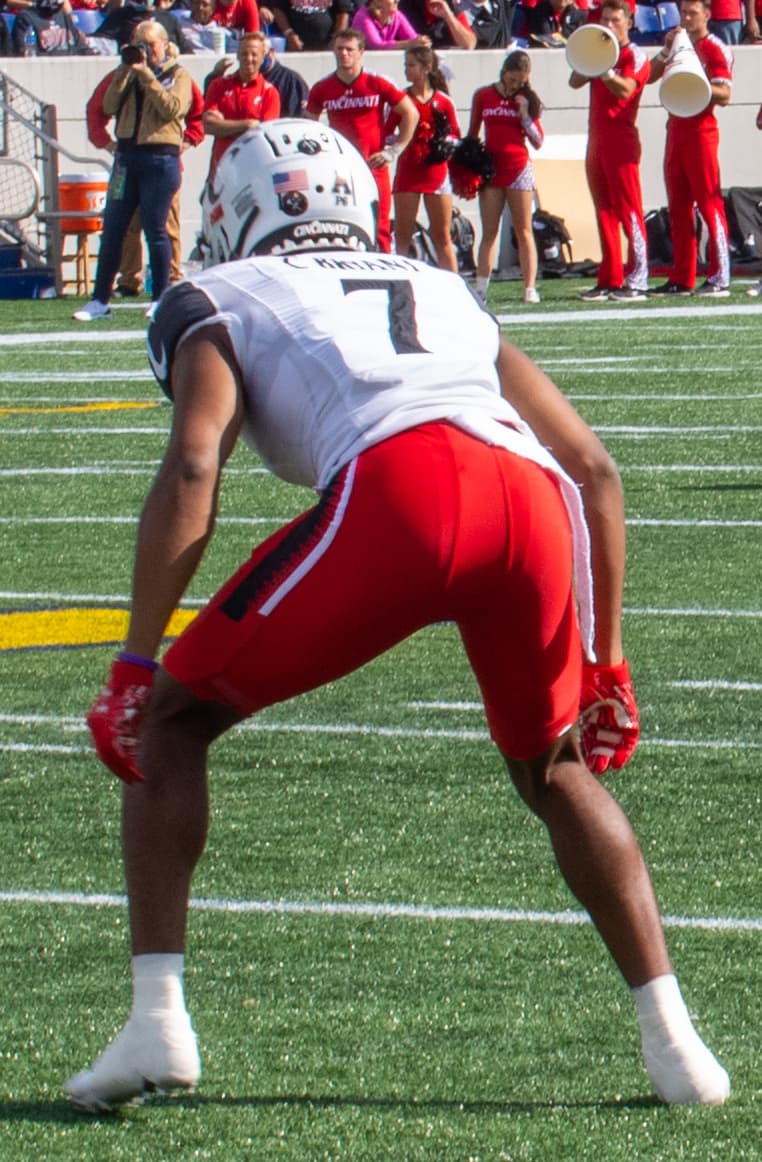
Chicago Bears safety Coby Bryant is expected to miss eight to 10 weeks after hyperextending his left knee during Monday's practice, the first padded session of training camp. Reporting indicates he sustained a bone bruise and a small fracture, and that he is not expected to need surgery. Some outlets have put the range as wide as eight to 12 weeks.
Bryant was Chicago's headline free-agent addition of the offseason, signing a three-year deal reported at $40 million. He was hurt in a one-on-one drill against tight end Cole Kmet, which is to say he was hurt in the most routine possible setting, on the first day the pads came on.
The Bears do not play their Week 1 game until September 13, which gives Bryant a little over a month before the season starts. That is not close to enough on the reported timeline. An eight-week clock from the first week of August lands at the end of September at the earliest, and a 10-week clock pushes into mid-October.
What Chicago actually loses
No surgery is the meaningful part of this report. Bone bruises and small fractures heal on their own schedule, and that schedule is frustrating but predictable. A player in this situation is far more likely to return in the stated window than a player facing a procedure, and the risk of a season-long absence is low.
What Chicago loses in the interim is the specific thing it paid for. A team does not commit $40 million to a safety to be a depth piece; it does so to solve a coverage problem in the middle of the field. Bryant's absence forces the Bears to open the season with whichever combination of returning and internal options they had planned to upgrade past.
The timing compounds it. Missing training camp entirely means Bryant will not have installed the defense at full speed with the players he is supposed to communicate with. Safeties are the position where that matters most, because the job is largely about pre-snap organization and post-snap adjustment with the corners and the linebacker level. A safety who returns in October is a new player in the huddle, not a returning one.
Chicago also has an unresolved situation at corner. There is no timeline attached to Kyler Gordon's activation from the physically unable to perform list after a reported delay in his recovery from a calf injury. A secondary missing its big-ticket safety signing and waiting on a starting corner is not the unit the Bears drew up in March.
Fantasy fallout
Bryant is an IDP asset rather than a redraft one, and in IDP formats this is a straightforward downgrade to a stash. He should not be drafted as a starting defensive back in any format that requires weekly production through September. Managers in deep IDP leagues with injured reserve slots have a legitimate late-round play, because the reported timeline points to a return with roughly half a season left and a full-time role waiting.
The wider fantasy consequence is on the other side of the ball. Bears opponents get easier, and specifically the passing games that face Chicago in the first six weeks of the season get easier. Streaming quarterbacks and tight ends against a secondary that is missing its free-agent safety signing and possibly a starting corner is exactly the kind of matchup edge that decides one-week decisions in September.
Chicago's own team defense drops in fantasy value for the same window. D/ST units are drafted on projected turnovers, and turnovers in the secondary come from players who know where each other are. A unit assembling itself in real time produces fewer of them.
The Verdexed model take
Our model separates injury news into two categories: availability changes and structural changes. A star skill player missing two weeks is an availability change, and it moves projections in a narrow, predictable way. A defensive back with signal-calling responsibility missing all of camp and the first month is a structural change, and it moves projections wider.
The Bears fall into the second category, and the model has moved Chicago's projected pass-defense efficiency down for the September portion of the schedule while holding the full-season number closer to its preseason level. The implied shape is a defense that is worse than its talent for six weeks and roughly at its talent afterward.
That produces a specific market read. Chicago's win total, already sitting toward the lower end of the NFC North in most preseason pricing, does not need to move much on this news, because the games most affected are early and the personnel returns. What should move, and generally has not, is the pricing of Bears game totals in the first month.
Betting angle
The play is on early-season totals rather than the season-long number. Chicago games in September project to be higher-scoring than the market has them, because the secondary will be operating below its intended level and the offense is not built to shorten games.
Opponent passing props are the more precise version. Quarterbacks facing Chicago in the first four weeks should carry higher passing-yard expectations than their season-long baselines suggest, and those props are typically priced off season averages rather than opponent-specific personnel absences.
The Bears' win total itself is a pass. Bryant returning in the second half of the season means the version of Chicago that plays the majority of its schedule is the version the number was set on. Betting the under because of an August knee injury to a safety is an overreaction to a story that resolves in October.
What to do in your league
In IDP leagues with an injured reserve slot, Bryant is a defensible last-pick stash. In IDP leagues without one, he should not be drafted.
In redraft leagues, the action is in your Week 1 through Week 5 streaming plan. Look at who Chicago plays in the opening month and note the quarterbacks and pass catchers on those rosters. Those are your streaming targets, and they will be priced as if the Bears secondary is intact.
If you were considering the Bears defense as a mid-round D/ST, move on. There are better September units available later.
What's next
The checkpoint is whether Chicago places Bryant on injured reserve with a designation to return or carries him on the active roster. The former would lock him out for a defined minimum number of games and confirm the longer end of the reported range. Carrying him would suggest the team believes the eight-week end of the estimate is realistic.
The second thing to track is Kyler Gordon. A secondary can absorb one significant absence. Opening the season without both a free-agent safety and a starting corner is how a defense ends up carrying a unit rating it never recovers from.