Christian McCaffrey Has Missed Multiple 49ers Practices With 'Tightness' and the Warning Signs Are Familiar
By Verdexed NFL Desk
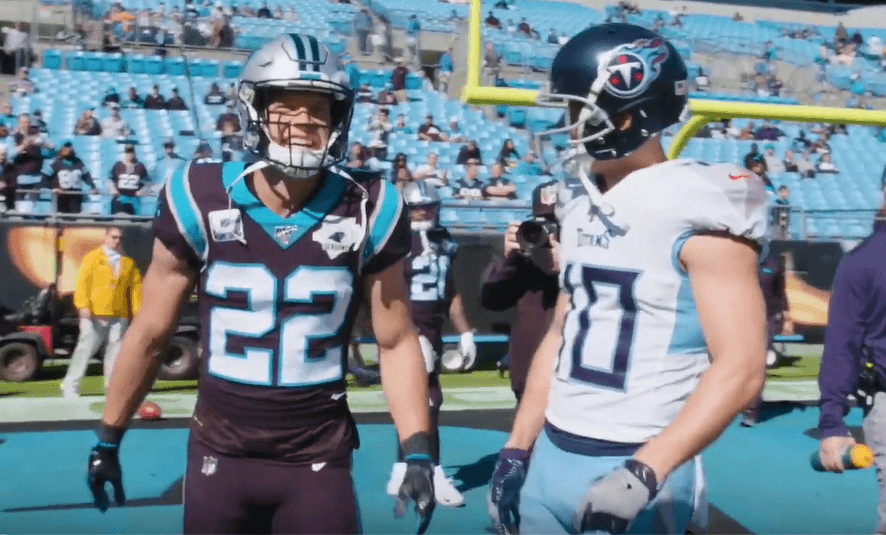
Christian McCaffrey missed another San Francisco practice this week, extending an absence the 49ers have publicly described only as "tightness." Offensive coordinator Klay Kubiak used that word on Monday without attaching it to a specific muscle, and McCaffrey was again out on Tuesday. Head coach Kyle Shanahan told reporters he is not concerned and framed the decision as workload management with Week 1 as the target, which is the standard August answer from a team that has no reason to push a 30-year-old running back through mid-August padded work.
The reason this registers at all is that the 49ers used almost exactly the same language two years ago, and that version did not end well.
Why "tightness" is a loaded word in Santa Clara
In 2024 training camp, McCaffrey was managed through calf tightness. That maintenance plan carried into the regular season, the diagnosis eventually expanded to Achilles tendinitis, and he was limited to a handful of games before a separate knee issue ended his year. San Francisco was never dishonest about it. The problem was that the vague early label understated a soft-tissue issue that never resolved.
Shanahan appeared to acknowledge that history directly. His stated concern was not the current absence but the alternative: McCaffrey pushing through tightness, aggravating something, and turning a week of rest into a month on the sideline. That is a coach describing a risk he has already lived through once. It is also, for fantasy purposes, the most useful thing anyone in the building has said this month.
The counterpoint matters too. There has been no reported imaging result, no injury designation, no PUP move, and no timeline floated by the team. Nothing in the public reporting says this is a strain. A veteran back sitting out consecutive August practices in a camp where the coaching staff has openly prioritized his Week 1 availability is not, in isolation, alarming. The alarm comes from the pattern, not the practice report.
What it does to the San Francisco backfield right now
The immediate beneficiary is not a running back. With McCaffrey out, Deebo Samuel has been taking running back reps, which is both a return to how San Francisco used him for most of his first stint with the team and a reminder of how thin this offense has become at skill positions. Samuel re-signed with the 49ers earlier this month on a one-year deal after a season in Washington, arriving into a receiver room that has been gutted: Ricky Pearsall is out for the season after knee surgery, George Kittle opened camp on the PUP list, and Mike Evans has been managing a quad strain.
That context changes how to read the McCaffrey reps. Shanahan is not simply resting a star. He is redistributing touches in an offense that currently does not have enough healthy bodies to run its full menu, which is why a wide receiver is logging carries in the second week of August.
For fantasy managers, the practical read is that San Francisco's offense concentrates production in very few hands when healthy and has almost no margin when it is not. McCaffrey remains the engine of that structure. He is also the single largest source of variance on any roster that drafts him.
Fantasy fallout
McCaffrey's price has not moved in any dramatic way on the back of two missed practices, and it should not. He is still being drafted as a high-end RB1 on the strength of a role that no other back in the league matches: he is the primary runner, the primary passing-down back, and a legitimate receiving weapon in an offense that manufactures efficiency.
The correct adjustment is not to move him down the board. It is to change what you do around him.
Draft the handcuff, and draft it earlier than you want to. Any San Francisco back who inherits even 60 percent of this workload is an immediate every-week starter, and the market historically underprices that specific handcuff because the depth chart behind McCaffrey looks unremarkable on paper. It is not the talent that makes the backup valuable. It is the volume the scheme guarantees.
Build the rest of the roster for stability. If you spend a first-round pick on McCaffrey, your next several picks should skew toward players with locked-in roles rather than additional upside swings. A roster that pairs McCaffrey with three other injury-discounted profiles is not a portfolio, it is a single bet placed four times.
Do not chase Deebo Samuel as a running back. The August backfield reps are a symptom of a depleted camp, not a projection of his September role. If McCaffrey is healthy in Week 1, Samuel's value comes from the receiver room being thin, not from carries.
The Verdexed model take
Verdexed's projection system treats McCaffrey the way it treats every high-usage back coming off an injury-shortened stretch: it separates his per-snap production, which remains elite, from his games-played distribution, which is now the dominant input in his season-long value. Those two things move independently, and conflating them is how managers end up either overpaying or fading a top-five talent for the wrong reason.
The model's current posture is that McCaffrey's per-game ceiling is unchanged and his availability projection carries a wider band than any other back in the top tier. That combination produces a player whose median outcome is still an RB1 finish and whose downside case is meaningfully worse than the players drafted immediately around him. In best-ball formats, where you are paid for weekly spikes and never punished for a zero, that profile is more valuable than the raw season projection suggests. In redraft leagues with weekly lineups and shallow benches, it is worth less.
On the betting side, nothing here should move a San Francisco season number yet. A pair of August practice absences with no injury designation is not information the market prices, and it should not be. The number to watch is whether McCaffrey appears in a preseason game or is held through the entire slate. A full preseason absence would not be unusual for a veteran of his standing, but combined with the tightness reporting it would tell you the team is treating this as something to be managed rather than something already resolved.
What's next
The next real checkpoint is whether McCaffrey returns to full team work before San Francisco's joint practice and preseason schedule advances. If he is back in pads within the week and stays there, this becomes a footnote, and his draft price will hold. If the absences stretch toward the end of August with the same non-specific language attached, the team's own stated fear, a small problem becoming a month-long one, starts to look like the base case rather than the tail risk.
Fantasy managers drafting this week do not need to solve that question. They need to price it. Take McCaffrey where his talent says, then spend a mid-round pick on the backfield behind him and stop pretending the two decisions are separate.