Atlanta Has No Named Starting Quarterback for Sunday and Bijan Robinson Absorbs It
By Verdexed NFL Desk
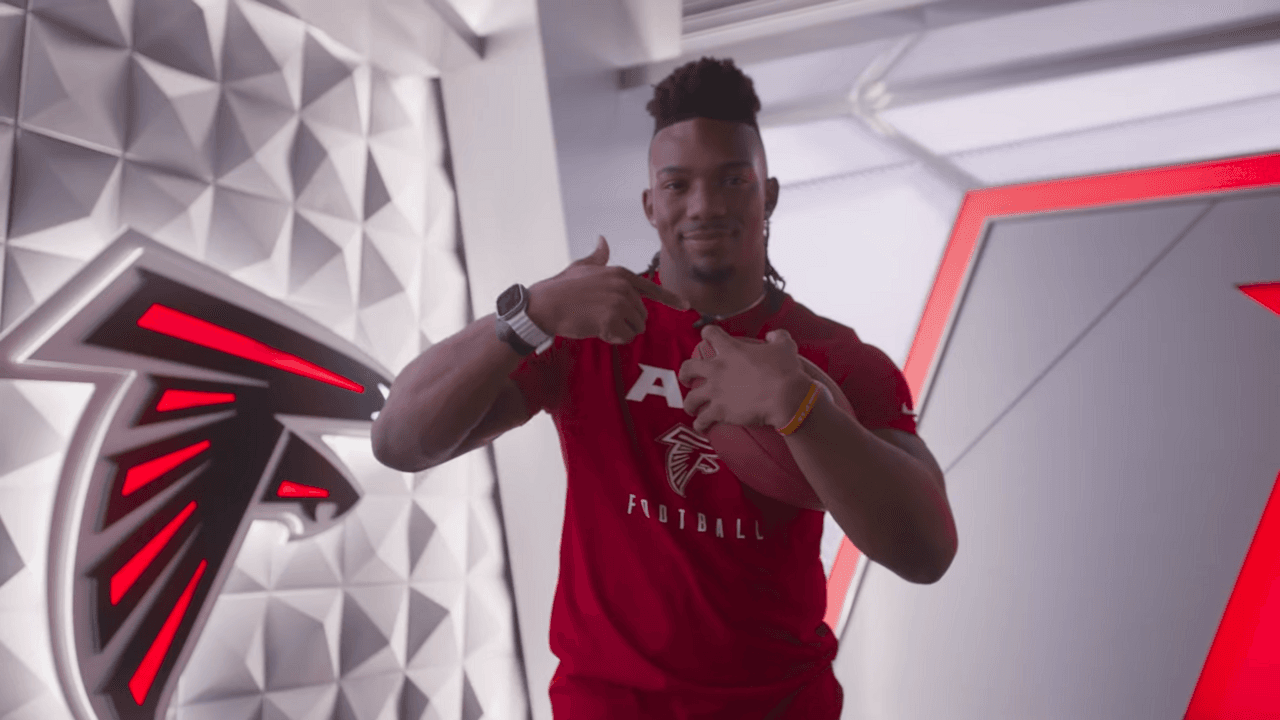
Atlanta head coach Kevin Stefanski declined to name a starting quarterback for Sunday's game against Carolina, saying he is not ruling anybody out. That leaves four names live: Tua Tagovailoa, who is day to day with an oblique injury and did not practice Wednesday; Cooper Rush, who started the opener and is working through a flareup of back spasms; Michael Penix Jr., who is still coming back from an ACL tear; and Jack Strand.
For a fantasy manager, the quarterback question is almost beside the point. What matters is that an offense with this much uncertainty at the position is going to run the ball, and Atlanta happens to employ one of the two or three best running backs in football.
The situation, as confirmed
Rush started Week 1 in a 20-13 loss to Pittsburgh and finished 12 of 22 for 143 yards with one touchdown and two interceptions. Tagovailoa was unavailable for that game with an oblique issue and remains day to day, with no practice on Wednesday. Rush was a full participant in Wednesday's practice despite the back spasms that flared up over the weekend. Penix is working his way back from an ACL tear and has not been cleared as a starting option.
Stefanski's public position is that no decision has been made. That is worth taking at face value in a week where two of the three viable candidates have active injuries. The Friday injury report will say more about Tagovailoa's availability than anything said in a Thursday press conference.
What the market thinks
The game is priced inside a field goal with a total in the low-to-mid 40s, which is the market's way of saying it does not expect much offense from either side. An implied team total in the low 20s for Atlanta is consistent with a game plan built around ball control rather than volume passing.
That is the single most useful piece of information available this week. Books have not moved this number much on the quarterback news, which suggests the market views Rush, a healthy Tagovailoa and a limited Tagovailoa as roughly interchangeable for the purposes of pricing a game against Carolina. When the spread does not care who plays quarterback, the fantasy conclusion is that the quarterback does not matter much either.
Bijan Robinson is the entire fantasy story
Robinson was already a top-three fantasy asset on volume and efficiency. An offense that cannot settle on a quarterback is an offense that funnels touches to its best player, and Atlanta has shown no hesitation about giving Robinson both the early-down work and a meaningful share of the passing game.
The specific reason this matters in Week 2 is game script. In a game the market prices as a near coin flip, Atlanta is likely to be within a score in the fourth quarter. A tied or slightly trailing team with a shaky quarterback and a back who can catch is a formula for Robinson touches in every situation, including the ones where a lesser back would come off the field.
He is a must-start and, for anyone who can get him, a buy. The quarterback mess actually raises his floor even as it caps the offense's ceiling, and that trade is one every fantasy manager should be happy to make with a player of his usage.
The pass catchers are a fade
Drake London and the rest of the Atlanta receiving group are the losers. A passing game that produced 143 yards in the opener, with a quarterback rotation nobody can predict and two interceptions already on the ledger, is not a place to invest weekly starts. London's talent means he remains a hold in season-long leagues and a start in leagues where the alternative is worse, but the realistic expectation for Week 2 is six or seven targets in a low-volume attack.
Tight ends and secondary receivers in this offense should not be in lineups at all this week. The target distribution in a game with roughly 30 attempts is too concentrated and too unpredictable to bet on anyone outside the top of the depth chart.
The Verdexed model take
Verdexed's approach to quarterback uncertainty is to project the offense rather than the individual. When the identity of the starter is unknown, the honest model output is a wide band on passing volume and a much tighter band on rushing volume, because the rushing plan survives a quarterback change while the passing plan does not.
Applied here, that produces a Robinson projection that barely moves regardless of who takes the first snap, and a London projection with error bars wide enough that he belongs in the flex conversation rather than the automatic-start group. It also argues for the game's under from a pure structure standpoint, since both defenses are facing offenses with clear ceilings, though the number is already low enough that the edge is thin.
Betting angle
The two markets worth a look are Robinson's rushing and receiving props, and the Atlanta team total. Robinson's props tend to be priced off a neutral game script, and this one is anything but neutral: an offense with no quarterback certainty in a close game is a volume machine for its back. Anything that prices him near his season-long average of touches is likely too low.
On the game side, the under is the structural bet, but the honest read is that the market has already found it. A total in the low 40s for a near pick'em is not an inefficiency waiting to be exploited. The better approach is to wait for the Friday quarterback news and take a position on Atlanta's team total if the number has not adjusted.
What to do before Sunday
Start Robinson without a second thought. Treat London as a flex rather than a set-and-forget WR2. Leave every other Atlanta pass catcher on the bench. And watch the Friday report for Tagovailoa's game status, because if he is ruled out and Rush's back is still an issue, the quarterback situation goes from murky to genuinely alarming, and that is the point where Atlanta's team total becomes a bet rather than a lean.