Anthony Richardson and Riley Leonard Are Tied for Colts QB2, and That Job Matters More Than It Should
By Verdexed Fantasy Desk
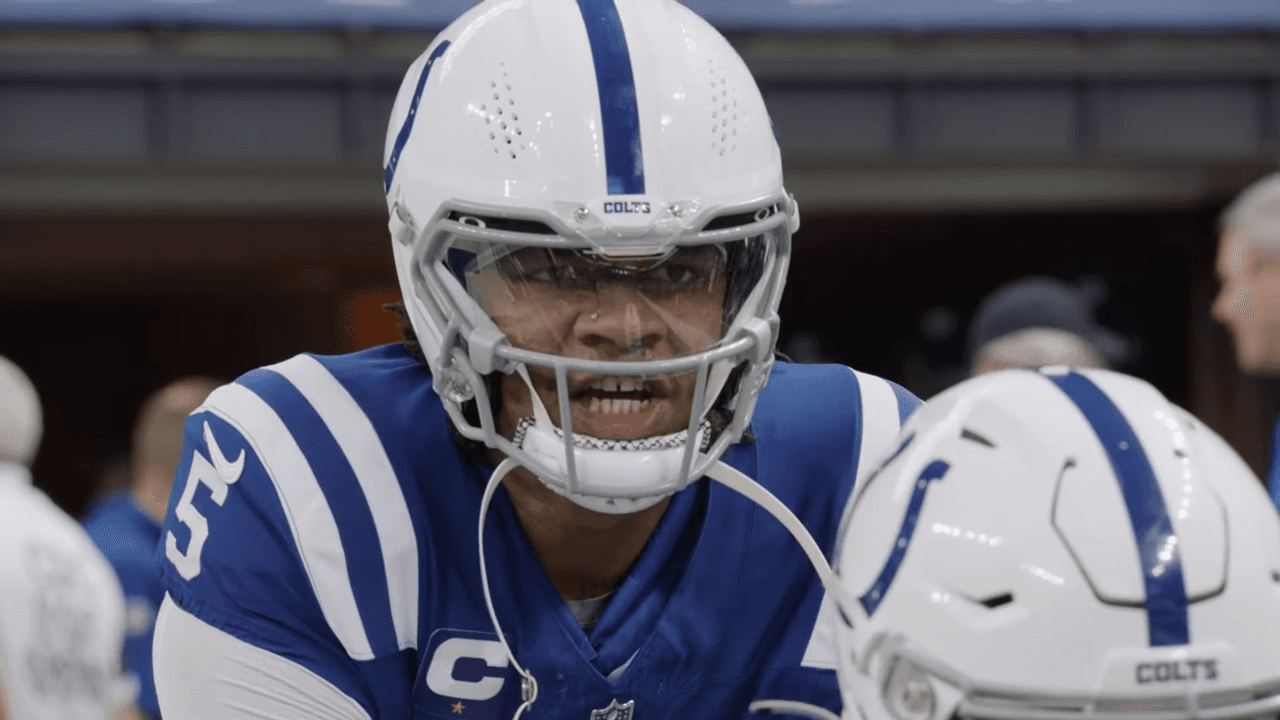
Two weeks into Indianapolis training camp, Anthony Richardson Sr. and Riley Leonard are still rotating between the second- and third-team offense with neither able to pull away in the competition to be Daniel Jones' backup. General manager Chris Ballard has said the intent is to carry all three quarterbacks when the roster is trimmed to 53 on August 30, which means the Colts plan to spend a roster spot on redundancy at the most important position.
That decision tells you how the organization views the risk profile of its starter. Jones signed a two-year deal worth a reported $88 million in March and is the unquestioned QB1. He is also coming back from an Achilles injury suffered in Week 14 of last season, and Indianapolis lived through the consequences of quarterback attrition a year ago.
How the room got here
Richardson opened 2025 as the backup, a demotion from the starting job he had held, and a pregame accident in Week 6 ended his season. He requested a trade during the offseason, then returned for the voluntary program and by all accounts has drawn positive reviews from the coaching staff and his teammates. That is a meaningful reset for a player whose Colts tenure had looked finished.
Leonard is the counterweight. He took over after Jones went down late last season and started the regular-season finale against Houston, and the performance was strong enough that he entered this camp with a legitimate claim rather than as a developmental third stringer. He also has the advantage of never having been benched in Indianapolis, which is a soft factor but not a meaningless one.
Reporting from camp describes the two splitting second-team reps evenly with neither separating. That is unusual this deep into August. Most backup competitions resolve themselves by the second week because coaching staffs want the eventual winner getting the bulk of the developmental work.
Why fantasy managers should care
Backup quarterback battles are usually irrelevant. This one is not, for three reasons.
The first is the starter's injury history. An Achilles rupture is one of the injuries with the most stubborn recurrence and compensation-injury profile in football, and Jones has already missed significant time. The probability that Indianapolis' QB2 starts games this season is materially higher than the league-average figure.
The second is the skill group. Jonathan Taylor just signed a $44 million extension and profiles as a workhorse RB1. Josh Downs has emerged as the primary receiver. Alec Pierce is working back from an ankle procedure. This is not a barren offense where the backup quarterback's identity is irrelevant. Whoever plays quarterback in Indianapolis is throwing to and handing off to fantasy-relevant players.
The third is the divergence between the two candidates. Richardson and Leonard are not interchangeable. Richardson is a designed-run threat whose rushing volume, when he has played, has been the single largest driver of his fantasy value and a real component of the offense's red zone approach. Leonard is the more conventional distributor. If Richardson wins the job and then has to play, Taylor's goal-line carries are at risk in a way they are not under Leonard.
The Verdexed model take
The model treats quarterback rushing as the highest-leverage variable in fantasy football, because rushing production is both more predictable week to week than passing production and worth more points per touch in standard scoring. That is why the two candidates project so differently despite similar passing profiles.
Under a Leonard scenario, the model's projections for Taylor hold roughly steady and Downs' target share ticks up, because a conventional pocket quarterback distributes more evenly. Under a Richardson scenario, the model shifts expected rushing touchdowns away from Taylor and toward the quarterback, and widens the variance on the passing game in both directions.
At the team level the model does not move Indianapolis' win projection much on the backup question, because both candidates project below Jones. What it does move is the shape of the offense, and that shape is what determines fantasy outcomes.
What to do in your league
Do not draft either backup in a standard redraft league. That has not changed.
Do adjust how you price Jonathan Taylor. Taylor's ADP reflects a workhorse role in a functional offense, and it should, but the quarterback contingency is a real tail risk on his touchdown projection rather than his volume projection. If you are choosing between Taylor and a comparably ranked back in an offense with a stable quarterback, that is a tiebreaker.
Do put Richardson on your dynasty watch list if he is unrostered. A quarterback with his rushing profile who wins a starting job at any point, in Indianapolis or elsewhere, has weekly QB1 upside for the weeks he plays. He is a free asset in most leagues right now.
Do treat Downs as the Colts pass-catcher least affected by the quarterback question. His usage is concentrated in the short and intermediate areas that every quarterback in this room can access.
Betting angle
Indianapolis' season win total is priced with Jones healthy. The market has not applied a meaningful discount for the Achilles recovery, which is defensible given he was cleared and has been a full participant in camp.
The position the model likes is the Colts' first-half schedule relative to their second-half schedule. If a quarterback change is coming, it is more likely to arrive late, and the market prices team performance as a flat rate across the season. Live betting Indianapolis early and fading them in November has been the model's structural read on this roster since the schedule release.
What's next
The August 30 cutdown is the checkpoint. Ballard has stated the intent to keep three quarterbacks, but stated intent in early August frequently loses to roster math in late August, and carrying three quarterbacks costs a spot that a special teams contributor would otherwise fill.
If Indianapolis does keep all three, the QB2 designation on the first regular-season depth chart is the answer, and it is worth checking before you set a Week 1 lineup. If they trade one, the departure tells you which quarterback the staff actually trusts, and that is the more informative outcome.