Anthony Davis Is Extension-Eligible in Washington and Both Sides Are Waiting
By Verdexed NBA Desk
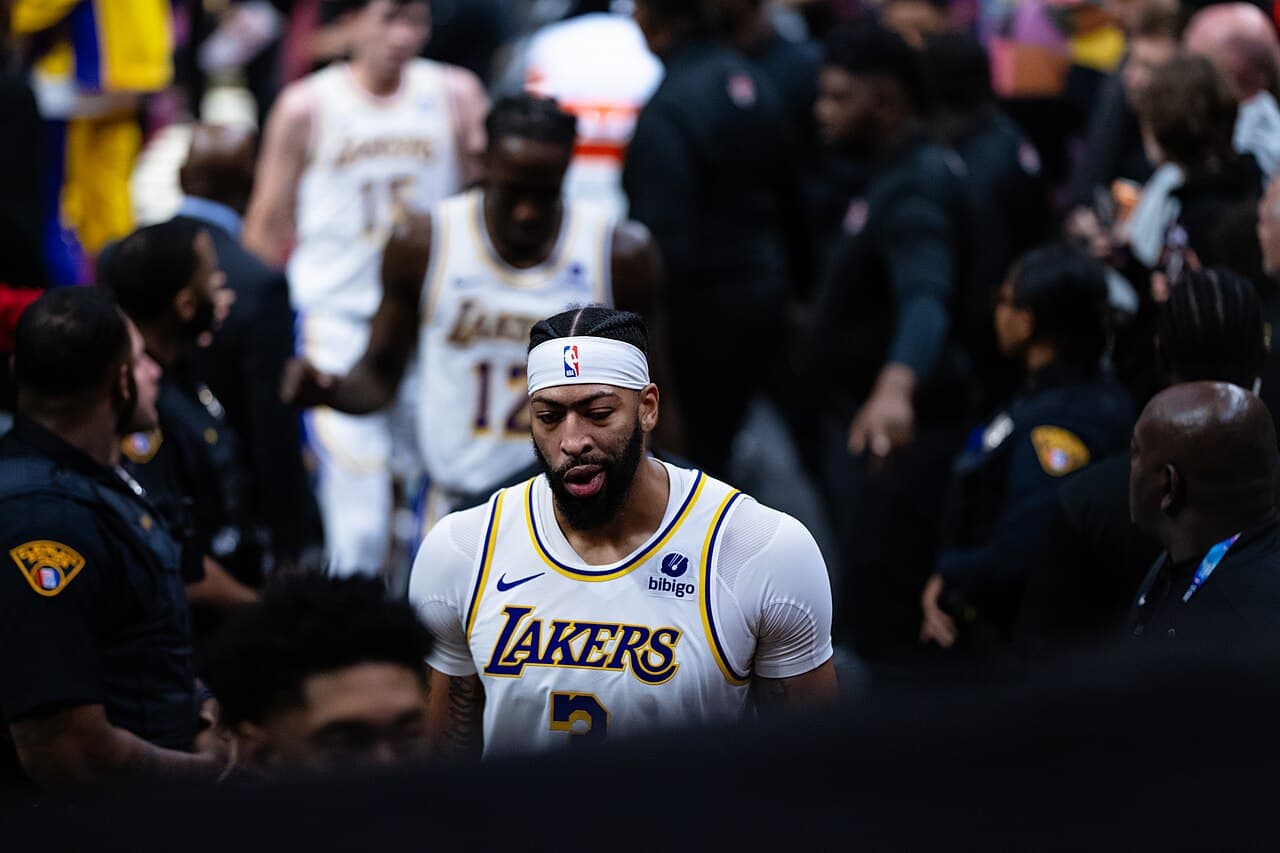
Thursday marked the first day Anthony Davis became eligible to sign a contract extension with the Washington Wizards, and reporting from around the league indicates neither side plans to engage seriously before the season. Davis is eligible for a maximum extension reported at four years and roughly $275 million, a structure that would pay him a figure in the neighborhood of $76 million during his age-37 season.
The Wizards acquired Davis at the 2026 trade deadline in a deal with Dallas, and he has not yet played a game for Washington.
Why waiting is the strategically correct move
The plain reading is the right one: Washington does not want to commit that money to a 33-year-old big man before seeing him play for the franchise, and Davis does not want to sign an extension that would restrict his own options.
There is a mechanical reason too. Signing an extension can make a player ineligible to be traded for six months depending on the exact terms of the deal. By not extending, Washington preserves its ability to move Davis at any point during the season. For a team that acquired him at a deadline and has not seen him on the floor, that optionality is worth more than the marginal benefit of locking in a number early.
It is a reversal of the usual pattern. Teams and players typically explore extensions during the offseason and then shut down talks once the season begins. Washington and Davis are reportedly doing the opposite, planning to have the meaningful conversations during the 2026-27 season rather than before it.
The roster context
Washington's offseason has been unusually active for a team in its position. The Wizards re-signed Trae Young to a long-term maximum deal, drafted AJ Dybantsa with the No. 1 overall pick, and brought back Khris Middleton via a multi-team sign-and-trade earlier in the summer.
That is a strange combination of assets: a max point guard in his prime, a top overall pick who needs developmental minutes, a veteran wing on a short-money deal, and an aging superstar big who has not played a minute for the franchise. It is not obviously a roster built toward one timeline, which is precisely why Washington would want to keep Davis tradeable.
Fantasy fallout
For fantasy basketball, the extension question is less important than the availability question, and Davis has been a load-management and injury story for several seasons running. A player who did not appear for his new team after a deadline trade enters the season with real questions about how many games he will play.
The fantasy read on Davis has always been the same: elite per-game production, unreliable games played. When healthy he is a first-round category-league producer because he fills blocks, rebounds, and field goal percentage simultaneously, which is a rare combination. The drafting question is how much you discount for the games he will miss.
The trade eligibility angle adds a second layer. Fantasy managers who draft Davis are also drafting the possibility that he changes teams midseason, which usually depresses value in the short term through missed games and role adjustment.
The more actionable fantasy read is on the players around him. Alex Sarr's role in Washington's frontcourt is materially different depending on whether Davis is present and healthy, and Dybantsa's minutes ceiling depends on whether the Wizards are trying to win games or develop. If Davis is moved during the season, the Washington young core becomes one of the better late-season fantasy sources in the league.
The Verdexed model take
Our model treats extension news as roughly neutral for on-court projection and meaningful for roster-continuity probability. Not extending Davis raises our modeled probability that he is on a different team by the trade deadline, which flows into a wider distribution around Washington's projected win total.
The Wizards project as a lottery-adjacent team in our system regardless. A roster with a max point guard, a top pick, and an aging star with availability questions is not a playoff structure in a deep Eastern Conference, and the model treats Washington's floor as low and its ceiling as capped by the frontcourt's health.
For Davis individually, our projection applies a substantial games-played discount. His per-minute production remains among the best in the league at his position, and the model's uncertainty is almost entirely about exposure rather than quality.
Betting angle
The Washington win total is the market most directly connected to this, and it should be priced with a wide error band. A team that could plausibly trade its best player in December is not a team you want to bet a season-long total on at a tight number.
The more interesting market is the Davis player-props family, particularly any season-long markets on games played or on award eligibility. Most awards require a games-played minimum, and Davis is exactly the profile where those thresholds bite. If a book prices him as a live candidate for a defensive award, the games-played requirement alone argues the other way.
The trade markets, where they exist, are the cleanest expression of the extension news. A player who deliberately preserves his own trade eligibility is more likely to be traded than one who does not.
What it means
The takeaway is that Washington has not decided what it is. Extending Davis would have been a commitment to competing on his timeline. Declining to extend, while keeping Young on a max and a No. 1 pick in development, is a hedge.
Hedges are usually correct in the abstract and uncomfortable in practice. The Wizards will spend the first half of the season looking like a team with two conflicting plans, and the Davis decision in January will resolve which one wins.
What's next
Two checkpoints. First, the NBA schedule release, expected in the coming week, which will show how the league is treating Washington in terms of national windows and gives a rough read on external expectations. Second, Davis's participation in training camp and the preseason, which is the first genuine information anyone will have about his health with this team.
If Davis plays a normal camp and opens the season on the floor, the extension conversation restarts in earnest by December. If he does not, Washington's optionality becomes the whole story.