Alex Ovechkin Is Day to Day at 41 and Might Miss the Entire Preseason
By Verdexed NHL Desk
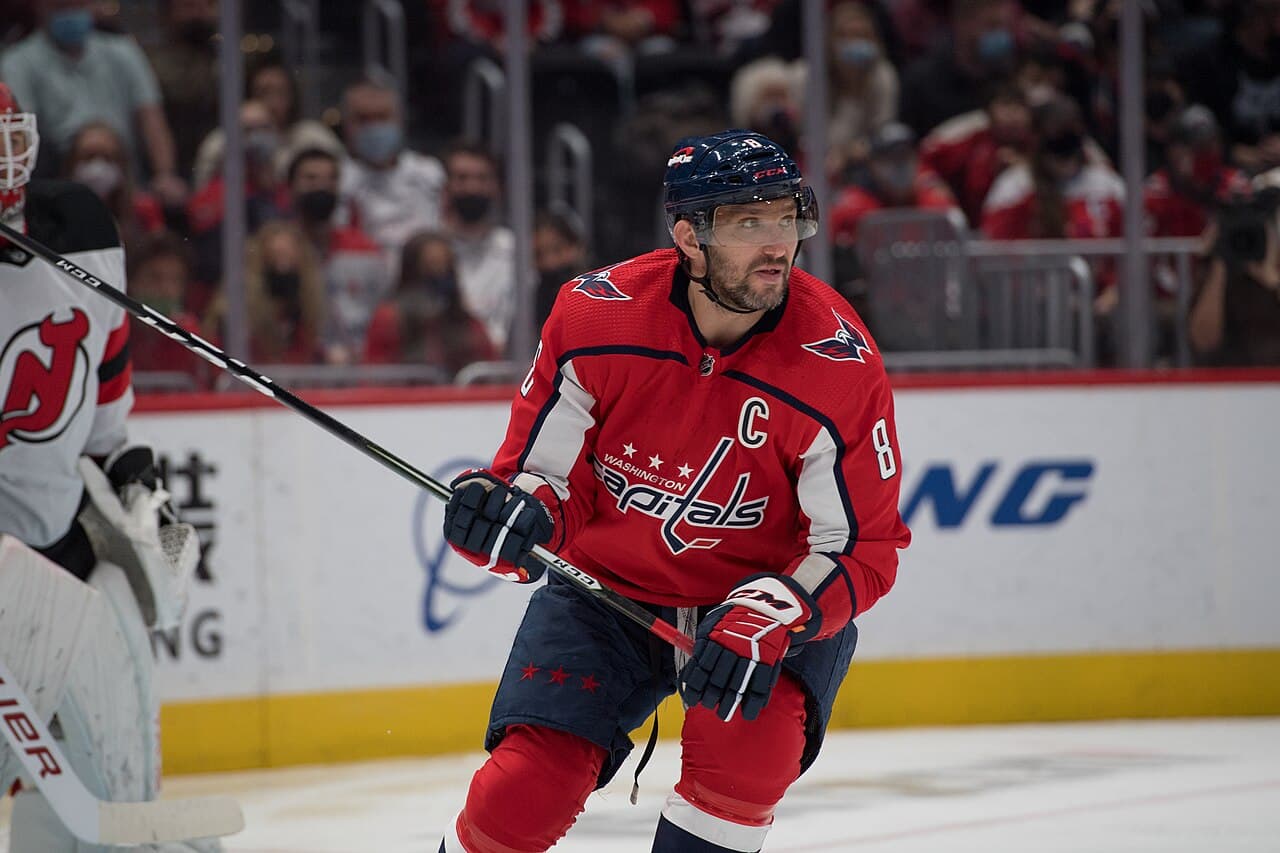
Washington Capitals captain Alex Ovechkin is day to day with a lower-body injury less than two weeks before the season opener, the team said. The 41-year-old winger did not practice Monday for the second consecutive day, missed Washington's preseason opener against Boston on Sunday and did not skate with the non-game group. Head coach Spencer Carbery has not ruled out the possibility that Ovechkin misses the entire exhibition schedule.
Washington has two preseason games left, at home against Boston on Friday and at Philadelphia on Saturday, before opening the regular season on October 2 against the defending Stanley Cup champion Carolina Hurricanes.
Day to day is the operative phrase
A day-to-day designation with no structural diagnosis attached is the mildest classification a team can use, and it is worth saying clearly: Ovechkin has not been ruled out for the regular season, has not been placed on injured reserve and has not been given a timeline.
The concerning part is not the injury. It is the age. A 41-year-old forward missing practices in September with a lower-body issue is a different situation than a 25-year-old doing the same thing, because the recovery curve flattens and because soft tissue injuries in older athletes recur at higher rates. Washington has no incentive to rush him into exhibition games and every incentive to have him ready for October 2.
What is confirmed: he has not practiced in two days, he missed the preseason opener, and the team is calling it day to day. What is not confirmed: the nature of the injury, whether he will play in either remaining preseason game, or his status for the opener.
The fantasy draft problem
Fantasy hockey drafts are happening this week and next, which makes this the worst possible timing for a player whose value is already the subject of an argument.
Ovechkin's fantasy profile is narrow and it is powerful: goals, power play goals, shots on goal and hits. He has been among the most reliable sources of shot volume in the sport for two decades, and shot volume is the most predictive input to goal scoring in fantasy formats. What he does not provide is assists, and his defensive categories are what they are.
A drafter taking Ovechkin is buying a category specialist. The question this injury raises is whether that specialist is available for 75 games or 60. At 41, the difference between those two numbers is the difference between a valuable pick and a mistake.
The practical advice: let his price fall. Drafters who were planning to take him should wait one or two rounds past their original target and let another manager absorb the risk. Drafters who already own him in keeper formats should not panic over a day-to-day designation in September.
Washington's other fantasy assets
Ovechkin's absence, whether it lasts two preseason games or extends into October, opens power play time and top-six minutes for the players around him. Washington signed young winger Ryan Leonard to a reported long-term extension earlier this month, a deal reported at eight years and $84 million, which is the kind of commitment that signals a significant role.
That is the fantasy angle worth acting on. A young forward with a new long-term contract, on a team whose 41-year-old captain has a lower-body injury, is the classic late-round target. If Ovechkin misses any regular season time, the beneficiaries are the players moving up the depth chart and onto the top power play unit, and those players are being drafted at replacement-level prices.
The betting angle
Washington opens against Carolina, and the Hurricanes are the defending champions. That game was going to be priced against the Capitals regardless of Ovechkin's status.
The market for a single day-to-day injury to an aging forward is usually efficient, which means there is little edge in betting the game on this news alone. The edge, if there is one, sits in the season-long markets: Ovechkin's goal total prop and Washington's point total.
Goal-scoring props for players over 40 are systematically difficult for books to price because there is so little historical precedent. If a book has not adjusted Ovechkin's season goal total for a September injury and a possible slow start, the under is worth a look. Conversely, an overcorrection creates an over.
The Verdexed model take
Verdexed's model handles aging curves by weighting recent performance heavily and by applying a games-played discount that grows sharply past age 38. Ovechkin's projection already carried a meaningful availability discount before this news. The injury widens the band rather than moving the center.
The model's practical output for fantasy purposes: Ovechkin projects as a useful but not elite fantasy asset in standard formats, with his value concentrated in leagues that count shots, hits and power play goals as separate categories. In leagues that weight points equally, he is overpriced relative to his draft position.
For Washington's team projection, the model's adjustment is small. The Capitals' season does not turn on two preseason games from a player who will be managed carefully all year.
What to do in your league
If a draft is scheduled before Washington's Friday preseason game, treat Ovechkin as a modest injury risk and adjust one round. If a draft is scheduled after it, the practice reports between now and then will provide real information.
The better move for most managers is to target the Washington forwards who benefit from any absence rather than to gamble on the absence itself. Those players cost nothing and hold value even if Ovechkin plays 80 games.
What is next
The Friday game against Boston is the checkpoint. If Ovechkin skates in that game, this becomes a September non-story and his draft price recovers immediately. If he sits out both remaining exhibitions, the question shifts to October 2 and to whether Washington uses the early schedule to give him additional recovery time.
The Capitals have managed his workload carefully in recent seasons and there is no reason to expect that to change. A team with a 41-year-old captain and a young core plays the long game in September.