 MLB2026-07-08
2026 MLB MVP Races at the Break: Ohtani Runs Away in the NL While Judge's Injury Blows the AL Wide Open
By Verdexed Analytics
The All-Star break is the natural checkpoint for the MVP races, and the two leagues could not look more different. In the National League, Shohei Ohtani has turned the award into a formality. In the American League, Aaron Judge's rib injury has detonated what looked like a coronation and left a genuine scrum in its place. For bettors, one race offers no value and the other offers plenty.
Start with the AL, because that is where the market moved. Judge is dealing with a stress fracture in a rib that is expected to sideline him for at least several weeks, and it will likely cost him a shot at a third straight MVP. His absence reshaped the odds board overnight and turned a two-horse race into a multi-way sprint, exactly the kind of volatility that creates betting opportunity.
The AL race after Judge
With Judge on the shelf, the AL favorites board reset around a tight cluster. Yordan Alvarez emerged as a front-runner, powered by an AL-best batting average and a top-of-the-league OPS, while Bobby Witt Jr. leads the league in FanGraphs WAR by pairing a strong bat with elite defense and baserunning. Those two profiles represent the classic MVP debate: the dominant hitter versus the total-value shortstop. Alvarez is the offensive force; Witt is the do-everything candidate whose glove and legs pad his case.
The most interesting mover is Junior Caminero, whose odds collapsed from a long shot to a serious contender in the span of a week as his production surged. That kind of rapid market shift is where sharp bettors find edges, because the price often lags the performance. Nick Kurtz and Ben Rice round out a group of challengers who could climb if they get hot in the second half. The takeaway is that the AL race is live, and the value lies in identifying which surging bat the market has not yet fully priced.
The NL: Ohtani in a class of one
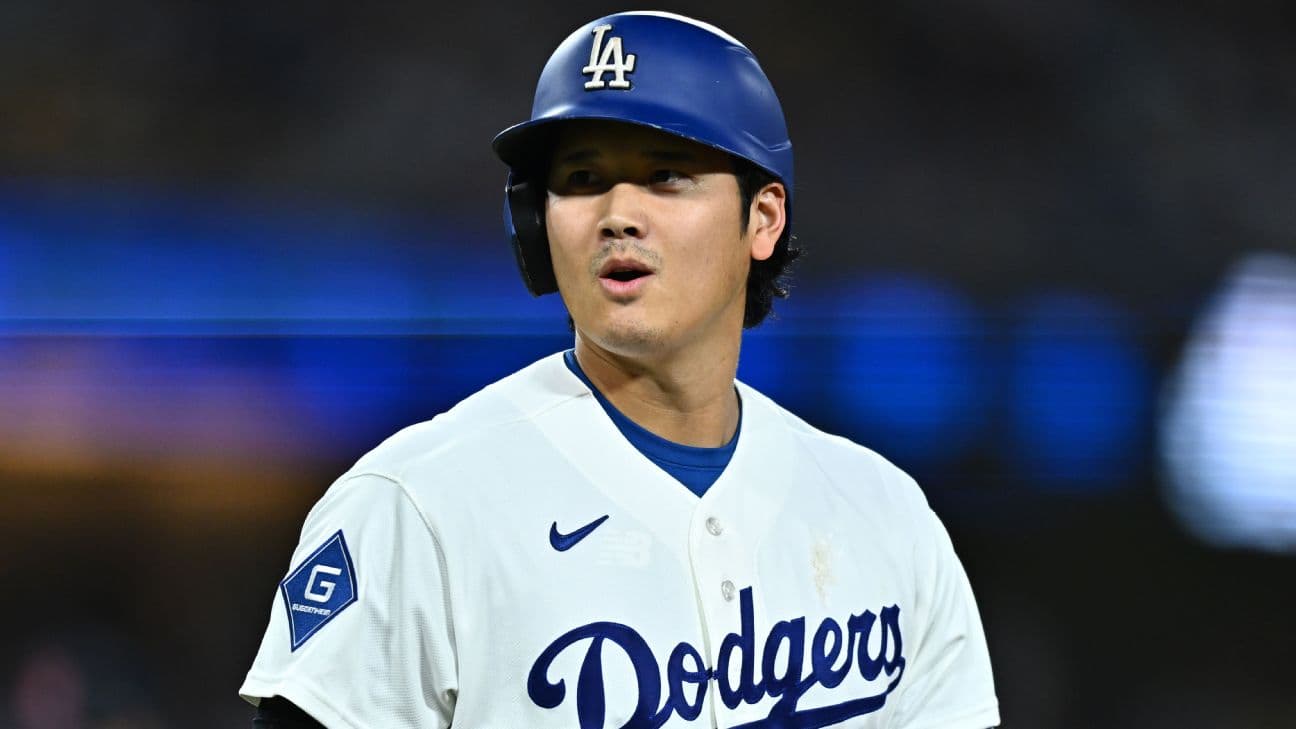
The National League is the opposite story. Ohtani sits as a massive odds-on favorite, and the reason is that he is doing something no one else can. He is producing at an elite level at the plate while simultaneously posting the best pitching campaign of his career, with a sub-2.00 ERA across his starts. When a single player is both a middle-of-the-order bat and a front-line starter, the value calculation is not close, and the market has priced it accordingly.
The only name worth mentioning as a theoretical challenger is Pete Crow-Armstrong, who has gone on a scorching run at the plate while providing historically strong defense in center field, pushing his WAR into elite territory. In most seasons that would be an MVP-caliber first half. This season it is a distant second, because Ohtani's two-way value is a moving target no position player can catch. For bettors, the NL MVP is not a market to touch; the juice on Ohtani offers no return, and betting against him requires an injury you cannot predict.
The Verdexed model take
Verdexed's model agrees that the NL race is closed and the AL race is open, and it frames the value accordingly. On the NL side, the projection treats Ohtani's two-way production as functionally uncatchable barring injury, which means there is no betting edge, only risk. The model's read is to leave the NL MVP alone entirely.
The AL is where the model sees opportunity. Its projection favors the total-value profile of Witt Jr. as the pick most likely to accumulate the WAR that voters increasingly reward, while flagging Alvarez as the safer bat-only case and Caminero as the live long shot whose price has not fully caught up to his trajectory. The model's cleanest edge is treating the post-Judge reset as an overcorrection in spots: the market moved fast, and a couple of the surging challengers are priced as if the second half is already decided when it is not. For bettors, that means shopping the AL board for the contender whose recent production the odds have underrated, rather than chasing the new favorite.
The fantasy crossover
MVP races and fantasy value are not the same thing, but they rhyme. The AL's reshuffled top tier is a reminder that the players climbing the award board, Witt Jr., Alvarez, and a surging Caminero, are also the bats delivering the most fantasy production in the second half, which matters for trade valuations in ongoing leagues. Managers weighing a buy or sell should note that Caminero's rapid ascent up the odds board typically lags his actual performance, meaning his fantasy price in a league trade may still undervalue what he is doing on the field. Alvarez and Witt, by contrast, are established commodities whose cost already reflects their production.
Ohtani sits in a category of his own here too. His two-way season makes him the most valuable asset in any format that counts pitching and hitting, and his runaway MVP case is simply the awards-side expression of that dominance. For head-to-head managers eyeing the fantasy postseason, the takeaway mirrors the betting one: the NL MVP is settled, and the second-half intrigue, both for awards and for roster building, lives in the AL.
What's next
Judge's recovery is the variable that could scramble the AL race a second time. If he returns healthy with a month-plus of runway, his rate stats could still vault him back into the conversation, which makes any long-term AL ticket a bet on both a challenger's second half and Judge's absence. For now, the actionable reads are simple: pass on the NL, where Ohtani has ended the debate, and hunt value in the wide-open AL, where Witt, Alvarez, and a rising Caminero are fighting over an award that looked settled a month ago.