 NFL2026-07-06
2026 Fantasy Football RB Sleepers: New Homes for Kenneth Gainwell, Jordan James, and Keaton Mitchell
By Verdexed Fantasy Desk
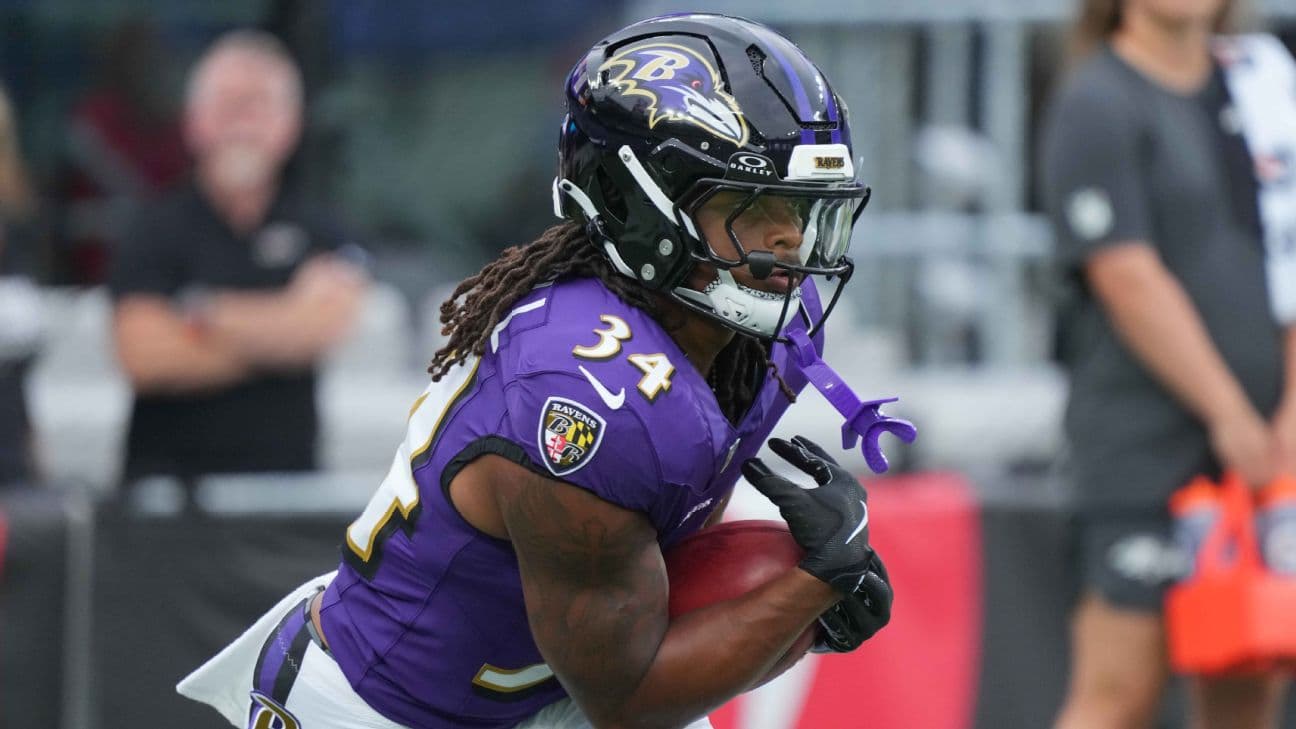
The best fantasy running back values are rarely the names at the top of the board. They are the backs who changed teams into a better role, the ones camp chatter has not yet priced in, and the late-round darts with a clear path to touches if the depth chart breaks their way. Heading into 2026 camps, three backs stand out as sleepers whose new situations make them worth more than their draft cost.
Here are the running backs to target after the middle rounds.
Kenneth Gainwell, Tampa Bay Buccaneers
Gainwell signed a two-year, roughly $14 million deal with the Buccaneers this offseason, and the money signals a real role rather than a depth flyer. He is coming off the most productive season of his career, one of just five backs in the league to clear 500 rushing yards and 450 receiving yards, joining company like De'Von Achane, Jahmyr Gibbs, Christian McCaffrey, and Bijan Robinson in that dual-threat club.
That receiving profile is the fantasy hook. Pass-catching backs carry a PPR floor even in a committee, and Tampa Bay's staff has drawn comparisons between Gainwell's skill set and the versatile backs the scheme likes to feature. If Gainwell handles third downs and two-minute work while mixing into early-down carries, he is a flex-worthy asset going far later than his usage justifies. In a backfield without a bell-cow lock, his target share alone can carry weekly value.
Jordan James, San Francisco 49ers
James is the classic Kyle Shanahan-system dart. A fifth-round pick in 2025 out of Oregon, he matched Bucky Irving's college production and finished his final season with over 1,200 rushing yards and 15 touchdowns while averaging better than five yards per carry. That is exactly the profile Shanahan's wide-zone offense has repeatedly turned into fantasy production from unheralded backs.
The San Francisco backfield has been a fantasy cheat code for years because the scheme, not the name, drives the numbers. Any back who wins the early-down job in that system inherits efficient volume and goal-line looks. James does not need a clean path to a starting role to matter; he needs one injury or one hot camp to leap into relevance, and his cost reflects none of that upside. He is the definition of a late-round stash with league-winning variance.
Keaton Mitchell, Los Angeles Chargers
Mitchell signed a two-year deal worth up to about $9.25 million with roughly $5 million guaranteed to join new Chargers offensive coordinator Mike McDaniel, and the fit is the story. McDaniel's motion-heavy, wide-zone scheme has always featured an explosive change-of-pace back who can turn a crease into a touchdown, and Mitchell's burst and receiving ability slot cleanly into that archetype.
Even with an established lead back ahead of him, Mitchell is the kind of speed piece McDaniel offenses manufacture touches for, and a handful of designed looks per game can produce outsized fantasy weeks. He is a best-ball favorite and a deep-league flier in managed formats, the type of back whose ceiling on any given Sunday dwarfs his draft position. If the lead back misses time, Mitchell's value spikes immediately.
The Verdexed model take
The Verdexed model likes all three for different reasons. It grades Gainwell as the safest of the group because receiving volume is the stickiest fantasy input for a running back, giving him a floor that does not depend on winning a rushing job outright. It flags James as the highest-variance profile, a Shanahan-system back whose median is modest but whose ceiling, if the depth chart opens, ranks among the best values on the board. And it views Mitchell as a leverage play, a low-cost piece in a scheme built to create the exact explosive touches that decide best-ball weeks.
The common thread is role clarity relative to price. The model rewards backs whose situation gives them a defined path to touches, and all three landed in spots that offer one at a discount.
The handcuff angle
Each of these sleepers doubles as a leverage handcuff, which is the second reason to draft them. Gainwell is the pass-game insurance behind Tampa Bay's early-down back, James is the direct handcuff to a San Francisco backfield that has historically seen its lead back miss time, and Mitchell is the explosive complement in Los Angeles. Pairing a sleeper with the starter ahead of him locks up an entire backfield's touches, which is one of the most reliable ways to build a league-winning roster at a discount.
The strategy is especially potent in best-ball and deeper managed leagues, where roster spots are cheap enough to speculate on upside. A late-round back who inherits a starting role after one injury can return three or four times his draft cost, and all three of these names sit one depth-chart break away from exactly that outcome.
How to draft them
Treat Gainwell as a target after the midpoint of your draft, the sleeper with the best combination of floor and role. Take James as a late-round stash in leagues deep enough to carry upside, and hold him through camp for the Shanahan lottery ticket he represents. Draft Mitchell in best-ball and deeper managed leagues as a leverage dart, especially if you already roster the Chargers' lead back as a handcuff pairing. None of these names will anchor a fantasy roster on draft day, but each carries the kind of path-to-value that turns a double-digit-round pick into a season-defining hit.