Zach LaVine Opted Into $49 Million and the Kings Promised Him Nothing
By Verdexed NBA Desk
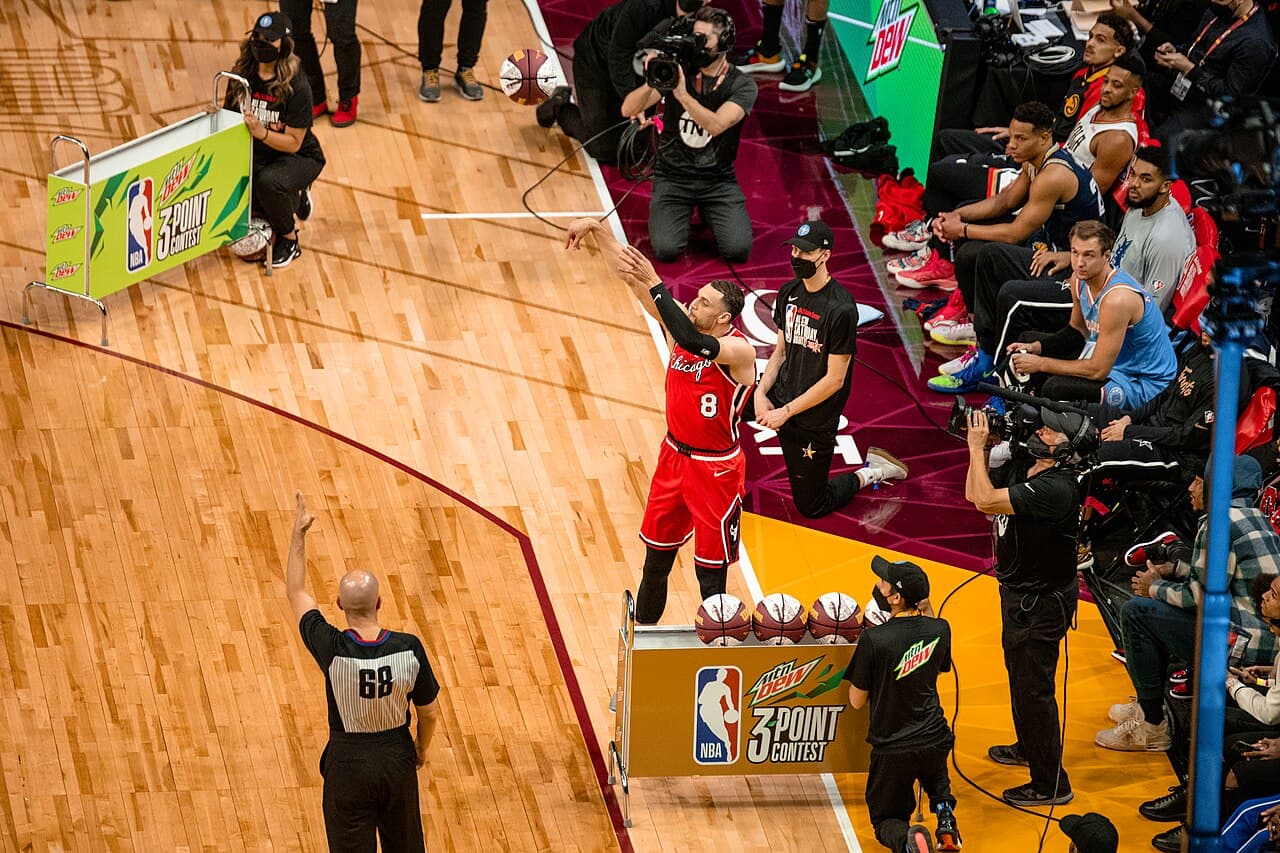
Zach LaVine exercised his $49 million player option for the 2026-27 season, and reporting since has made clear that Sacramento made him no promises in return. According to multiple accounts, the Kings told LaVine directly that picking up the option would not come with a guaranteed starting job, a guaranteed number of minutes, or a guaranteed long-term future with the organization.
That is an unusual thing for a front office to say out loud about a player earning that kind of money, and it is the single most important input into how fantasy managers should price LaVine this fall.
The situation Sacramento is in
The Kings are in the awkward middle. They waived DeMar DeRozan earlier this summer, which sent a veteran scorer into free agency and cleared usage. They also drafted Darius Acuff with the No. 7 overall pick, and a rebuilding-adjacent roster with a lottery guard has structural reasons to prioritize development minutes over veteran production.
LaVine sits directly in the path of that priority. He is a high-usage scoring guard on an expiring deal whose value to a franchise looking toward 2028 is primarily as a trade asset. Reports indicate Sacramento has left the door open to moving him, which is the natural conclusion of the position both sides are in.
The counterargument, and it is a real one, is that LaVine will probably open the season as a starter anyway. There is no version of this roster where a healthy player of his caliber comes off the bench in October. What the front office was communicating is not that he will be benched, but that his role is contingent on winning rather than guaranteed by contract.
Fantasy fallout
Two things are true at once, and holding both is the key to drafting LaVine correctly.
The first is that his ceiling is intact. A high-usage guard on a team without another established scorer is exactly the profile that produces top-40 fantasy seasons, and the DeRozan departure removed the player most likely to compete for those shots.
The second is that his floor has collapsed. A player whose organization has publicly declined to guarantee minutes is a player whose value can evaporate in a single front office decision. Trade risk cuts both ways in fantasy: a move to a contender would likely reduce his usage substantially, while a move to another rebuilding team could raise it.
The practical translation is that LaVine belongs in the tier of players you draft at a discount to their projected production. If the market prices him on last season's per-game numbers, fade. If it prices him with the uncertainty discount already applied, he is one of the better value targets in the middle rounds.
What the numbers say about usage
The most reliable predictor of fantasy production for a scoring guard is not efficiency. It is shot volume, and shot volume is a function of who else on the roster demands the ball.
Sacramento's answer to that question is genuinely unsettled. Acuff will get developmental usage that a rookie on a contender would not. The rest of the roster does not contain an established primary option. In an environment like that, whoever is on the floor with the ball tends to shoot it, and LaVine has never needed encouragement.
The counterweight is minutes. Development-focused teams cap veteran minutes, and a coaching staff instructed to evaluate young players will find reasons to sit a 31-year-old guard in the fourth quarter of a game that is out of hand.
The Verdexed model take
The model separates a player's per-minute production from his projected minutes, and prices uncertainty on the second term rather than the first. LaVine's per-minute projection is stable and strong. His minutes projection carries one of the widest confidence intervals of any rotation player in the league right now.
Feeding that through, the model's expected value for LaVine lands roughly in the range where he has typically been drafted in recent years, but with a distribution shaped very differently: a fatter left tail driven by trade and minutes risk, and a right tail that remains genuinely high if he opens the season as the primary option and stays in Sacramento.
For roto formats, which reward reliability, that distribution is unattractive relative to the price. For points leagues and best ball formats, which reward upside, it is fine.
Betting angle
Sacramento's win total has been priced near the bottom of the Western Conference, which is where a roster in this position belongs. The model agrees with the market on the direction and does not see enough of a gap to act on.
The more interesting market is the trade question itself, where it is available. Player prop markets on games played and team-changed markets are thin, but the model's read is that the probability of LaVine finishing the season in Sacramento is lower than casual assumptions would suggest. Front offices that publicly decline to commit to a player are usually shopping him.
What to do in your league
In roto and category leagues, let someone else take LaVine at his current price. The risk of a mid-season role change is a category killer.
In points leagues, draft him in the middle rounds and enjoy the usage while it lasts. The scoring floor for a guard who takes 18 shots a night is high regardless of where he plays.
In dynasty, this is not a player to acquire. LaVine's contract situation, age and organizational standing all point the same direction, and dynasty rosters should not carry expiring veterans on rebuilding teams.
What's next
Two checkpoints matter. The first is the NBA schedule release, which lands in the coming days and will tell managers how Sacramento's early calendar sets up. The second is training camp, where the starting lineup Sacramento opens with will settle the minutes question faster than any amount of offseason reporting.
Until then, the honest position is that LaVine is a talented player whose employer has publicly declined to commit to him, and fantasy prices should account for that rather than ignore it.