Vikings QB Battle: Kyler Murray vs. J.J. McCarthy and the Fantasy Stakes
By Verdexed NFL Desk
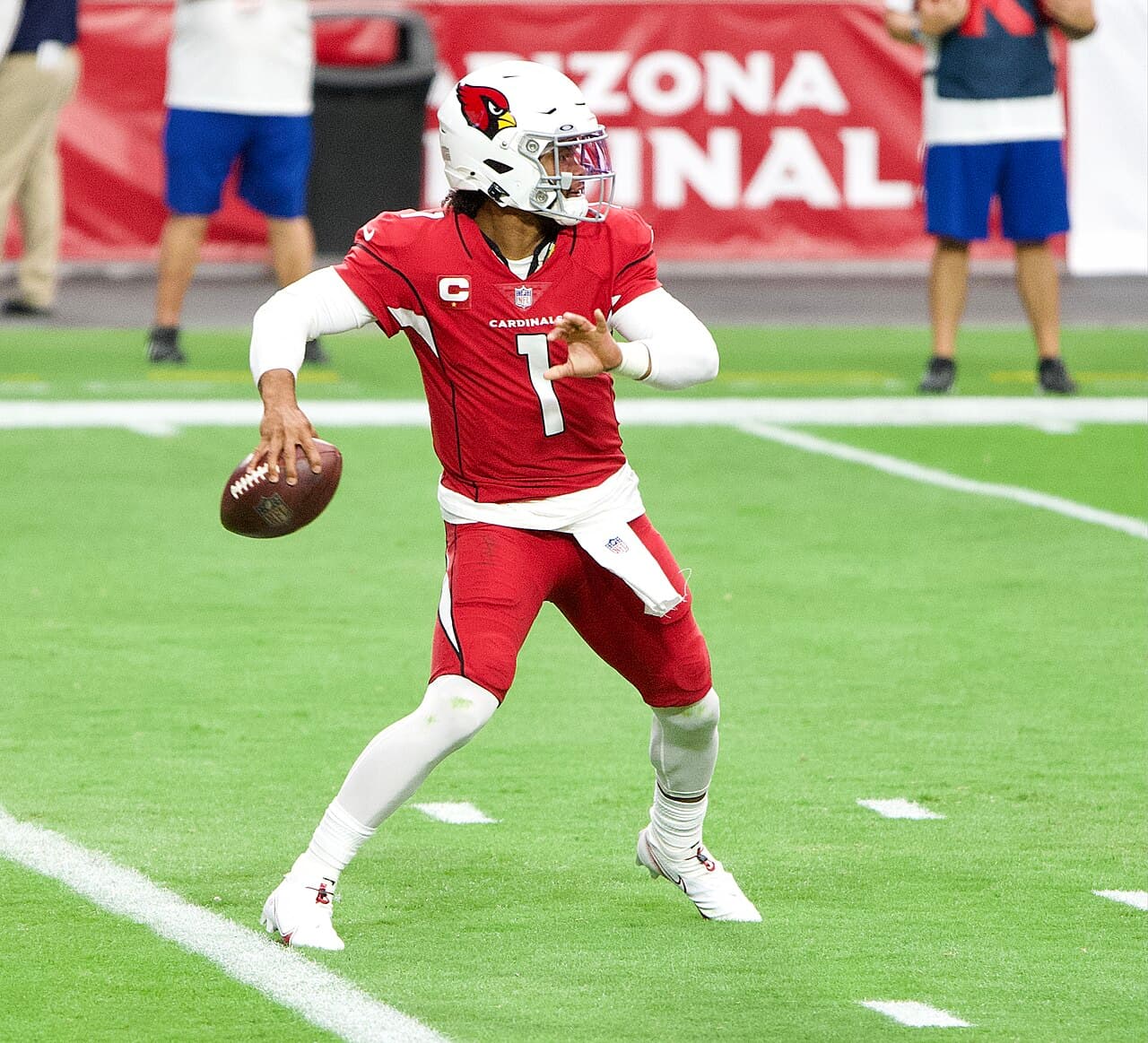
The most consequential fantasy quarterback battle of the offseason is unfolding in Minnesota, where Kyler Murray and J.J. McCarthy are competing for the keys to one of the league's most quarterback-friendly offenses. Murray signed with the Vikings on a low-cost one-year deal after his release from Arizona this spring, and the team has framed the situation as a genuine competition. The early read from those covering the team is that Murray is the favorite to win the job, but the stakes extend well beyond which quarterback takes the first snap in Week 1. The winner shapes the fantasy ceiling of Justin Jefferson and the entire Minnesota skill group.
Where the battle stands
Murray and McCarthy have been splitting first-team reps through the offseason program, and national reporting has tabbed Murray as the heavy favorite to win the competition. Murray himself has acknowledged that sharing first-team work makes it harder to master the offense, the kind of comment that hints at the friction of a true rep split. McCarthy, for his part, has made clear he wants to stay in Minnesota rather than seek a trade, betting on himself to win the job.
The contractual backdrop is worth understanding. Murray is on a one-year arrangement, which means he is auditioning both for the Vikings and for the rest of the league. McCarthy remains on his rookie deal, which gives Minnesota a cheaper long-term path if he wins the job and plays well. That dynamic creates a real competition rather than a coronation, even with Murray holding the early edge, because the franchise has incentives pointing in both directions.
Why the winner matters for fantasy
This offense, under a head coach with a strong track record of scheming receivers open, is a fantasy accelerant for whoever runs it. That is why the quarterback resolution matters so much for the skill players, particularly Justin Jefferson. Jefferson is one of the most talented receivers in football, but his fantasy production dipped when the quarterback play around him faltered, and drafters have grown wary enough that some are willing to let him slide closer to the second round than his talent suggests.
A Murray-led offense would bring mobility and off-script playmaking that can extend drives and create explosive opportunities, the kind of quarterback who can lift a receiver's big-play rate. A McCarthy-led offense would lean on timing and structure within the system. Either way, Jefferson projects as a target hog with a high floor, but the ceiling and the week-to-week variance shift depending on who wins. The same logic applies to the tight end and the secondary receivers, whose target quality rises or falls with the quarterback's decision-making.
The fantasy read on the players
Murray is the more intriguing fantasy quarterback if he wins, because his rushing ability gives him a built-in floor that pocket passers lack, and pairing that mobility with this receiving corps creates legitimate streaming-plus upside. McCarthy is the dynasty bet, a young passer with the system and the weapons to take a leap, but a riskier redraft proposition until he proves he can hold the job.
For Jefferson, the takeaway is that the talent is undeniable and the situation is the variable. He remains a high-end WR1 in any realistic outcome, but managers should treat the lingering quarterback uncertainty as a reason the market may offer a small discount, not a reason to avoid him. If anything, an unsettled quarterback room creating draft-day hesitation is the kind of inefficiency that lets a sharp manager land an elite receiver below his ceiling.
The supporting cast in the balance
Jefferson is the headliner, but the resolution ripples through the rest of the Minnesota skill group. The secondary receiver and the tight end both depend on a quarterback who can distribute the ball accurately and on time, and their fantasy value is far more sensitive to the quarterback outcome than Jefferson's, because they lack his target-earning floor. A precise, decisive starter lifts the entire group; a quarterback who locks onto his top read suppresses everyone outside the primary target. Managers drafting Minnesota's complementary pieces are making a direct bet on the quarterback competition, and they should price that risk accordingly.
The betting angle
The quarterback market favors Murray, and any movement on those odds through camp will be the clearest signal of how the competition is trending. From a team standpoint, the resolution affects Minnesota's win total and its offensive pace and pass-rate profile: a mobile quarterback changes the math on sacks, scrambles, and explosive plays, all of which feed into the team's scoring outlook and the props attached to its skill players.
The Verdexed model take
Verdexed's projections install Murray as the likely starter while keeping a meaningful probability on McCarthy, and the model treats Jefferson as a top-tier WR1 across both scenarios with a slightly higher ceiling in a Murray-led, off-script offense. The model views the quarterback uncertainty as the main driver of variance in Minnesota's skill-player range of outcomes, and it flags Jefferson as a potential value if draft-day caution pushes his cost below his projection.
For DFS, a Murray-Jefferson stack carries appealing leverage if Murray wins the job, given the combination of rushing upside at quarterback and elite target share at receiver.
What to do in your league
Monitor the competition through camp, but do not let it scare you off Jefferson, who profiles as a high-floor WR1 regardless of who wins. Treat Murray as the higher-upside fantasy quarterback if he claims the job and McCarthy as the dynasty-friendly alternative. The single most important thing is to track the depth-chart resolution in late July: the winner unlocks the Minnesota passing game, and the manager who reads the signals first will price Jefferson and the rest of the skill group correctly before the rest of the room catches up.