Tyreek Hill Is an Unsigned Free Agent With No Timetable: Handle His ADP With Care
By Verdexed NFL Desk
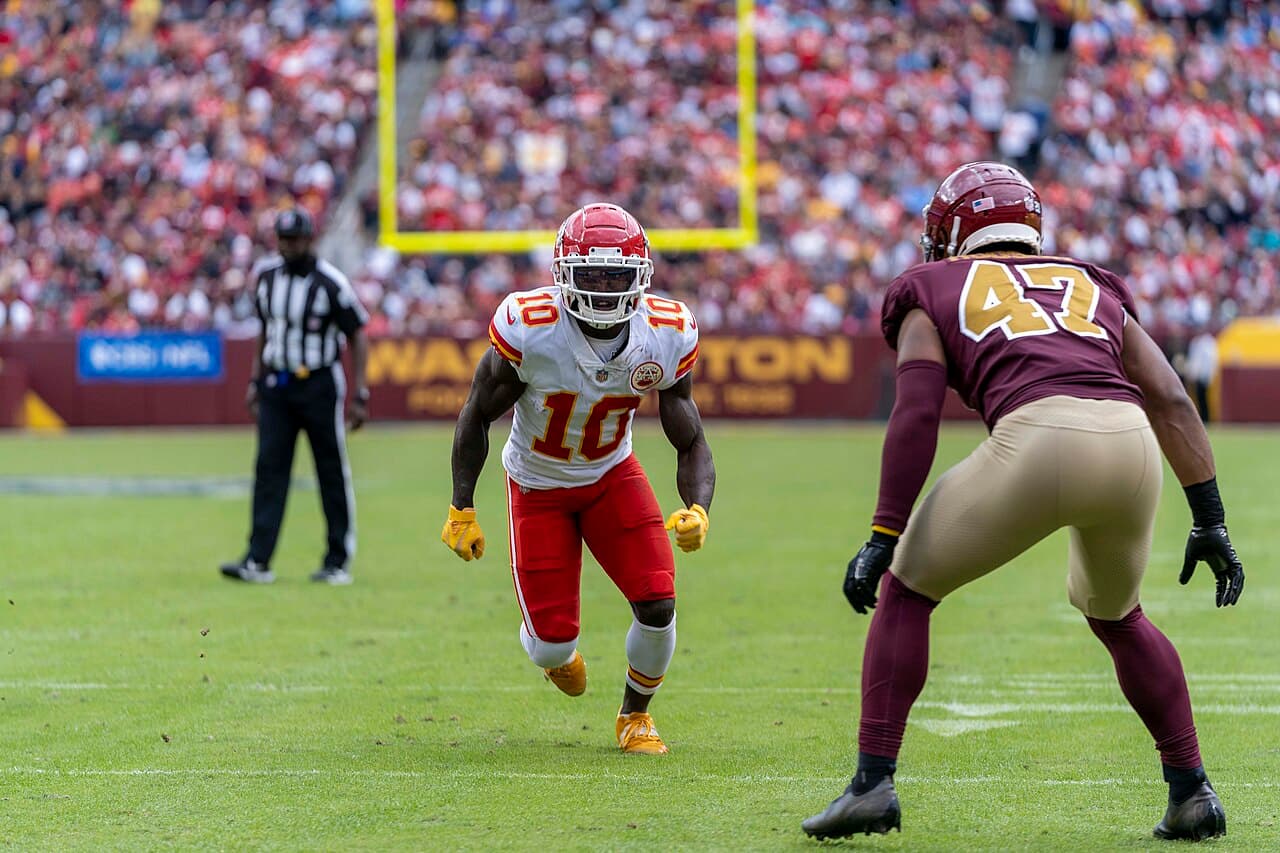
Tyreek Hill remains an unsigned free agent in June, still working back from a serious knee injury that ended his 2025 season early, and his agent has said there is no set timetable for a return. For fantasy managers, that is a flashing caution light on a player whose name recognition keeps his average draft position higher than his situation warrants.
How Hill got here
The Dolphins released Hill ahead of his 2026 contract guarantees rather than carry a cap hit north of $50 million for a player coming off a major injury. Hill suffered a dislocated knee during the season and subsequently underwent surgery, and reporting indicates he later required an additional procedure. His representation, which had earlier suggested a Week 1 target, has since walked that back, acknowledging he is in the middle of a rigorous rehab with no firm date attached.
The release itself is a meaningful signal. When a team declines to pay a future Hall of Fame receiver and eats the associated cost rather than bet on his recovery and price tag, it tells you how the people closest to the situation weigh the medical timeline and the contract. Hill turned the page publicly and has expressed confidence about returning, but as of now he has not signed anywhere.
The fantasy problem
Hill's draft cost has fallen by roughly two rounds over the past month, but he is still being selected as if a healthy, productive season is the base case. It is not. A receiver who is unsigned in June, recovering from a significant knee reconstruction, and lacking a clear return window carries a stack of risks that compound: the injury itself, the unknown landing spot, the offense he eventually joins, and the timeline for ramping back to a featured role.
Even in a best-case scenario where he signs with a contender and is ready early in the season, Hill would be doing it at an age where elite speed receivers historically begin to decline, and after a layoff. The range of outcomes runs from useful WR2 in the back half of the year to a player who never gets right in 2026 at all. That is not a profile you draft at a premium.
The landing-spot variable
Until Hill signs, every projection is guesswork. A move to a strong passing offense with an accurate quarterback would lift his ceiling; a one-year deal with a team in transition would cap it. The comparison some have drawn is to other veterans who found one-year landing spots this offseason, but those players were not coming off the same kind of injury. Where Hill lands, and on what terms, will tell you far more than any current ranking can.
The Verdexed model take
The model treats Hill as a low-confidence projection with an unusually wide error band, the statistical way of saying nobody should be anchoring a draft to him. The expected value at his current ADP is negative, because the price still reflects the player he was rather than the uncertainty he carries. Until there is a signing and a credible return timeline, the model would rather draft a healthy, rostered receiver with a known role than a name brand with a question mark on every input.
There is a contrarian case, and it is worth stating: if Hill signs with a good offense and the medical news is positive, his cost could look like a bargain in hindsight. But that is a bet to make after the information arrives, not before, and it is better suited to deep best-ball pools where the cost of being wrong is small.
The historical lens
The track record of speed-dependent receivers returning from major knee surgery in their thirties is not encouraging. Burst and separation are the first traits to suffer, and even players who get back on the field often need most of a season to look like themselves again. That backdrop is a core reason the model is skeptical of paying for Hill's name in June.
None of that means Hill is finished, because elite competitors have beaten worse timelines. But fantasy is a game of probabilities, and the base rate for this profile, an unsigned, older, post-injury burner with no return date, argues for a discounted, cautious valuation rather than a confident one. The information that would change the math, a signing and a clean medical update, simply has not arrived.
What to do in your league
Do not draft Hill as a weekly starter you are counting on. If you want exposure, do it late and in formats that tolerate a zero, treating him as a lottery ticket rather than a roster cornerstone. In redraft leagues with tight benches, the opportunity cost of holding an unsigned, injured player through the early season is real, and there are healthier options at the same price.
The smarter play is patience. Let the signing and the medical updates come, then reassess. The market will move when Hill picks a team, and a manager who waited will have far better information than one who reached on reputation in June.
The bottom line is discipline. Reputation drafts are how managers talk themselves into risk they would never accept from a lesser name, and Hill is the textbook case this summer. His ceiling is real if everything breaks right, but the price should reflect the probability of that outcome, not the memory of his peak. Let the market move on facts, then decide whether the discount is steep enough to justify the gamble.