 NFL2026-07-24
Ty Simpson Is the Last Unsigned First-Rounder: The Rams' QB of the Future and His Dynasty Value
By Verdexed Fantasy Desk
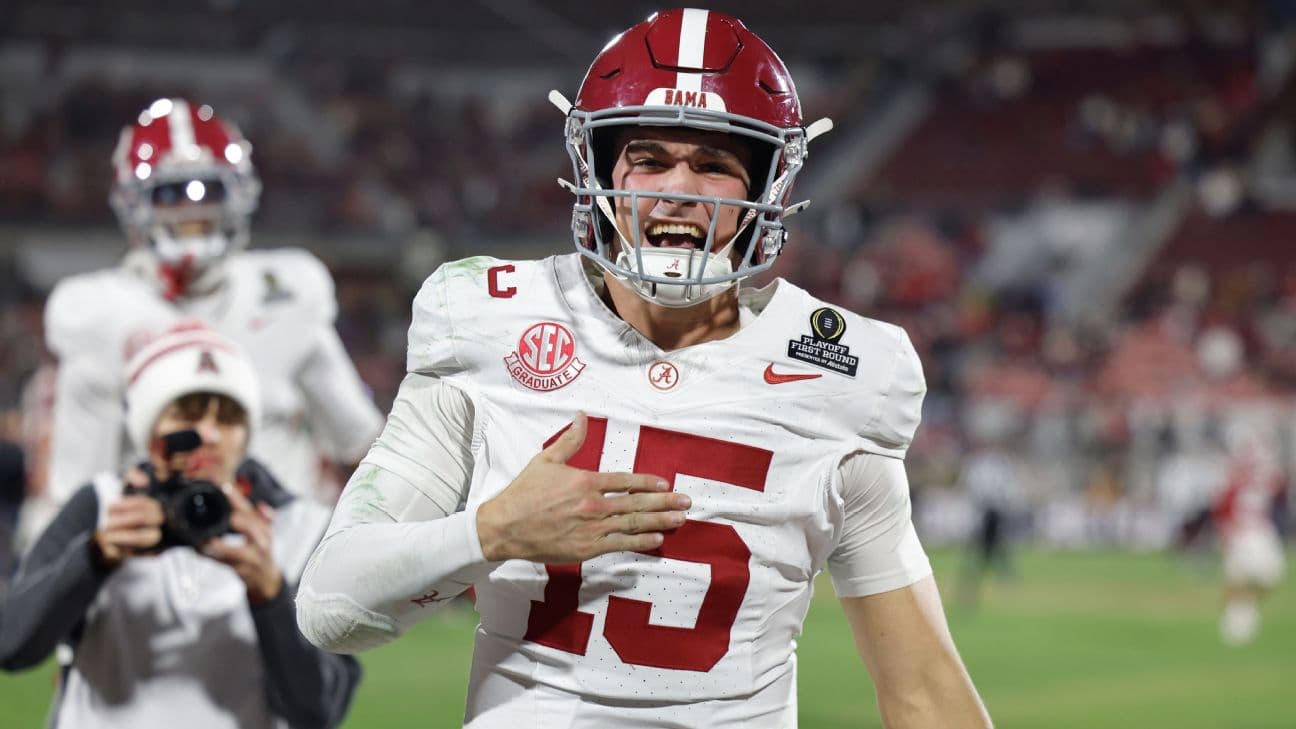
Ty Simpson is now the last unsigned first-round pick from the 2026 draft. The Las Vegas Raiders inked No. 1 overall pick Fernando Mendoza to his rookie deal this week, leaving the Rams' 13th overall selection as the lone first-rounder without a contract as training camps open. First-round holdouts have become rare under the rookie wage scale, so the standoff is notable even if the sums are largely predetermined. For dynasty managers, the more interesting question is not the paperwork but the player: what is Simpson worth as the quarterback Los Angeles drafted to eventually replace Matthew Stafford?
Why a first-rounder is still unsigned
The rookie wage scale fixes the total value of first-round contracts, so these deals rarely stall over money in the aggregate. Simpson's slot carries a four-year value in the mid-20s of millions per public contract trackers. When a pick this high lingers, the sticking points are usually structural: offset language, the timing and mechanism of signing-bonus payments, or guarantee triggers rather than the headline number. None of that typically threatens a player's availability for long, and the expectation across the league is that these deals get done before camp reps that matter.
The practical fantasy point is simple. A brief contract delay for a rookie backup quarterback has essentially no bearing on 2026 production, because Simpson was not projected to play meaningful snaps behind an entrenched starter. The story matters for what it signals about the Rams' plan, not for any redraft lineup decision.
The depth chart Simpson walks into
Matthew Stafford remains the Rams' starter, and the team drafted Simpson to develop behind him rather than to compete for the job immediately. With Jimmy Garoppolo having retired, Simpson is competing with Stetson Bennett for the backup role, and the organization has framed his rookie year as a redshirt-style runway to learn the offense before Stafford's eventual exit. Scouts flagged Simpson's frame and limited college starting experience as reasons his pro readiness is a projection rather than a certainty, which is exactly why the Rams value the time behind a veteran.
That context shapes his fantasy relevance. In redraft leagues, Simpson is undraftable in all but the deepest superflex formats, and even there only as a late dart tied to Stafford's injury history. Stafford has missed time in recent seasons, and a mid-season injury is the one path to Simpson carrying standalone value in 2026. Managers in deep superflex leagues can justify a final-round stash on that contingency alone.
The dynasty read
Dynasty is where Simpson's value actually lives, and it hinges on landing spot as much as talent. Inheriting a Sean McVay offense is one of the best possible situations for a young quarterback, because the scheme is quarterback-friendly, built on timing and structure, and has produced strong fantasy seasons from a range of passers. A quarterback who eventually wins that job steps into a system designed to make him look good, with an established receiving corps and a play-caller who protects his passers with scheme.
The risk is timeline uncertainty. Stafford could play at a high level for another season or two, which pushes Simpson's fantasy payoff into 2027 or beyond and forces dynasty managers to hold a non-producing asset. Simpson also has to actually win the job, and the pre-draft concerns about his readiness mean that is not guaranteed. Dynasty valuation of a rookie quarterback behind a capable veteran is a bet on opportunity cost: you are paying now for a role that may not open for a year or more.
The Verdexed model take
Verdexed's dynasty model treats young quarterbacks in quarterback-friendly systems as undervalued relative to their eventual ceiling, and it views the McVay landing spot as a meaningful multiplier on Simpson's baseline. The model's read is that Simpson is a hold-or-buy in dynasty at a discount, not a sell, precisely because the market often fades rookie passers who will not produce immediately. The scheme fit raises his projected outcome if and when he plays, and the cost to acquire him now is depressed by the uncertain timeline.
The model is equally clear about redraft: it projects effectively zero standalone value for Simpson in 2026 outside of a Stafford injury, and it prices him accordingly. The separation between his redraft value (near nothing) and his dynasty value (a real speculative asset) is the entire point, and confusing the two is how managers misprice young quarterbacks every summer.
Rookie-draft managers in dynasty leagues face the sharpest version of this decision. In superflex rookie drafts, a first-round NFL quarterback with a clear long-term path is almost always worth an early pick despite the delayed payoff, because quarterback is the most valuable dynasty position and the supply of startable options is thin. Simpson's landing spot in a proven system strengthens that case relative to a passer drafted into a worse situation. The counterpoint is timeline: managers with a win-now roster may prefer to trade the pick for immediate help rather than roster a quarterback who will not produce for a year or more. The right call depends entirely on where your team sits on the contend-or-build spectrum.
What to do in your league
In redraft, ignore Simpson unless you are in a deep superflex league that rewards handcuffing a starter with injury history, in which case he is a final-pick flier. In dynasty, treat him as a buy-low or a firm hold: the McVay system and the eventual vacancy behind Stafford give him a genuine path to fantasy relevance, and the current contract noise does nothing to change that. The signing will get done, the redshirt year will proceed, and the managers who acquire Simpson before he ever throws a meaningful NFL pass are the ones positioned to profit when the job opens.