Tua Tagovailoa Starts the Falcons' Preseason Opener, but Kevin Stefanski Has Not Named a Week 1 Quarterback
By Verdexed NFL Desk
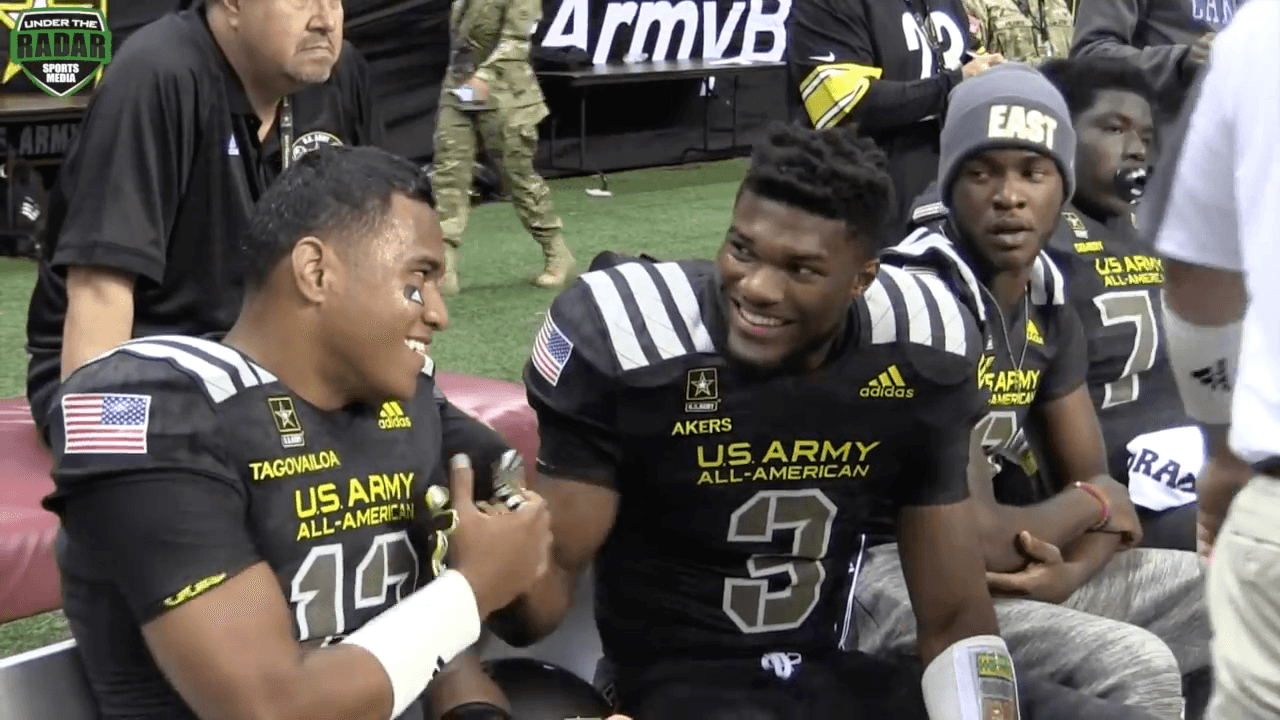
Tua Tagovailoa will start Atlanta's preseason opener against Denver on Friday, head coach Kevin Stefanski announced Wednesday, and he went out of his way to make clear that the decision applies to that game only. Tagovailoa is not the Falcons' named Week 1 starter. Michael Penix Jr. is not out of the competition. Stefanski declined to attach a date to when the job will be settled.
That is an unusual amount of ambiguity to carry into the middle of August, and it is entirely a function of health.
Penix is not losing a competition, he is waiting to enter one
Penix is roughly eight months removed from surgery on a torn left ACL suffered during the 2025 season. He opened camp without clearance for 11-on-11 work and has been limited to individual drills and 7-on-7 sessions. He has been productive in that setting, but 7-on-7 is a passing drill without a pass rush, and no coaching staff in the league evaluates a starting quarterback on it.
Penix himself has said his doctors pointed toward roughly four more weeks before he reaches the next stage of clearance, while allowing that it could come sooner. He has also been publicly unwilling to commit to a timeline. The Falcons have split his reps with the second team as a workload measure, not as a demotion.
That framing matters. If Penix were healthy and losing snaps, this would be a quarterback competition with a leader. Instead it is a competition that has not started, in which one participant has taken every meaningful team rep by default. Stefanski's refusal to name a Week 1 starter is the honest read of that situation rather than gamesmanship.
What Stefanski's offense means for whoever wins
Stefanski's first Atlanta season is the more durable fantasy story here. His offenses have historically leaned on play-action, condensed formations, and heavy usage of the tight end as a primary read, and the Falcons already spent the offseason signaling that Kyle Pitts is central to the design. That is a scheme that raises the floor of a quarterback who processes quickly and throws with anticipation and lowers the value of a quarterback whose edge is arm strength on downfield shots.
Tagovailoa fits the first description almost perfectly. Stefanski praised his accuracy publicly, which is the least surprising evaluation in football. Penix fits the second: his separator is raw arm talent and the ability to threaten the intermediate and deep thirds of the field.
For fantasy purposes, that produces two different offenses wearing the same uniform. A Tagovailoa version projects as high-completion, tight-end-friendly, and comparatively efficient with a lower ceiling in passing yards and touchdowns. A Penix version projects with more downfield volume, more variance, and a higher ceiling for the receivers who win outside.
Fantasy fallout
Nobody in this passing game should be drafted at a price that assumes clarity, because there is none.
Kyle Pitts is the exception, and he is the player to actually target. Pitts's value is tied to scheme and target share rather than to which quarterback throws him the ball, and Stefanski's history makes the tight end a structural priority rather than a matchup-dependent option. Whether the passer is Tagovailoa or Penix, Pitts is the player the offense is designed to feed.
The Falcons' outside receivers are the group that swings hardest on the outcome. Drafting them at a price built on the higher-variance version of this offense while Tagovailoa holds the reps is the wrong side of the trade in redraft. Wait, and let the September usage tell you which offense you are buying.
Neither quarterback belongs in a single-quarterback fantasy league right now. In superflex, Tagovailoa is the more reliable near-term asset because he is healthy and taking the snaps. Penix is the better long-term dynasty hold precisely because the team invested a first-round pick in him and has shown no interest in closing the door.
The Verdexed model take
Verdexed's projection model does not treat an unnamed starter as a coin flip. It weights snap probability by what the team is actually doing, and what Atlanta is actually doing is giving every first-team rep to Tagovailoa while its other quarterback waits on medical clearance. That produces a meaningful lean toward Tagovailoa for Week 1 that has almost nothing to do with the evaluation of either player.
The more interesting model output is the split projection for the receiving corps. The variance between the Tagovailoa and Penix versions of this offense is wide enough at the wide receiver position that a single blended projection would be misleading in both directions. Pitts's projection barely moves between the two. That divergence is the actionable piece: the tight end is quarterback-proof in this system and the perimeter is not.
Betting angle
Atlanta's season win total has sat in the same neighborhood as the rest of a bunched NFC South, and the quarterback uncertainty is a real part of why the market has not separated these teams. The division is the most open in football, with all four teams priced close enough that a single roster answer could move a number.
The bet to watch is not the win total today. It is the reaction if Penix is cleared for full team work in the last week of August and immediately takes first-team reps. That would be a genuine information event, because it would mean the Falcons believe their higher-ceiling quarterback is available. Markets that have priced Atlanta on the assumption of a caretaker season would need to adjust.
If instead the season opens with Tagovailoa starting and Penix still ramping, the range of outcomes narrows in both directions, which argues for the under on a total priced for upside and against Atlanta at plus-money division prices that assume a breakout.
What's next
Friday against Denver gives Tagovailoa at least the first series with the starters, and Stefanski has said he intends to play his starters in the opener. That is a real look at the first-team offense, and it is worth watching how much of the tight end and play-action structure Atlanta is willing to show in August.
The bigger date is whatever practice Penix is finally cleared for 11-on-11 work. Stefanski has pointed to upcoming joint practices with Indianapolis as a chance for separation, but separation requires both quarterbacks to be on the field. Until that happens, Atlanta does not have a competition. It has a placeholder, and fantasy managers should price it accordingly.