Titans 2026 Win Total Sits at 6.5: Why Cam Ward's Year 2 Leans Over
By Verdexed Analytics
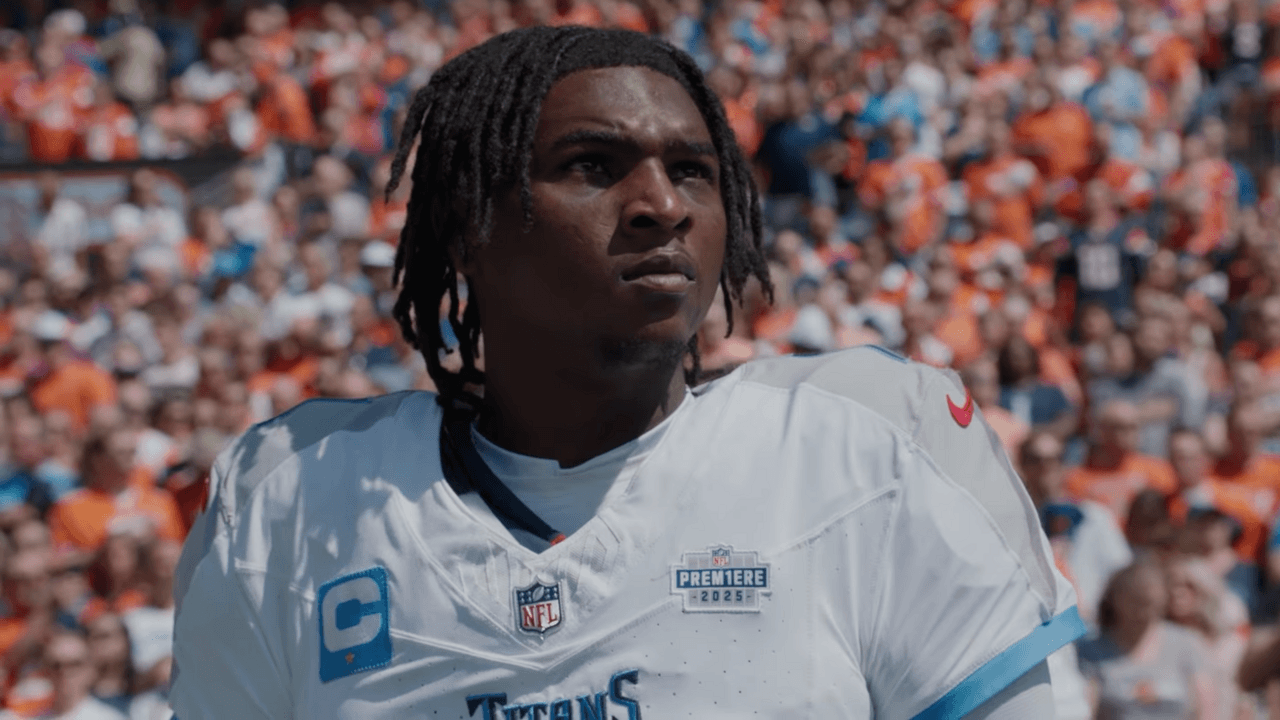
The Tennessee Titans' 2026 win total has settled at 6.5, with the over priced around -105 and the under near -115 at major books, a near coin flip that captures the uncertainty around a young quarterback entering Year 2 behind a brand-new coaching staff. The case for the over is built on three pillars: a schedule that projects meaningfully easier than the brutal one Cam Ward faced as a rookie, a coaching upgrade headlined by head coach Robert Saleh and offensive coordinator Brian Daboll, and a receiver room that finally gives Ward the weapons to climb.
Last season the Titans stayed under their win total and fired their head coach midway through the year. That is the baseline the market is pricing off of. But win totals reward forward-looking inputs, not last year's record, and several of Tennessee's inputs are pointing up. A second-year quarterback with a clean offseason, a competent staff, and better surrounding talent is exactly the kind of profile that tends to outrun a low number.
The schedule regression case
The single strongest argument for the over is strength of schedule. As a rookie, Ward faced one of the most difficult slates of opposing defenses in recent memory, the kind of gauntlet that buries a young passer's development and inflates his interception and sack totals. The 2026 schedule projects far more forgiving, which matters disproportionately for a quarterback making the leap from Year 1 to Year 2. Easier defenses mean cleaner reads, more sustained drives, and the kind of confidence that compounds.
Layered on top is close-game regression. Teams that lose a cluster of one-score games one year tend to bounce back in those same spots the next, simply because close-game outcomes are noisy and revert toward the mean. A young Titans team that came out on the wrong side of tight finishes is a candidate to flip a few of those, and flipping two or three close games is the entire distance between an under and an over on a 6.5 total.
The coaching and weapons upgrade
The staff overhaul is the other lever. Saleh brings a defensive identity that should stabilize a unit that struggled, while Daboll arrives to run an offense that can actually scheme a young quarterback into rhythm. Daboll's track record with quarterbacks is the kind of input that does not show up in last year's record but shows up in a sophomore passer's efficiency. A coordinator who can simplify and accelerate Ward's processing is worth real wins to a team this young.
The weapons are upgraded, too. Tennessee added to its receiver room, with Calvin Ridley as the established veteran, Wan'Dale Robinson brought in to work the underneath and intermediate areas, and Carnell Tate as a younger ascending piece. Running back Tony Pollard gives the offense a proven dual-threat back. That is a more complete supporting cast than Ward had as a rookie, and a quarterback's Year 2 leap is far easier when the players around him can win their matchups.
Fantasy fallout
If the over case is right, the fantasy ripples are meaningful. Ward becomes a late-round quarterback sleeper, the kind of value play who can outperform his draft cost if the offense climbs even to league-average. His ceiling is tied directly to the schedule softening and Daboll unlocking more efficient passing, and at a quarterback's typical late-round price, that is a bet worth making in superflex and two-quarterback formats.
The receiver room is where the fantasy logjam lives. Ridley, Robinson, and Tate are competing for the same targets, which caps any single player's ceiling but also means whichever pass-catcher separates in camp gains real standalone value. Ridley carries the highest floor as the established target, while Tate is the higher-variance upside swing. Pollard, meanwhile, is a steady volume back whose value rises if the offense sustains more drives. None of them are must-draft, but all three are worth tracking through camp as the target hierarchy clarifies.
The Verdexed model take
The Verdexed model leans to the over on Tennessee's 6.5, driven primarily by the schedule regression and the expected Year 2 quarterback improvement. The model weights opponent-adjusted inputs heavily, and the gap between last year's defensive gauntlet and this year's projected slate is large enough to move the win projection up by more than a game on its own. Add the close-game regression and the coaching upgrade, and the model's projected win count sits just north of the number.
The model's caveat is the same one any young-team over carries: variance. A second-year quarterback's range of outcomes is wide, and a Titans team this dependent on Ward's development could just as easily stall as climb. The over is the lean, not a lock. The edge exists because the market is anchored to last year's record while the model is pricing the forward-looking inputs, and that is precisely the kind of disagreement that creates value on a season-long number.
What it means for bettors
The actionable read is a modest over lean on Tennessee at 6.5, sized as a value play rather than a conviction bet given the inherent variance of a young team. The cleanest supporting wager is to treat Ward's individual passing props as likely to open conservatively, leaving room to attack the over on his counting stats if the offense trends up in camp and the early schedule cooperates.
The bigger picture is that Tennessee is a classic bounce-back candidate: a young core, a softer schedule, a real coaching upgrade, and a win total anchored to a discouraging prior year. None of that guarantees a leap, but it tilts the probabilities, and a near coin-flip number on a team with this many arrows pointing up is the kind of spot disciplined bettors and fantasy managers should be circling.