The Statcast Case for Buying Low on Bo Bichette With the Mets
By Verdexed Analytics
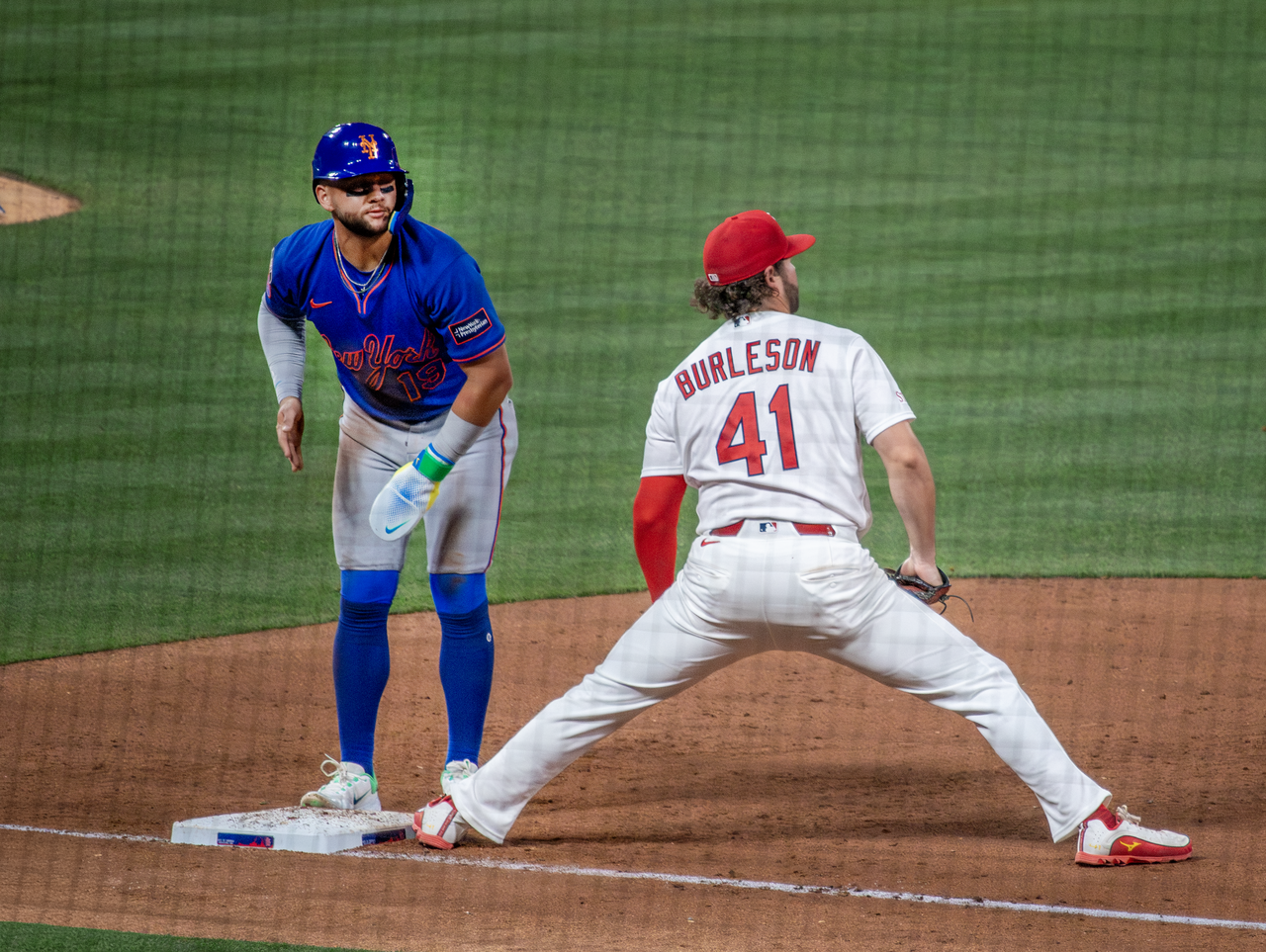
Bo Bichette's first season in a New York Mets uniform has been a slog at the surface level, and frustrated fantasy managers are weighing whether to cut bait. The Verdexed read is the opposite: Bichette is a textbook buy-low, and the Statcast profile is the reason why. The gap between what he is hitting and what he is producing is the kind of disconnect that tends to correct over a full season.
Bichette joined the Mets this offseason and shifted into a new role and a new ballpark after his long run in Toronto, even moving off shortstop in the move. New team, new park, and new infield position all add noise to a player's adjustment, and that noise has shown up in batting average and counting stats that lag well behind his career baselines and preseason projections.
The disconnect on the surface
The actual numbers have been underwhelming. Bichette's batting average has hovered well below his career norms, and his power output has been light relative to the 15-plus homer pace his projections called for. For a hitter who built his reputation on a high-contact, high-average profile, a sub-par average is the kind of stat that scares managers into selling.
That fear is where the opportunity lives. When a recognizable name posts a disappointing average and a modest home run total, the perceived trade value craters even if the underlying skills remain intact. The job of an analytics-driven manager is to separate the result from the process, and Bichette's process tells a more encouraging story than his slash line.
The Statcast case
Here is the core of the argument. Bichette's expected weighted on-base average sits meaningfully above his actual weighted on-base average, a clear sign that his outcomes have trailed the quality of his contact. His average exit velocity has held in the low-90s and his hard-hit rate has stayed in the mid-40s, both healthy marks that indicate the bat speed and contact quality have not eroded. He is squaring the ball up; the hits simply have not fallen at his usual rate.
A depressed batting average on balls in play is doing a lot of the damage. Bichette has historically run strong BABIP figures thanks to his line-drive stroke, and when that number dips well below a hitter's established baseline without a corresponding drop in contact quality, regression toward the mean is the expectation rather than the hope. Pair a soft BABIP with a hard-hit rate that says the contact is genuine, and you have the classic signature of a hitter due for positive correction.
The barrel and exit-velocity data matter because they are sticky. Luck-driven metrics like BABIP fluctuate; batted-ball quality stabilizes faster and predicts future production better. Bichette's batted-ball quality says the talent is present. The results say the dice have been unkind. Over a large enough sample, the dice tend to even out.
Fantasy fallout
In redraft leagues, Bichette is a hold for anyone who drafted him and a buy-low target for everyone else. Send an offer to the manager who rosters him and is tired of the empty average. You are paying a discount for a hitter whose underlying metrics suggest a return toward his career production in the second half. Even a partial bounce in average and power would dramatically outperform his current trade cost.
Position eligibility adds to the appeal. Bichette's move around the infield can broaden where he qualifies depending on your platform's rules, which raises his roster flexibility and his value in formats that reward middle-infield or corner-infield depth. Confirm his exact eligibility in your league before finalizing any deal, but the positional angle is a quiet bonus on top of the regression case.
In dynasty formats, the case is even stronger because you are buying a still-prime hitter at a depressed valuation driven by a noisy adjustment season. Dynasty managers who can stomach a slow stretch are getting a discount on a player whose skills have not collapsed.
The Verdexed model take
The Verdexed model flags Bichette as a high-confidence positive-regression candidate. The inputs it weights most heavily, expected weighted on-base average relative to actual, hard-hit rate, and the BABIP gap, all point the same direction. When those three signals align, the model treats the underperformance as variance rather than decline, and it projects a meaningful step up in production over the remainder of the season.
The model does attach caveats. A new ballpark and a position change introduce real adjustment costs, and a slow first half can erode in-season counting stats that never fully recover even when the rate stats rebound. The model's projection is for the rate-stat profile to recover strongly while acknowledging the home run and RBI totals may not fully catch up to preseason expectations given the slow start. The discount, however, more than accounts for that risk.
What's next
Watch three indicators. First, the BABIP trend over the next few weeks, because a normalizing BABIP is the fastest path to a visibly better average. Second, whether the hard-hit and barrel rates hold or climb, which would confirm the contact quality is real and not fading. Third, any reporting on his comfort at his new infield position, since defensive adjustment can bleed into offensive focus early in a transition.
The actionable takeaway is simple: Bichette is a sell-low for the manager who rosters him and a buy-low for everyone else. The Statcast profile says the hitter is still here. The results say the market is undervaluing him. That gap is the opportunity.