 NFL2026-09-09
The Seahawks-Patriots Showdown Slate Is Thin at Running Back and That Is Where the Leverage Sits
By Verdexed Fantasy Desk
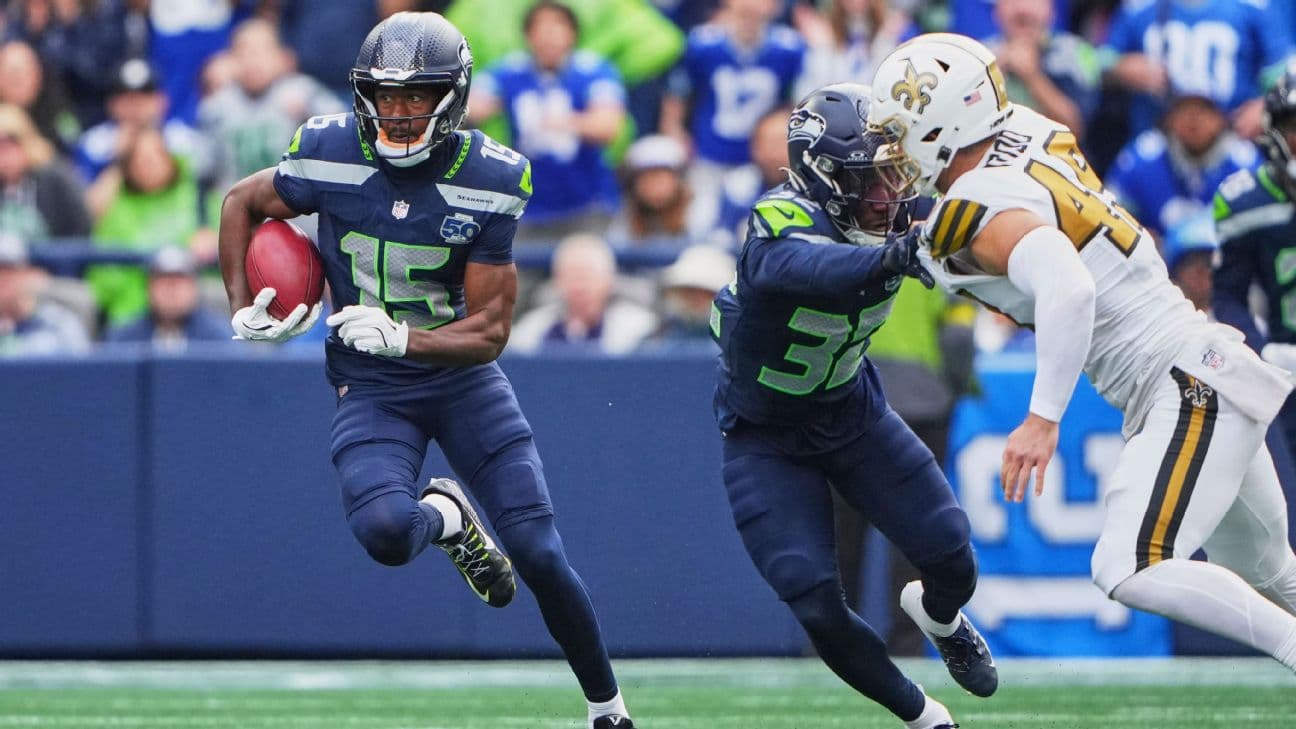
The 2026 season opens Wednesday night at Lumen Field with a Super Bowl LX rematch, New England at Seattle, and for daily fantasy players it is the only game on the board. Single-game slates reward correlation and punish consensus, and this one has an unusually clear pressure point: neither team has a settled, healthy, fully trusted lead running back.
Seattle opened as a short favorite in the low single digits and the number has held there. That is a game script the market reads as close and competitive, which is the worst possible environment for a clean running back projection and the best possible environment for leverage.
What the injury report says
Seattle ruled out safety Ty Okada with a hamstring. Safety Nick Emmanwori, dealing with an ankle, and receiver Tory Horton, with a hamstring, both carry questionable tags into the game. New England ruled out center Ben Brown, which matters more for the run game than the box score suggests.
The bigger fantasy question is TreVeyon Henderson, who has not practiced since late August with an ankle issue and did not receive a clean designation heading into the week. Rhamondre Stevenson has been the expected Week 1 answer for New England either way, but Henderson's status changes the shape of the passing-down work.
Seattle's backfield is its own puzzle. Zach Charbonnet opened on the physically unable to perform list and will miss at least the first four games. Rookie Jadarian Price is the starter. George Holani is the complement. Neither has an established NFL workload to project from.
Building the captain slot
The obvious captains are the quarterbacks. Drake Maye and Sam Darnold will both be popular, and Maye in particular should carry heavy ownership after a summer in which New England did not play him in the preseason at all.
The contrarian captain is Price. Rookie running backs starting an opener on national television in a game the market expects to be close are the exact profile that produces 20-plus touches with goal-line work, and his salary will not reflect that because he has no NFL production to price against. If Seattle plays with a lead in the second half, Price is the single highest-ceiling roster spot on the slate relative to cost.
Stevenson is the same argument from the other side, with a lower ceiling and a firmer floor. If Henderson sits, Stevenson approaches a bell cow role in a game New England needs to keep close.
Where the correlation lives
The clean stacks on this slate are quarterback plus his top target plus a bring-back. Maye with his primary receiver and a Seattle skill player on the other side is the standard build. Darnold with a Seattle receiver and a New England bring-back is the mirror.
The leverage is in the third and fourth slots. Horton's questionable tag will scare ownership away, and questionable receivers who play tend to see full route participation. If Seattle activates him, he is the cheapest path to Darnold's passing volume in the field.
Tight ends are the other under-owned correlation. Single-game slates chronically underrate tight end targets in close games, because red zone possessions compress and the tight end is often the read on second and goal from the six.
Defenses and kickers are the standard flex fillers. In a game with a total the market has set on the lower side, a kicker in a close, field-goal-heavy script is not the punt it looks like.
The Verdexed model take
Verdexed's model prices this game as close to a coin flip with a modest lean to the home side, which is consistent with where the market landed. Neither the side nor the total shows a meaningful edge.
The edge is in the running back distribution. The model's simulation for Price shows a wider outcome range than his salary implies, driven by the combination of an unestablished workload and a positive game script. Wide distributions with low ownership are the definition of tournament value.
On the New England side, the model treats the Henderson designation as a binary that the field will not fully process before lock. If Henderson is inactive, Stevenson's projection jumps significantly and his ownership will not, because most lineups get built before inactives post at ninety minutes to kickoff.
The betting angle worth a look is the under on the game total combined with a leaning toward rushing attempts. Openers between teams that both sat their starting quarterbacks all preseason tend to start slowly, and the market total on this game already reflects some of that. The rushing prop overs are the cleaner expression.
What to do before lock
Build two lineups, not one. The first assumes Henderson is out, and it captains Stevenson with a Seattle bring-back. The second assumes he plays, and it captains Price with New England pass-game exposure.
Wait for the inactive report. On a single-game slate, ninety minutes of information is worth more than three days of projections, and the field will not adjust.
Fade the chalk quarterback captain in large-field tournaments. Both quarterbacks will be heavily rostered in the captain spot, and the mathematical case for a running back captain in a close game with cheap salaries is strong.
What's next
This game is also the first real data point of the season for two backfields that fantasy managers have been guessing about all August. Whatever the snap counts say Wednesday night will set waiver priorities for both Seattle and New England before the rest of the league even kicks off, which is a small but real advantage for anyone paying attention to a midweek opener.