 NHL2026-08-26
Thatcher Demko's Camp Status Is Unclear and Fantasy Hockey Drafts Are Guessing
By Verdexed NHL Desk
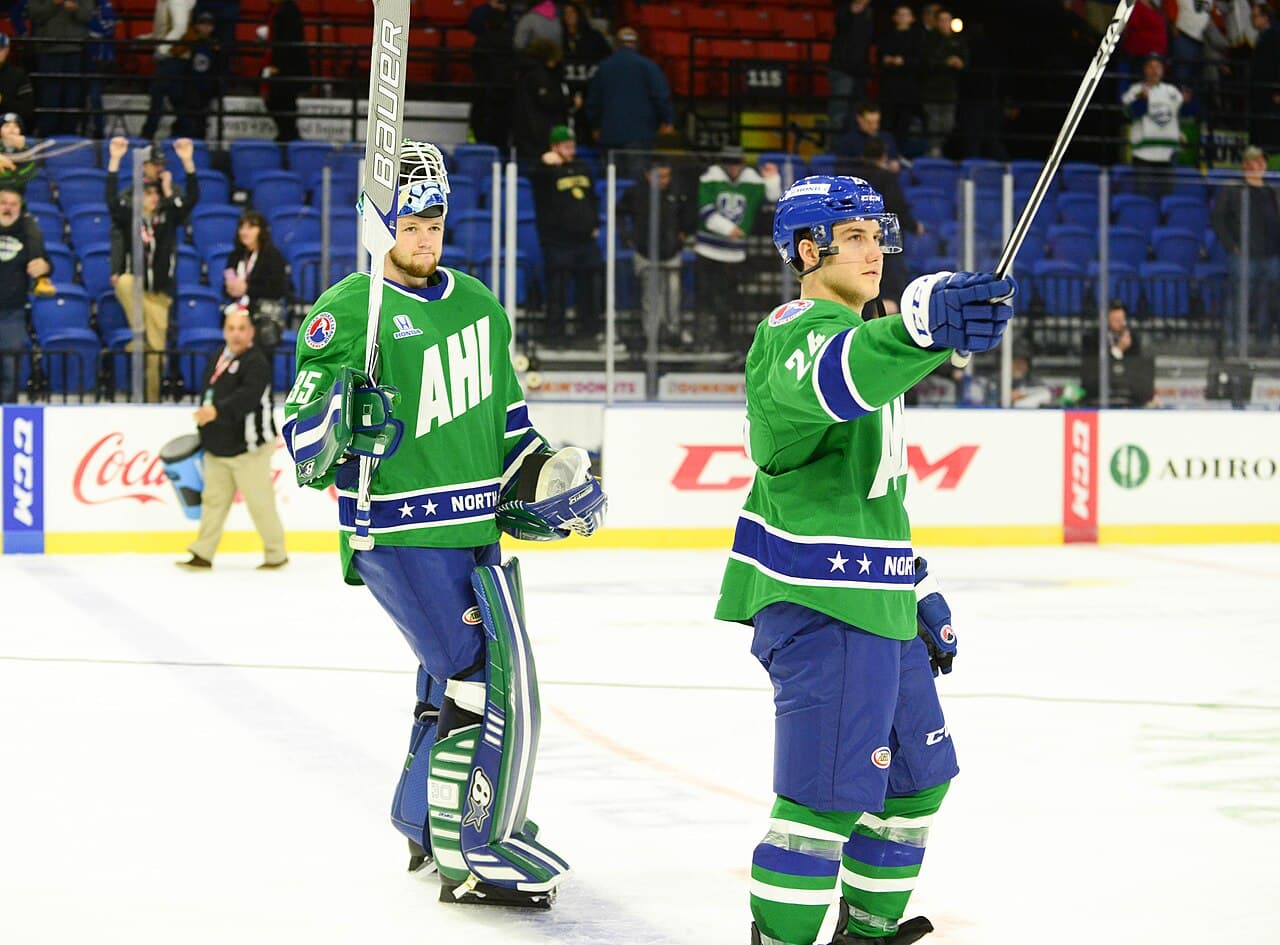
Vancouver Canucks goaltender Thatcher Demko has no firm timeline for a return, according to reporting from Sportsnet's Elliotte Friedman, and it is unclear whether he will be ready when training camp opens next month. Demko is working out and doing on-ice work, but the club has not committed to a date.
That is a meaningfully different message from the one the Canucks were sending in the spring, and it lands right as fantasy hockey drafts begin.
How Vancouver got here
Demko underwent hip surgery that ended his 2025-26 season. The procedure was unrelated to the knee problems that had defined his previous injury history, and the team's expectation at the time, expressed publicly by the front office, was that doing it when they did would leave him ready for the start of training camp.
That expectation has softened. Hip surgery recovery is described consistently by people who cover the team as a long road, and the sensible institutional posture is not to rush a franchise goaltender back for exhibition games.
The context that makes this concerning rather than routine is volume. Demko has appeared in roughly 43 games across the past two seasons combined. That is not a goaltender managing a single injury, it is a goaltender who has not been available at a starter's workload in two years.
The depth behind him
Vancouver enters the season with three goaltenders who have NHL experience: Demko, Kevin Lankinen, and Nikita Tolopilo.
The intended structure is Demko as the No. 1 with Lankinen backing him up. The complication is that Lankinen's 2025-26 was difficult by any measure, with career-worst marks in goals-against average, save percentage, and losses. A backup coming off a season like that is not a comfortable fallback if the starter cannot go.
Tolopilo is the roster-mechanics problem. He would need to clear waivers to be assigned to the AHL, and given how the organization values him, there is a real chance he would not clear. That means Vancouver may have to carry three goaltenders, which is a roster inefficiency teams accept only when they have no confidence in the top of the depth chart.
Fantasy fallout
Demko is the highest-variance goaltender on most draft boards. When healthy and playing at his peak, he is a top-tier fantasy asset who can single-handedly carry save percentage and goals-against categories. The problem is that "when healthy" has been doing an enormous amount of work in that sentence for two seasons.
The right price is well below his talent-based ranking and above where pure games-played projections would put him. In practical terms, that means treating him as a second goaltender in a two-goalie league rather than as your anchor, and being willing to take him a round or two earlier than a pure risk-adjusted model would suggest if you have already secured a stable starter.
Kevin Lankinen is the contingency that most managers will ignore and some will need. His draft cost is minimal. If Demko misses the start of the season, Lankinen inherits a starter's workload on a team that should be competitive, and that is worth more than a late-round pick.
The uncomfortable truth is that Lankinen's own performance last season means inheriting the crease does not automatically make him a useful fantasy asset. He would provide wins and volume, not ratios.
The general principle for goaltender drafting applies here with unusual force. Goalie is the position where availability dominates talent in fantasy scoring, because a great goaltender who plays 40 games contributes less than a good one who plays 60. Demko is the clearest current example of that math.
The Verdexed model take
Verdexed's goaltender model projects starts as a distribution and then applies performance rates within it, which is why it consistently ranks high-talent, low-availability goaltenders lower than consensus.
For Demko, the model's expected starts sit well below a typical No. 1's workload, and the shape of the distribution is bimodal rather than centered. Either he is healthy and plays a starter's season, or he is not and plays substantially fewer than 40 games. There is very little probability mass in between.
Bimodal distributions are the hardest thing to draft against, because the expected value understates both the upside and the downside. The model's practical recommendation in these cases is to pair the asset with its own contingency, which here means drafting Lankinen if you draft Demko.
The betting angle
Vancouver's regular-season win total and playoff odds are both sensitive to goaltending in a way few teams' are, because the gap between Demko at his best and the alternative is among the largest starter-to-backup gaps in the league.
If the market has priced Vancouver assuming a healthy Demko, and camp opens without him, that is a fade. Watch for the number to move in the last week of September, and act before it does if the reporting stays vague.
What to do in your league
Do not anchor your goaltending on Demko. Draft him as an upside second option, and draft Lankinen late as the paired contingency. In leagues with weekly lineups and no injured reserve slot, downgrade Demko further, because a goaltender who misses camp will usually miss games.
In dynasty formats, hold. The talent has not gone anywhere and he is not old. This is a season-level problem, not a career-level one.
What's next
Training camp opening is the checkpoint. If Demko is on the ice for the first day in a full capacity, most of this concern resolves and his draft price will jump immediately. If he opens camp in a limited role or is not cleared, Lankinen becomes a must-add and Vancouver becomes a fade in the futures market. That answer arrives within a month.