Omarion Hampton Is Set Up to Smash in Mike McDaniel's Chargers Offense: A 2026 Breakout RB
By Verdexed Fantasy Desk
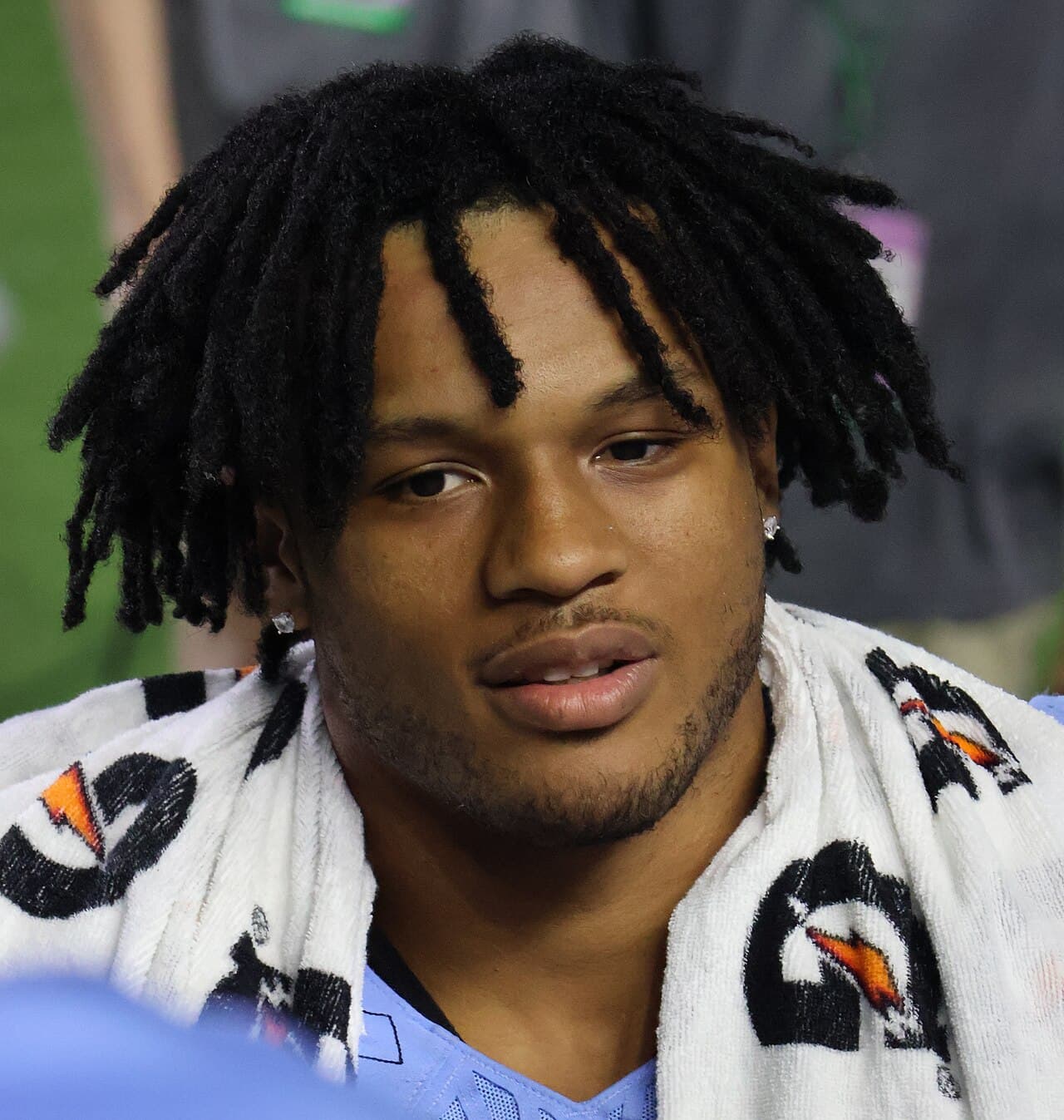
Omarion Hampton has the clearest path to a breakout of any running back entering his second season. The Chargers hired Mike McDaniel as their new offensive coordinator, the backfield has been cleared of veteran competition, and Hampton flashed every-down ability as a rookie before injury cut his year short. Put those pieces together and Los Angeles has the makings of a top-five fantasy running back at a draft-day price that still has room to climb.
The lead-back opportunity is the foundation, but the scheme change is what raises the ceiling. McDaniel's offense is built to manufacture explosive runs, and a back with Hampton's profile is exactly the kind of player it is designed to feed.
The scheme change that matters
McDaniel arrives in Los Angeles after a run as a head coach and an offensive architect, bringing a system defined by heavy pre-snap motion and outside-zone concepts. Reporting on his approach pegs his motion usage far above league norms, a wrinkle that stresses defenses before the snap and creates cleaner running lanes. The previous Chargers ground game leaned on a more conventional, gap-heavy identity. Swapping that for a motion-and-zone scheme is a meaningful upgrade for a back who wins on vision and burst.
The quarterback and receiver room benefit too, but the running back is the cleanest scheme-fit story here. McDaniel offenses have historically produced strong fantasy value from the backfield, both on the ground and in the passing game, and Hampton steps into that environment as the centerpiece rather than a piece.
The opportunity is wide open
The biggest single factor in Hampton's outlook is the absence of competition. Najee Harris, who opened the previous season as a complementary veteran before a torn Achilles ended his year and his time with the team, did not return to the Chargers. The team added depth in Keaton Mitchell and retained Kimani Vidal as a hedge, but neither projects to threaten Hampton's standing as the early-down and passing-down lead.
That matters because volume is the engine of running back fantasy scoring. As a rookie, Hampton showed what a featured role looked like: over a midseason stretch he handled a heavy carry and touch load and posted strong PPR output before an ankle and foot injury derailed the season. He has now had a full offseason to recover, and the depth chart around him only reinforces the bell-cow projection.
The fantasy case
Hampton is a consensus riser, drafted around the back end of the first tier of running backs, and the analyst community has been aggressive in projecting his ceiling. Multiple evaluators see a path to top-five positional production and a scrimmage-yardage total in the 1,300-to-1,400 range if he stays healthy, the kind of workload that wins fantasy leagues. The exact ADP varies by platform, but the direction is unmistakable: his price is climbing, and the scheme fit gives it more room to rise.
The one real risk is durability. Hampton's rookie year ended with a lower-body injury, and his college-to-pro workload has been substantial for a young back. That is the variable to weigh against the opportunity. But the profile here, a featured back in a back-friendly scheme with no veteran standing in his way, is the textbook recipe for a breakout, and the injury risk is the price of admission rather than a reason to fade.
What to do in your league
Draft Hampton as a high-end RB1 and be comfortable taking him near the top of the second round if he slips there. The combination of guaranteed volume and an offense engineered to spring explosive runs gives him one of the highest ceilings at the position. Pair the pick with a contingency stash if you can, because the injury history is real, but do not let it scare you off the upside.
For best-ball and dynasty managers, the value is even cleaner. A young, ascending back attached to a proven offensive mind on a multi-year arc is exactly the asset to acquire before the breakout fully prices in. The Verdexed model take is that the touches are close to locked and the scheme is an accelerant, which is the combination that turns a good back into a league-winner.
The Verdexed model take
The model weights two factors above all others in projecting running back fantasy value: opportunity and scheme, and Hampton scores near the top on both. Opportunity is the bigger of the two, because touches are the raw material of fantasy scoring, and Hampton's path to a bell-cow workload is as clear as any young back's after the offseason cleared his competition. The model reads a vacated lead role on a team without a proven alternative as one of the strongest signals available, and it is the foundation of his top-five upside.
Scheme is the multiplier. A motion-heavy, outside-zone system does not just hand a back carries; it improves the quality of those carries by stressing defenses pre-snap and creating cleaner lanes, which lifts yards per touch and the explosive-run rate that turns good games into great ones. The model sees the combination of secure volume and an efficiency-friendly scheme as the precise recipe that produces league-winning seasons, with the injury history as the lone factor pulling the projection back toward the middle of the range. Net it out and Hampton profiles as a high-end RB1 whose ceiling justifies an aggressive draft-day price.
What is next
Training camp will confirm two things: Hampton's health and the size of his passing-down role under McDaniel. Strong reports on both fronts would push his ADP firmly into first-round territory. Watch the early camp practice notes for snap-share signals and any mention of how the staff plans to deploy him on third downs. The opportunity is already there. Camp will tell us just how high the ceiling goes.