Yesterday's picks: how the model did (July 26)
By Verdexed Analytics
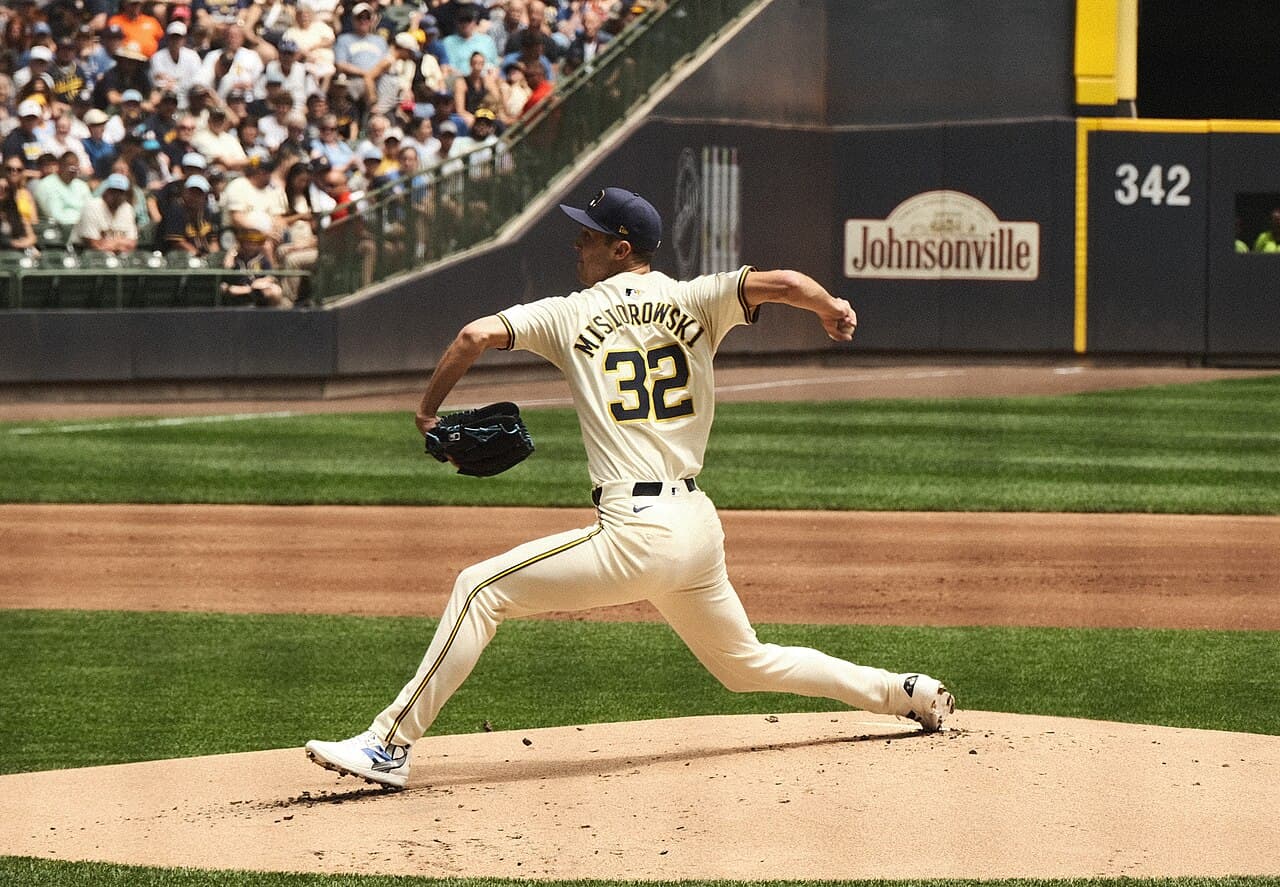
Sunday graded as a winning day at the top of Verdexed's MLB card and a losing one at the bottom of it. The model published five reads on the July 26 slate, three of them with a stated direction, and it went two for three. Its firmest confidence side, Milwaukee behind Jacob Misiorowski, won 11-2. Its contrarian read on the underpriced home team, Pittsburgh, won 8-7. The read the column called the clearest price-versus-projection gap on the board, Cleveland as a road underdog near +113 in Tampa Bay, lost 1-0, and lost in the way that refutes the argument behind it.
That is a fair day, not a good one. The model's confidence was rewarded and its value was punished, close to the opposite of what a market-anchored model wants to prove.
The scorecard
Two of the five published reads do not grade. Royals at Tigers was written as a spot where the market was likely ahead of the model, with Detroit near -190 called a defensible side at an indefensible number, and no side was endorsed. Blue Jays at Red Sox was published as priced about right. Declining to state a direction on two of five is the model's read of a thin Sunday board, and it keeps the graded sample small.
On the three reads that do grade, the record was 2-1.
The high-confidence tier held, and held emphatically. Milwaukee was the day's firmest side, the case rested almost entirely on one arm, and that arm delivered the best start in the majors on Sunday. The value tier did not hold. The single biggest listed edge on the card lost, and the second-largest value read, Pittsburgh, is the only reason the day finished above water.
A precise full-slate graded record for Sunday, including the day's accuracy percentage and Brier score, was not retrievable from Verdexed's public accuracy surface at the time of writing, so no figure is claimed here. What is verifiable is the published output and the final scores, and on that basis Sunday was two for three.
Best call / worst miss
The sharpest call was Pittsburgh, not Milwaukee. The column argued that a game trading near -126 was underpricing the home side because of a FIP gap approaching three runs between Braxton Ashcraft at 3.53 and Jameson Taillon at 6.39, and that specific mechanism is what decided the game. Taillon lasted four innings and was charged with seven runs on six hits, including a Ryan O'Hearn grand slam in the third that put Pittsburgh up 7-1. Ashcraft went six and gave up four. The Cubs closed to within one on a Seiya Suzuki two-run homer in their last at-bat, so the margin was thinner than the process, but reasoning and result matched.
The loudest correct call was Milwaukee. Misiorowski struck out the first seven Rockies he faced, a Brewers franchise record, finished with 12 strikeouts in five innings, allowed one run on one hit with no walks, and threw 66 of his 83 pitches at 100 mph or better, topping out at 104.7. Cole Carrigg's two-out homer in the fifth broke up the no-hitter. The final was 11-2. The model flagged in advance that this was confidence without value, since the price had almost certainly absorbed the projection, and that framing was right.
The worst miss was Cleveland, and it was worse than the one-run final suggests. The entire edge case was that the better arm belonged to the underdog, Parker Messick at a 2.68 ERA against Drew Rasmussen at 3.28. Rasmussen then threw seven innings of one-hit baseball, striking out nine and retiring the last 12 he faced after a leadoff double by Steven Kwan. Tampa Bay won 1-0 on a Cedric Mullins bunt single in the fifth and completed a three-game sweep. Cleveland managed one hit all day. The premise was not unlucky, it was wrong on the field, and a model that leans on starter quality has to own that.
The two ungraded games broke in opposite directions. Detroit, the price the column refused to endorse at -190, lost 5-4 after leading 4-3, with Michael Massey's two-run homer in the eighth deciding it and the Tigers blowing a late lead for the 17th time this season. Boston, the game called priced about right, won 6-1 behind Ranger Suarez. Flagging a bad number correctly is not a win, and it does not go on the record.
What it means
One Sunday at 2-1 on three graded reads is a small sample carrying almost no signal. The more useful frame is the weekend: Saturday split its two directional reads and Sunday went two for three, which is ordinary output across a board of thin edges. Nothing in either day supports a claim of a hot streak or a cold one.
The item worth watching is narrower. Sunday's chalk landed and Sunday's biggest stated value edge did not, and Friday ran the other way, with the firmest side buried by an underdog. If value reads keep losing while confidence reads keep cashing over a longer run of days, that becomes a calibration question rather than a variance question. Three days is not that run. The accuracy page, not this column, is where that verdict gets settled.
Responsible play
**This is a record of past model output, not betting advice.** Verdexed grades its model in public for transparency and entertainment. Past results do not predict future outcomes, nothing here is a recommendation to place a wager, and no pick is ever a guarantee, even a strong model loses regularly.
**You must be of legal betting age in your jurisdiction** and located where sports wagering is legal to bet. Sports betting is not available everywhere; know and follow the laws where you are. Never bet more than you can afford to lose, and never chase losses.
If gambling is affecting you or someone you know, help is available. In the US, call or text **1-800-GAMBLER** (1-800-426-2537), or visit ncpgambling.org. Please play responsibly.