 NFL2026-08-25
Michael Penix Jr. Was Cleared for Full Practice and Atlanta's Quarterback Race Is Real Again
By Verdexed NFL Desk
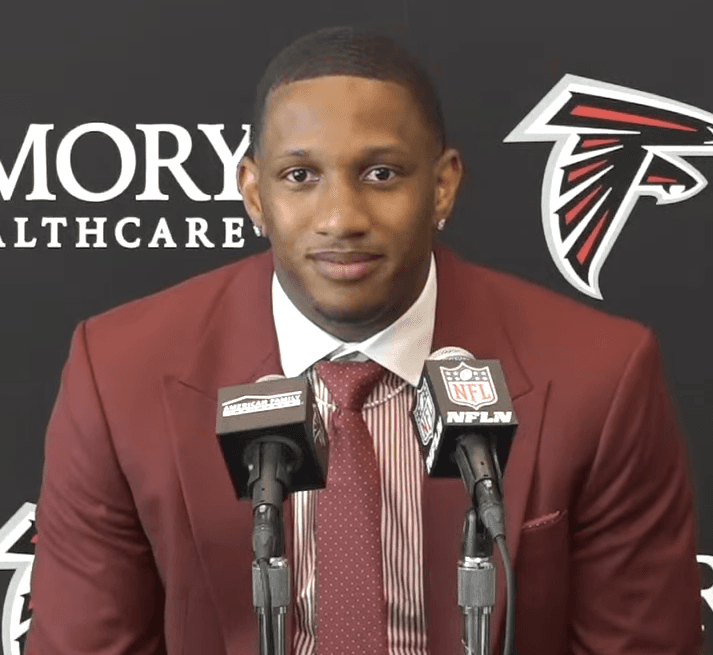
Michael Penix Jr. has been fully cleared to practice, Falcons head coach Kevin Stefanski said after Atlanta's preseason win over Indianapolis. It is the first time Penix has been permitted to take part in 11-on-11 team periods since he underwent surgery on his left ACL in November.
Until now Penix had been limited to individual drills and 7-on-7 work dating back to the spring, which is why Tua Tagovailoa took the overwhelming majority of first-team reps through OTAs and training camp and started the preseason opener. Stefanski has still not named a Week 1 starter for the September opener.
The reporting through camp has consistently framed Tagovailoa as the leader, and the reason has been availability rather than performance. A quarterback who cannot participate in team drills cannot win a job. That constraint is now gone, and there are roughly two and a half weeks of practice left before the opener.
What the clearance actually changes
It changes the number of competitive reps, and that is not a small thing. Coaching staffs make these decisions on what they see against a defense at full speed, and Penix has not given them any of that evidence since last fall. Two and a half weeks is enough time to produce a meaningful sample if the staff wants one.
It does not change the timeline problem. A player cleared in late August after an ACL repair is not the same player he was before the injury, and quarterbacks who return from that surgery typically need in-season reps to rebuild the movement that shows up on scramble drills and off-platform throws. Atlanta has to weigh a healthier Tagovailoa against a more talented but rustier Penix.
There is a contract dimension too. Tagovailoa signed a modest one-year deal to compete here, so there is no financial reason to protect his snaps. Penix was a top-10 pick two drafts ago and is the quarterback this franchise built its offense around. Organizations tend to find their way back to the player they invested in, which is why the market has never fully priced Tagovailoa as a lock.
Fantasy fallout
The pass catchers are the reason to care, and Atlanta has invested heavily in them. Drake London and Kyle Pitts both signed extensions this offseason, and both are being drafted as if the quarterback question resolves acceptably.
Drake London is the least sensitive to the outcome. His target share is not in question in either scenario, and his profile as a big-bodied contested-catch receiver works with a rhythm passer and with a downfield thrower. He stays where he is on draft boards.
Kyle Pitts is the player whose range is widest. Penix throws with more velocity and pushes the ball down the field more aggressively, which is the version of the offense that has historically produced Pitts's best stretches. A Tagovailoa-led attack that operates shorter and quicker is a lower-ceiling environment for a seam-stretching tight end. If you are drafting Pitts, you are implicitly betting on Penix at some point this season.
Bijan Robinson is insulated from all of it. He signed the richest running back contract in league history this offseason, and Stefanski's offenses have leaned on the run for years. Robinson is a top-of-the-first-round pick regardless of who takes the snaps, and the addition of Brian Robinson Jr. as a short-yardage complement is a minor touchdown-equity concern rather than a workload threat.
Zachariah Branch, the rookie drafted in the third round, is a speculative add whose value rises with Penix. Deep passing games create rookie explosive plays. Short passing games do not.
Neither quarterback should be drafted as a QB1 in a one-quarterback league given the uncertainty, but Penix is the one worth stashing in superflex.
The Verdexed model take
The model treats this as a two-outcome branch and prices Atlanta's offense between them rather than at either extreme. The projected difference in team scoring between a Tagovailoa season and a Penix season is smaller than the fantasy discourse suggests, because Stefanski's system is scheme-heavy and run-oriented in a way that limits quarterback-driven variance.
Where the branch matters is in air yards. The model's projected average depth of target for Atlanta's passing game moves meaningfully under Penix, and that shifts value from London's reception volume toward Pitts's yardage and touchdown equity. Managers drafting Pitts should understand they are buying that branch.
On the betting side, the Falcons' season win total has not moved on the clearance news, and the model sees a small edge on the over if Penix wins the job, driven mostly by an offense that scored in the bottom third of the league last season having more variance than the market credits. That is not a bet to place before the starter is named. The cleaner play is waiting for the announcement and then taking the Atlanta team total in Week 1 if Penix starts and the number has not adjusted.
What to do in your league
Draft London where you were already drafting him. Draft Bijan as a top-five overall pick without hesitation.
Treat Pitts as a tier-shifting decision rather than a flat ranking. If you believe Penix plays most of the season, Pitts belongs in the tier above the streamers. If you believe Tagovailoa holds the job all year, Pitts is a matchup-based starter.
In superflex, Penix is the better stash of the two. In one-quarterback leagues, neither is worth a pick.
What is next
Atlanta must reach 53 players by Sunday evening, and how many quarterbacks the Falcons keep will be its own signal. Stefanski said only that Penix is cleared, not that the competition has restarted, so the practice reps over the next ten days are the tell. If Penix takes first-team work in the week leading into the opener, the job is genuinely open.
The announcement itself should come in the first week of September, which is late enough that fantasy drafts happening this week will have to make the call without it.