Malik Nabers Won't Practice at Giants Minicamp After a Second Knee Procedure: An ADP Warning
By Verdexed Fantasy Desk
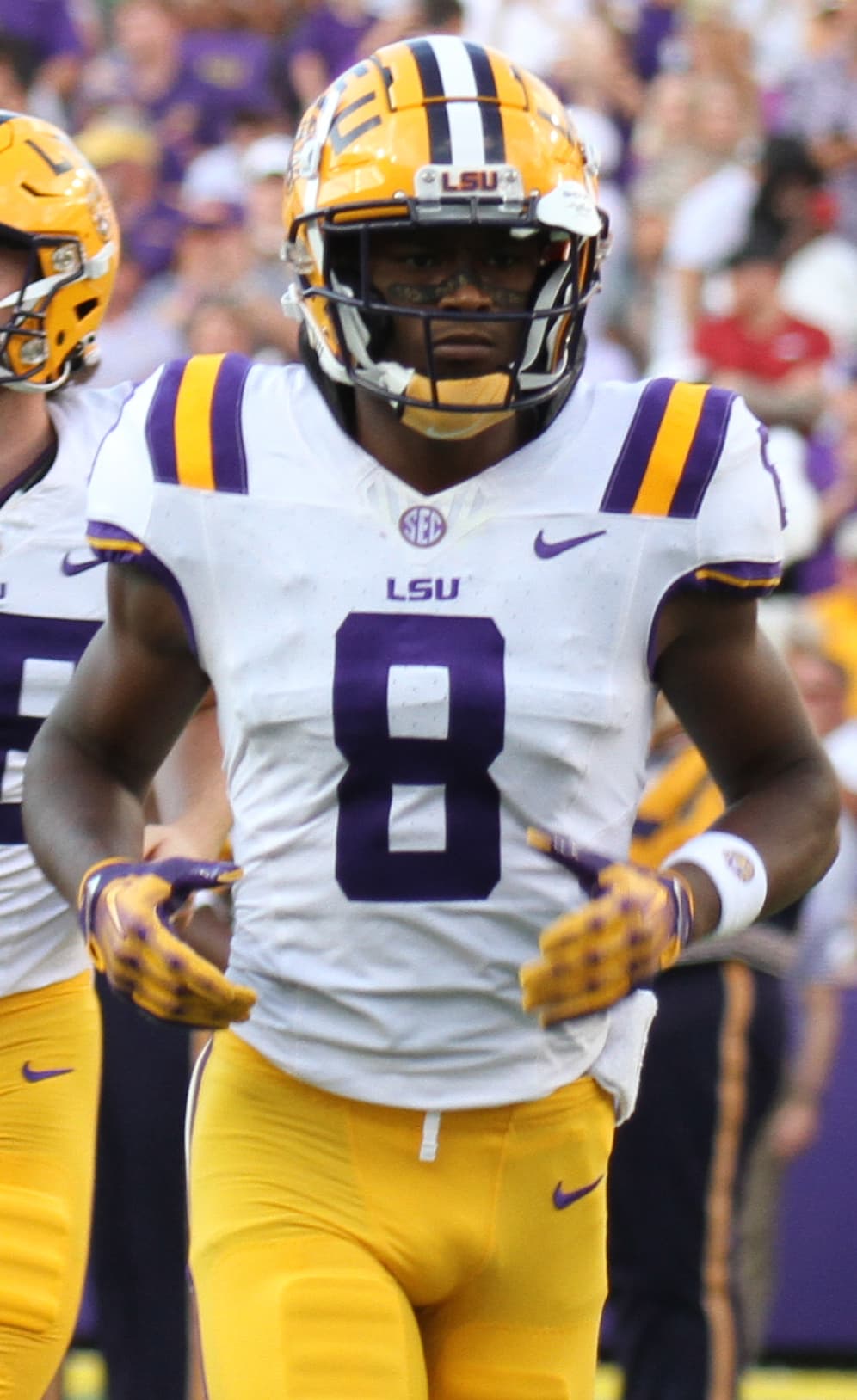
Malik Nabers will not practice at the New York Giants' mandatory minicamp after undergoing a second procedure on the knee he tore last September, a development that should change how fantasy managers price one of the game's most explosive young receivers. Nabers tore his ACL and meniscus on September 28, 2025, and the follow-up surgery this spring was done to address scar tissue and stiffness in the joint. With the receiver sidelined through minicamp and reporting casting doubt on his Week 1 readiness, the PUP list is now a live possibility, and that reshapes his draft cost.
Nabers is the kind of player fantasy drafters reach for: a target monopolizer who commands a huge share of his team's passing volume regardless of the quarterback situation. That profile normally lands him in the first two rounds. A second knee procedure and a real chance he opens the season on the physically unable to perform list is the opposite of what a Round 1-2 investment is supposed to look like, and it forces a hard conversation about both his floor and the cost of getting him.
What is confirmed and what is not
The confirmed facts are these. Nabers suffered a torn ACL and meniscus in late September of last year. He had a second procedure this offseason to clean up scar tissue and address stiffness. He will not take part in the Giants' mandatory minicamp. And the messaging around his Week 1 availability has grown more cautious, with reporting that his readiness for the opener is genuinely in question rather than assumed.
What is not confirmed is a hard return date. Sources have pointed in two directions: one camp suggests a target somewhere around Week 1, the other flags a real chance of a stint on PUP, which would cost him at least the first four games of the regular season. Until the Giants commit to a timeline, drafters should treat Nabers as a player whose start date is a range, not a date, and plan accordingly.
Fantasy fallout
The practical effect is a tiered draft decision. At his old ADP, Nabers was a set-it-and-forget-it WR1. With a second surgery and PUP risk, he becomes a player whose value depends entirely on the price. In redraft leagues, he is no longer worth a clean first or second-round pick at face value. He becomes a target in the range where his upside is still a discount and a multi-week absence would not sink your season.
His absence also lifts the rest of the Giants' pass-catching room in the short term. Whoever operates as the primary target while Nabers ramps back gains real standalone value, with tight end Isaiah Likely flagged as an emerging beneficiary of the early-season target vacuum. In best-ball and deeper formats, that makes the secondary New York options worth a late stab, because the targets Nabers normally hoovers up have to go somewhere if he opens on the sideline.
The betting angle
Nabers is central enough to the Giants' passing game that his availability touches New York's team passing props and win total. A healthy Nabers from Week 1 supports a higher team passing volume and keeps the Giants' offensive outlook intact. A PUP designation pulls the early-season passing projection down and adds uncertainty to a team that needs its young pass-catcher to function.
Bettors should expect Nabers's receiving yardage and reception props to open softly, with the market pricing in the chance of missed time. The cleaner edge is on the timeline news itself: the first concrete word on whether the Giants place him on PUP will move his season-long over/unders, and being early to that information is where the value sits.
The Verdexed model take
The Verdexed model now carries Nabers with a wider games-played distribution than a typical Round 1-2 receiver, reflecting the second procedure and the unresolved timeline. The model's per-game projection on a healthy Nabers remains elite, because his target share is the kind of input that does not erode, but the season-long projection takes a hit from the games-missed risk baked into the range of outcomes.
That split is the whole story. On a points-per-game basis, Nabers is still a star. On a total-season basis, the expected value drops because the model assigns meaningful probability to a delayed start. The disciplined approach the model points to is to draft him only where that risk is already priced in, capturing the upside of a healthy return without paying a premium that assumes one.
What to do in your league
Knock Nabers down from his old ADP and let him fall to a tier where missed time would not cripple your roster, then draft him as the high-upside discount he has become. If you take him, pair him with a stable WR2 who can carry the early weeks, and consider grabbing the Giants' next-most-involved pass-catcher as a cheap insurance play that doubles as a standalone option while Nabers ramps.
The single most important date is whenever the Giants make their PUP decision or attach a real timeline to his return. Until then, Nabers is a player to value on a curve, not a line. The talent is unquestioned and the ceiling is a top-five receiver season. The cost should reflect that the path there now runs through a second surgery and an opener that is no longer a given.