Kyrie Irving Has No Restrictions Entering Camp and Dallas Still Has No Timeline
By Verdexed NBA Desk
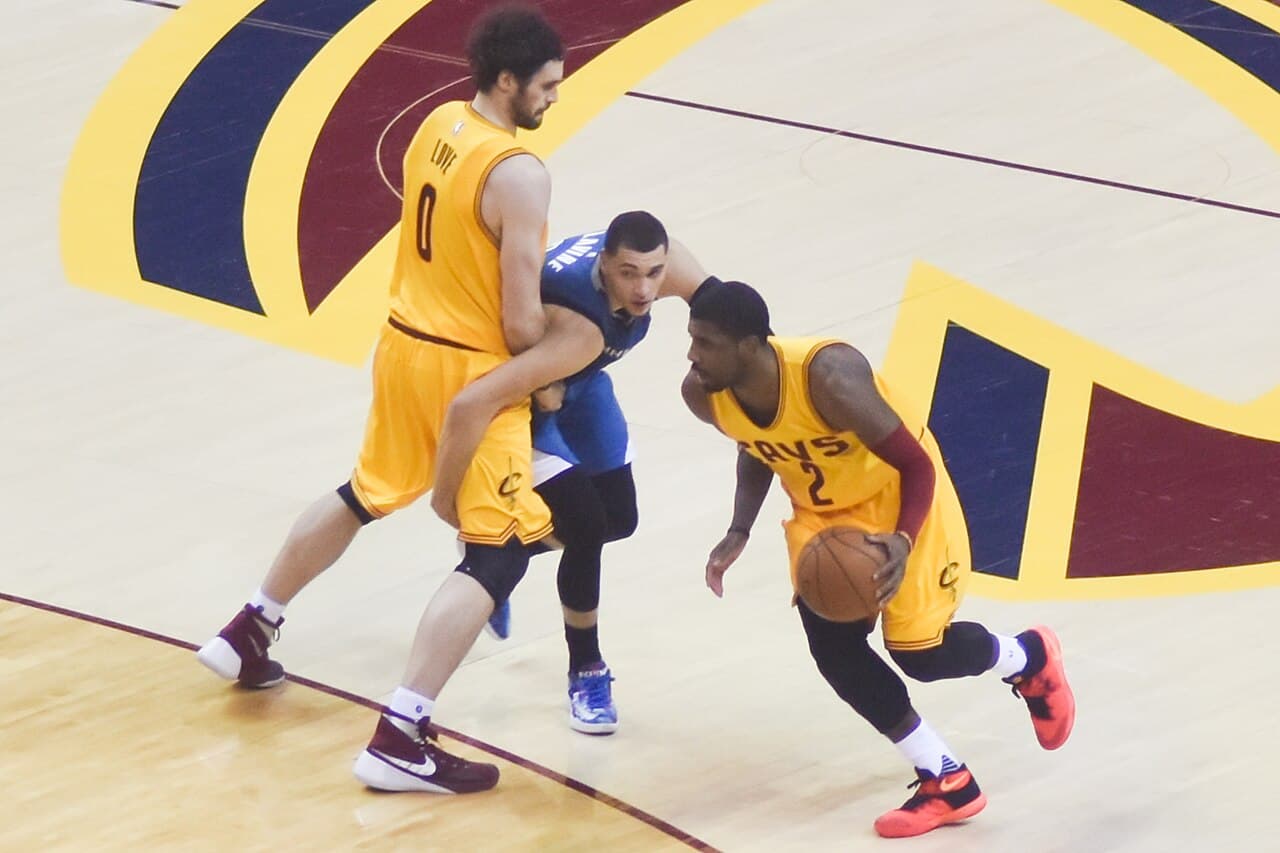
Kyrie Irving walked into the Mavericks' media day on Friday and said he has no restrictions heading into training camp, 18 months after tearing the ACL in his left knee. He has not played an NBA game since March 3, 2025, and Dallas ruled him out for the entire 2025-26 season in February.
No restrictions in camp is not the same as a return date for games, and the Mavericks have not provided one. For fantasy managers with drafts this week, that gap is the entire question.
What was actually said
Irving's message at media day was about perspective rather than timelines. He spoke about bringing joy back to basketball, and his teammates have said he looked like his old self in summer runs. The Mavericks are treating his return as a central part of their season, and he has been described as a leader for the group throughout the offseason.
What Dallas has not done is commit to him playing on opening night, or to a minutes range, or to a games-played expectation. That is standard and appropriate for a guard in his thirties coming off an 18-month absence, and it is also exactly the ambiguity that causes fantasy managers to misprice players.
Dallas has other camp news pushing the same direction. Dereck Lively II has not been cleared for camp, which leaves the center position unsettled, and the Mavericks opened media day ahead of most of the league before heading to Macao for the NBA's China Games.
The Cooper Flagg question
The most valuable fantasy read on Irving's return is not about Irving. It is about Cooper Flagg.
Flagg is the reigning Rookie of the Year and averaged more than 20 points per game as a 19-year-old. He enters year two as the centerpiece of this team, and the conventional analysis says that a healthy Irving takes usage away from him. That analysis is probably backwards.
A functional lead guard reduces the amount of offense Flagg has to create from scratch, and creating offense from scratch is the least efficient way to score. Flagg with Irving initiating should see better shot quality, more catch-and-shoot looks, and fewer late-clock possessions. The usage rate may dip slightly. The efficiency should rise more than the usage falls.
The fantasy implication is that Flagg's per-game scoring average is more likely to hold or rise than to fall, and his percentages should improve. He remains the Dallas player to draft, and the Irving return is a reason to feel better about him, not worse.
Fantasy fallout for Irving himself
Irving is a discount candidate, not a bargain. The distinction matters.
His talent is unquestioned, and when healthy he is a high-efficiency scorer who hits threes at a high rate and handles the ball enough to produce assists. That is a valuable fantasy profile. The problem is the number of games and the number of minutes, neither of which anyone can forecast with confidence.
A 34-year-old guard returning from ACL reconstruction after 18 months out is likely to face minutes restrictions early, rest days on back-to-backs, and the possibility of setbacks. Managers should draft him as a player who will produce well in the games he plays and who will miss a meaningful share of the schedule.
In roto formats, that is acceptable at the right price. In weekly head-to-head formats with lineup requirements, it is a real cost. In dynasty, he is a short-window asset rather than a building block.
The betting angle
Dallas's win total is the market most affected by Irving's availability, and the market has priced a healthy Irving. The more exploitable position is on the individual game level early in the season, when the market will not know from night to night whether he plays.
The specific pattern worth watching: teams with a star returning from a long absence frequently open slowly as the rotation adjusts, then improve markedly once roles settle. Betting against Dallas in the first two weeks and with Dallas in December is a crude version of that idea, and it has historical support.
Irving's own props are the market to avoid entirely until a minutes pattern is established. Prop pricing on a returning player with an unknown minutes allocation is guesswork on both sides of the counter.
The Verdexed model take
The model's projection for Irving is strong per-minute production, moderate minutes, and a games-played total well below a full season. That lands him as a useful but not elite fantasy piece, with a wide range of outcomes in both directions.
The model is more confident about Flagg. The combination of a sophomore leap, a healthier supporting cast, and a real point guard creating for him produces one of the more favorable situations in the league for a young forward, and the model's projection for Flagg is above his current market ranking in most formats.
On the team level, the model sees Dallas as improved but still dependent on health, with the Lively situation at center as an underdiscussed risk. A team relying on a 34-year-old guard returning from a knee reconstruction and an unsettled center rotation has a higher variance than its projected win total suggests.
What to do in your draft
Draft Flagg with confidence and treat the Irving news as supporting evidence rather than a threat to his value.
Take Irving a round or two later than his name suggests, and pair him with a reliable guard so that a missed game does not break a lineup. Avoid paying for the version of Irving who plays 70 games, because that version is the optimistic tail rather than the expectation.
And watch the preseason minutes in Macao. How Dallas uses Irving in games that do not count is the best available information about how it plans to use him in games that do.