 NFL2026-07-09
Jacoby Brissett's Cardinals Holdout Drags Toward Camp: The Fantasy Stakes for Harrison, McBride, and Conner
By Verdexed NFL Desk
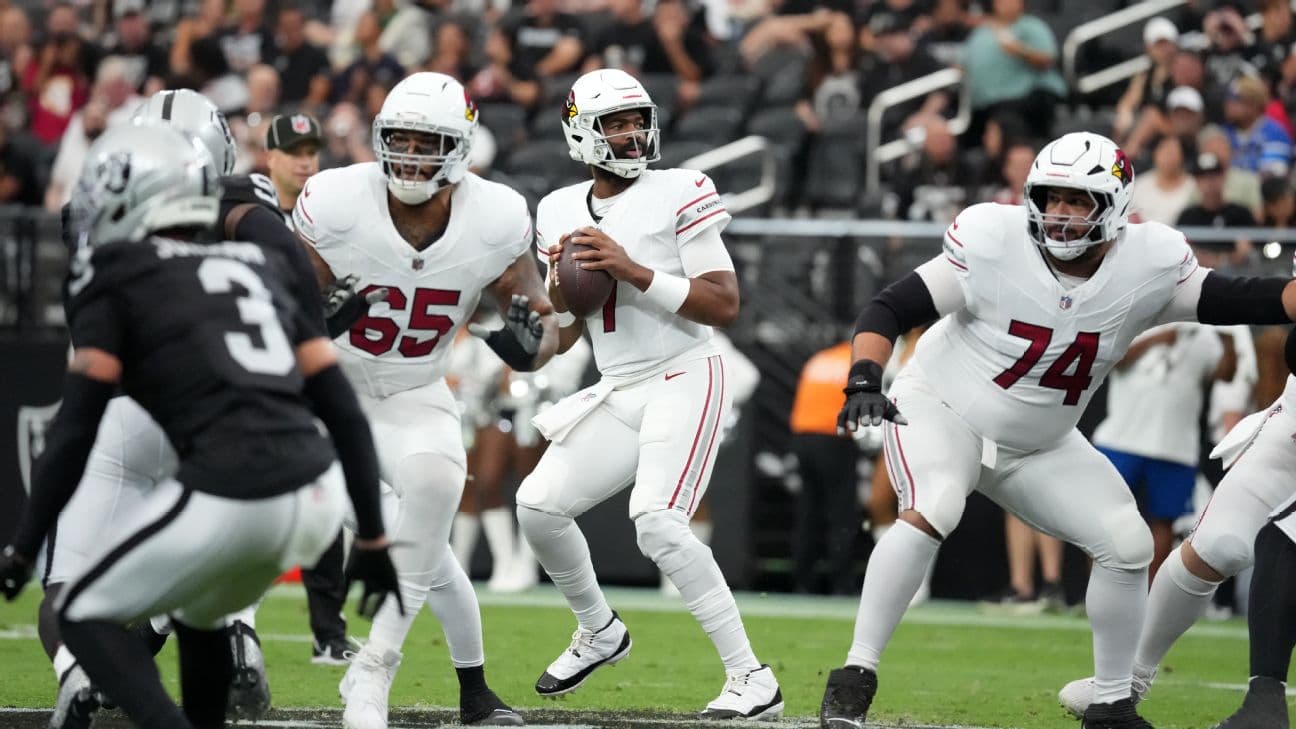
Jacoby Brissett has stayed away from the Arizona Cardinals' voluntary offseason program and OTAs as he pushes for a reworked contract, and with training camp opening in late July, the sides are reportedly still significantly apart. Brissett is entering the second year of the two-year deal he signed in March 2025, a contract that pays him a modest base with only a small portion guaranteed. The Cardinals told him after free agency that he was their starter. Brissett's stance, per reporting, is that a starting quarterback should be paid like one.
That standoff matters to fantasy managers because Arizona's entire pass-catching room is priced off the assumption that Brissett takes the majority of the snaps. If the holdout drags into camp or the Cardinals pivot, every projection on this roster moves.
The news, plainly
Brissett took over the Arizona offense midseason last year and finished as a back-end QB1 in points per game over the stretch he started. A big chunk of that value came from volume: the Cardinals trailed often, and Brissett threw the ball more than any quarterback in the league over the final stretch of the season. Constant comeback game scripts are miserable for a coaching staff and great for fantasy pass-catchers.
Arizona also used a Day 2 pick on a rookie quarterback this spring as a long-term option and insurance, which gives the front office leverage in the negotiation. Former No. 1 overall pick Kyler Murray is gone, having been released and landed elsewhere. The Cardinals are Brissett's team for now, but the leverage in this dispute is not entirely on his side.
Fantasy fallout: Marvin Harrison Jr.
Marvin Harrison Jr. is the name that swings most. In the games Harrison played a heavy snap share with Brissett last season, he posted strong per-game PPR output and a healthy target load. The volume-heavy, pass-first script that Brissett's offense produced is exactly the environment a boom-week receiver wants. If Brissett is under center for most of 2026, Harrison is a defensible bet to post the best statistical season of his young career.
The caveat is the pecking order. Harrison is not the unquestioned target hog in this offense: elite tight end Trey McBride commands a massive share, and the slot and complementary receivers eat into the rest. Harrison's ceiling is real, but managers drafting him at a top-12 receiver price are paying for a breakout that partly depends on a quarterback who is not currently in the building.
Fantasy fallout: Trey McBride
McBride is the safest asset on the roster and one of the two or three best fantasy tight ends in the league. He cleared well over 1,000 receiving yards last season and lived near the top of the position on target volume alone. A pass-happy Brissett offense keeps McBride's floor sky-high regardless of the contract noise.
The modest risk to McBride is positive game script. If Arizona is more competitive and leans on the run, or if Harrison's role grows, McBride's league-leading target share could shave slightly. That is a good problem. He remains a first-round tight end in any format, and the holdout does not change his tier.
Fantasy fallout: James Conner
The backfield is the loser here. James Conner enters 2026 facing a committee, and the offseason additions and depth in Arizona make it hard to project the workhorse role he has carried in the past. If the Cardinals script more balanced, run-forward football, Conner's touches could actually tick up. But a Brissett-led, pass-first, trailing offense is not a recipe for a bell-cow running back. Draft Conner as a volatile RB2 whose weekly value hinges on game flow, and handcuff accordingly.
The Verdexed model take
Verdexed's model treats the quarterback situation as the single biggest variable on the Arizona roster. In the scenario where Brissett reports and starts the bulk of the season, the model nudges Harrison toward a low-end WR1 outcome and holds McBride as a top-three tight end. In the scenario where the holdout lingers and a rookie sees meaningful snaps, the model discounts the entire passing game and pushes Harrison back into WR2 territory on efficiency and accuracy concerns.
The most likely path, historically, is that veteran quarterbacks in this spot report before the season and the deal gets tweaked or waited out. Contract holdouts in July rarely bleed into September for a player who has already been named the starter. That is the base case, but it is not a certainty, and the gap between the sides is worth monitoring right up to Week 1.
What to do in your league
Do not panic-fade the Cardinals. McBride is a set-and-forget elite tight end. Harrison is a buy if his ADP softens on holdout headlines, because the volume profile in this offense is genuinely appealing and the market may overreact to noise that historically resolves. Conner is the one to approach with caution: draft him as a committee back, not a locked-in RB1, and grab his backfield mate late as insurance.
What is next
The first real tell arrives when Arizona reports for camp. If Brissett is on the field, treat the pass-catchers as fully live and let the ADP discount work in your favor. If he is absent past the first week of camp, hold your Cardinals shares loosely and watch how the rookie looks in preseason reps. Either way, the fantasy value of this offense is tied to one contract, and that contract is not done.