Gavin McKenna Skipped the Prospect Tournament and Arrives at Leafs Camp With a Real Runway
By Verdexed NHL Desk
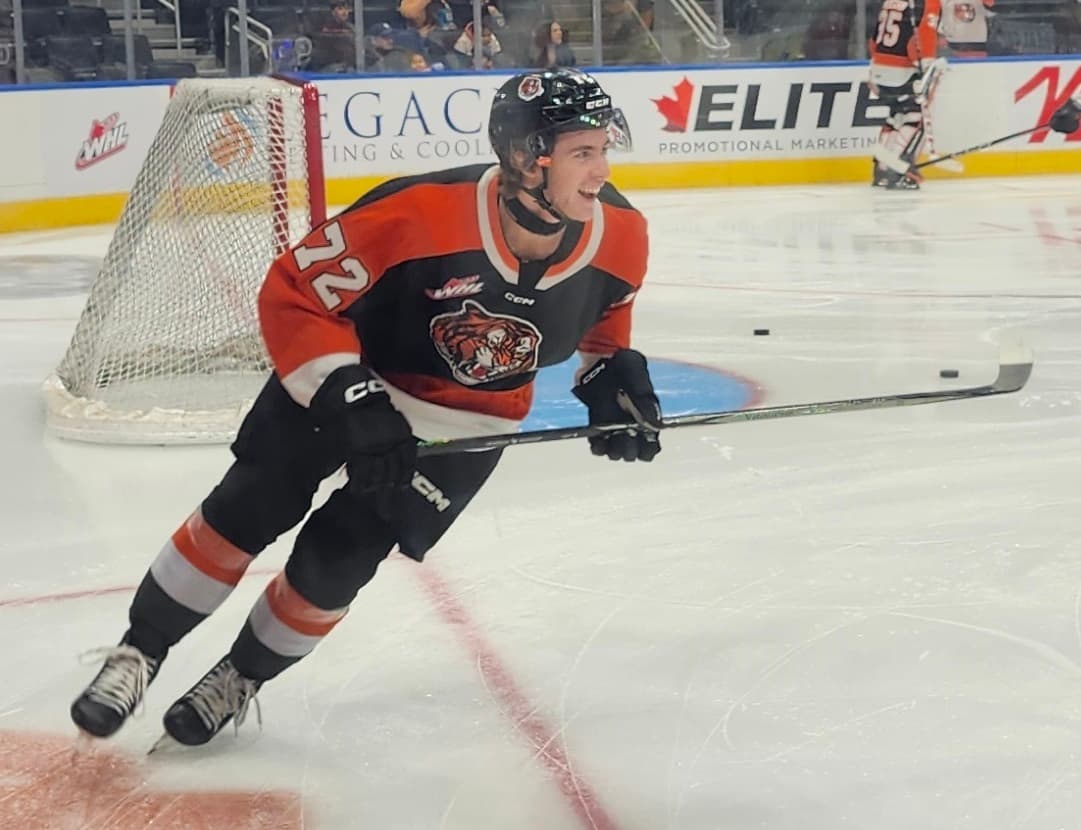
Toronto kept Gavin McKenna out of the four-team NHL Prospect Challenge in Gatineau, choosing instead to have the No. 1 overall pick of the 2026 draft rest and prepare for main training camp. He took part in rookie camp at the Ford Performance Centre, scored a Michigan-style goal in his first on-ice session, and drew public praise from Marlies coach Steve Sullivan, who described a player whose deception and processing speed put him ahead of everyone else on the ice. With the season opening September 29, the question for fantasy drafters is not whether McKenna makes the team. It is where he plays when he does.
The decision to hold him out
Skipping a prospect tournament is a signal, and it is a positive one. Teams send prospects to those events to evaluate them against peers. Teams hold prospects out when the evaluation is already finished and the only thing a rookie tournament can do is create injury risk.
Toronto has effectively said that McKenna does not need to prove anything against other organizations' prospects. He signed a three-year entry-level contract reported at $3.23 million after a freshman season at Penn State in which he posted 15 goals and 51 points in 35 games, setting program freshman records in assists and points. The Leafs are managing him toward a main camp where he will be evaluated against NHL players, which is the only evaluation that matters now.
The deployment question
This is where the fantasy value gets decided, and the early signs point upward. McKenna has spoken publicly about living with John Tavares and about the prospect of playing alongside Auston Matthews, which is the kind of detail that suggests the organization is at minimum considering a top-six look rather than a sheltered fourth-line introduction.
The two realistic outcomes are a top-six wing role with second power-play unit time, or a top-line look with first-unit power play minutes. The gap between those in fantasy terms is enormous. An 18-year-old at even strength on a good team with second-unit power play work is a 40-point player. The same player on the first unit with a genuine star at center is a 60-plus-point player and a Calder favorite.
Neither outcome is settled. Both are live, and camp will tell.
The 84-game factor
Every rookie projection this season needs an adjustment that did not exist a year ago. The NHL has expanded to 84 games, with each team playing 42 home and 42 road, and there is no Olympic break, which means the calendar runs continuously from September 29 through April.
For an 18-year-old, that cuts both ways. More games mean more counting-stat opportunity, which raises a rookie's ceiling. A longer season with no break also means more fatigue on a player who has never played anything close to a full professional schedule, and teams have historically managed young forwards' workloads with healthy scratches and reduced minutes in the back half of the year.
The practical guidance: project McKenna's per-game rate optimistically and his games-played number conservatively.
The Verdexed model take
The model treats first-overall picks as a distinct population, not as generic rookies. The hit rate on top picks producing immediately is substantially higher than for picks even a few slots later, and McKenna's college production profile, elite point rates as a freshman against older competition, is the strongest predictor available.
The projection lands in the range of a top-two rookie scorer in the league, with the distribution heavily dependent on linemates. The model's expected case is a top-six role that becomes a top-line role by midseason, which is the common arc for a franchise-caliber forward on a team with veterans ahead of him.
For fantasy purposes, the model's guidance is to draft McKenna one round earlier than his consensus position in points leagues and to be more cautious in category formats, where a rookie forward's shot volume, hits and blocks are typically thin. In dynasty, he is the first rookie off the board in most builds, and the debate about whether he or the second name goes first is closer than it looks.
Betting angle
The Calder Trophy market is the obvious one and the one most likely to be efficiently priced already. A first-overall pick on a high-profile team with a top-six opportunity is exactly the profile that attracts early money.
The better value is in McKenna's season-long points total, if it is available. Season-long rookie point totals are set conservatively by design, because books do not want exposure to an unknown, and they are frequently set against an 82-game mental model rather than the new 84-game schedule. Combine a naturally conservative rookie line with two extra games and a plausible first-line promotion, and the over is the structural position.
Toronto's team total and Stanley Cup price are not markets to touch on this news. A rookie, even a great one, does not move a contending team's win projection enough to justify a bet.
What to watch in camp
Line combinations in the third and fourth preseason games are the most predictive public information available. Coaches experiment early and settle late, and whoever McKenna is skating with in the final tune-ups is very likely who he starts the season with.
The second thing to watch is the power play. First-unit reps in preseason for a rookie are rare and highly informative. If McKenna is on the top unit in late September, raise your projection materially. If he is running the second unit, the 40-point outcome becomes the base case and the draft-day price should reflect it.